Haben Sie noch nichts passendes gefunden? Stöbern Sie durch unser komplettes Sortiment.
Oder melden Sie sich an bzw. registrieren Sie sich.


Beschreibung
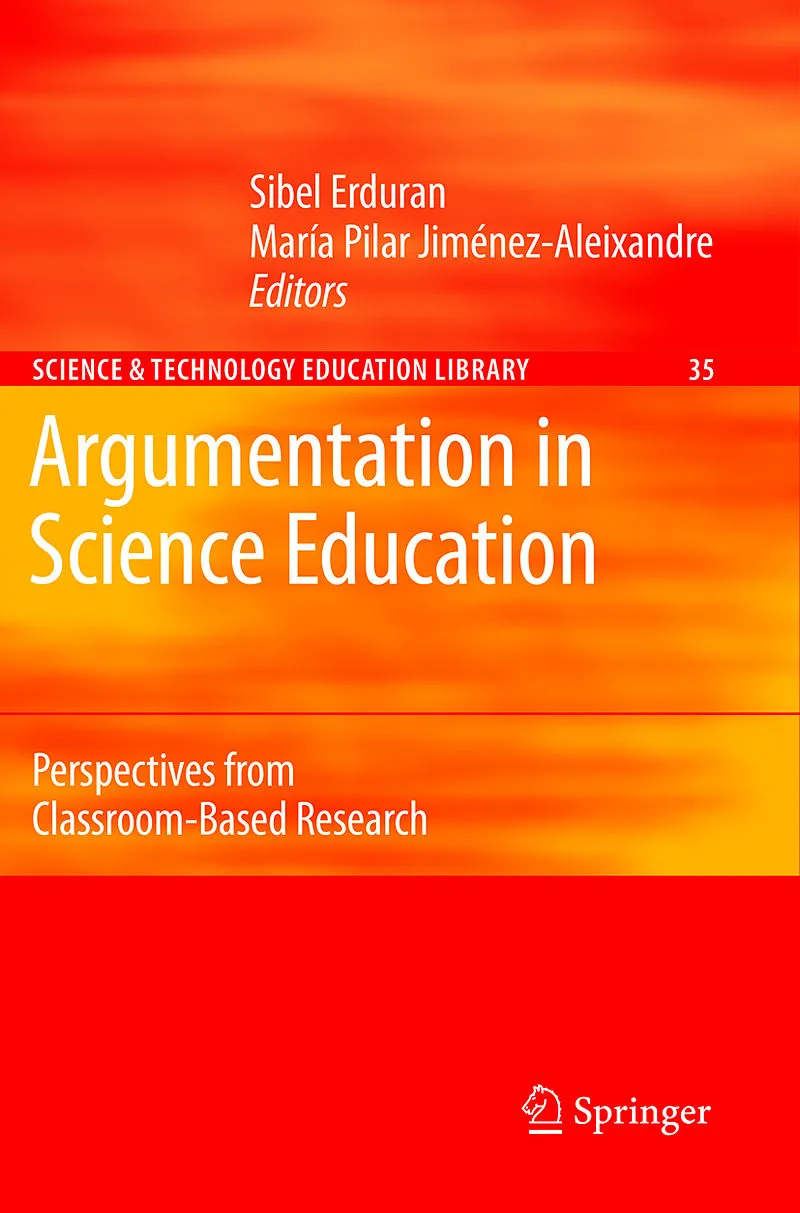
Our conversations about arguments began in Nashville in the Spring of 1996 in Richard Duschl's doctoral seminar that we were both attending, Marilar Jiménez-Aleixandre as a visiting scholar at Vanderbilt University. Jiménez-Aleixandre and Duschl were designing...Our conversations about arguments began in Nashville in the Spring of 1996 in Richard Duschl's doctoral seminar that we were both attending, Marilar Jiménez-Aleixandre as a visiting scholar at Vanderbilt University. Jiménez-Aleixandre and Duschl were designing authentic problems in genetics for the University of Santiago de Compostela-based RODA project aimed at engaging high school students in argumentation. Erduran and Duschl had been working on Project SEPIA extending their work in Pittsburgh schools to the design of curricula that support epistemological aspects of scientific inquiry including argumentation. In that spring we attended a NARST s- sion in St Louis, where Gregory Kelly, Steven Druker and Catherine Chen presented a paper about argumentation. As a consequence, a symposium about argumentation was organised (possibly the first of its kind) at the 1997 NARST meeting in Chicago, including papers from Kelly and colleagues and from Jiménez-Aleixandre, Bugallo and Duschl. The symposium was attended, among others, by Rosalind Driver, who had just submitted an application for funding of an argumentation project based at King's College London, a project Erduran would incidentally work on after Driver's untimely death. From this time frame in the 1990s to the present day, argumentation studies in science education have increased at a rapid pace, from stray papers for which we were unable to find an appropriate strand in a conference, to a wealth of research base exploring ever more sophisticated issues.
The first book on argumentation in science education Interest of researchers in argumentation is increasing, as evidenced by number of papers in journals and conferences, and by doctoral dissertations on the subject Brings together leading international experts in the field of argumentation in science education from around the world Includes both theoretical and empirical perspectives Covers a range of aspects of argumentation including methodological, cognitive, epistemological and moral perspectives Brings together international perspectives including classroom-based research from Norway, Israel, USA, France, Spain and United Kingdom
Autorentext
Sibel Erduran is a Professor of Science Education at University of Oxford and a Fellow of St Cross College. She also holds a Visiting Professorship position at Zhejiang Normal University, China. She is an Editor for International Journal of Science Education, Section Editor for Science Education, and serves on the Executive Board of European Science Education Research Association. Her work experience includes positions in the USA (University of Pittsburgh), Ireland (University of Limerick) as well as other universities in the UK (King's College London and University of Bristol). Previously she held Visiting Professorships at Oxford Brookes University, National Taiwan Normal University, Kristianstad University, Sweden, and Bogazici University, Turkey. Her higher education was completed in the USA at Vanderbilt (PhD, Science Education & Philosophy), Cornell (MSc, Food chemistry and Chemistry) and Northwestern (BA, Biochemistry) Universities. She has worked asa chemistry teacher in a high school in northern Cyprus. Her research interests focus on the infusion of epistemic practices of science in science education, in particular chemistry education. Her work has received international recognition through awards from NARST and EASE, and has attracted funding from a range of agencies including the European Union, Gatsby Foundation and Science Foundation Ireland. She is currently the Principal Investigator of a project on the assessment of practical science funded by the Wellcome Trust, and her edited book on Argumentation in Chemistry Education has been published in 2019 by the Royal Society of Chemistry. Ebru Kaya is an associate professor in science education at Bogazici University, Turkey. She received her PhD from Middle East Technical University, Turkey in 2011. Dr. Kaya has been a visiting scholar at University of Bristol, UK in 2009 and at National Taiwan Normal University, Taiwan in 2016 and 2017. Her research interests include argumentation and nature of science in science education. Dr. Kaya is the recipient of the Young Scientist Award from Science Academy in Turkey in 2015; the Outstanding Paper Award from East-Asian Association for Science Education (EASE) in Japan in 2016; and the Young Scientist Award from TUBITAK (Turkish Scientific and Technological Research Council) in 2017. Dr. Kaya has participated in research projects funded by TUBITAK (Turkish Scientific and Technological Research Council) and NARST, and conducted professional development workshops for science teachers in Turkey, Rwanda, Lebanon, and Taiwan. She served as a board member in Turkish Science Education and Research Association from 2012 to 2014, and a committee member in NARST Outstanding Paper Award Committee from 2013 to 2015. Currently Dr. Kaya is a reviewer for numerous journals including International Journal of Science Education and Science & Education. Dr. Kaya has been the PrincipalInvestigator of the projects entitled ''Nature of Science in Science Teacher Education: A Comparative Research and Development Project'' and ''University Students' Understanding of Reconceptualized Family Resemblance Approach to Nature of Science: A Case Study'' funded by Bogazici University Research Fund.
Klappentext
This book brings together the work of leading experts in argumentation in science education. It presents research combining theoretical and empirical perspectives relevant for secondary science classrooms. Since the 1990s, argumentation studies have increased at a rapid pace, from stray papers to a wealth of research exploring ever more sophisticated issues. This volume constitutes a unique collection and covers fundamental issues in argumentation such as cognitive, methodological and epistemological aspects; classroom-based research in teaching and learning of argumentation in science classrooms; and argumentation in context such as in socio-scientific and moral contexts. The book's underlying premise is that argumentation is a significant aspect of scientific inquiry and plays an important role in teaching and learning of science. Argumentation also contributes to the agenda of informed citizenship where students are encouraged and supported in evidence-based reasoning in their everyday lives. "Arumentation appeared as a major theme in science education research during the mid-1990s. Since that time, researchers working on themes such as the nature of science in science education, science education for citizenship, and language in the science classroom have all addressed argumentation in their work. This book brings together key lines of work and key scholars, presenting a state-of-the-art review of argumentation in science education." Professor John LeachThe University of Leeds, UK
Inhalt
Argumentation Foundations.- Argumentation in Science Education: An Overview.- Cognitive Foundations of Learning Argumentation.- Methodological Foundations in the Study of Argumentation in Science Classrooms.- What Can Argumentation Tell Us About Epistemology?.- Research on Teaching and Learning Argumentation.- Designing Argumentation Learning Environments.- Social Aspects of Argumentation.- Analysis of Lines of Reasoning in Written Argumentation.- Quality Argumentation and Epistemic Criteria.- Argumentation in Context.- Argumentation in Science Education: An Overview.- The Role of Moral Reasoning in Argumentation: Conscience, Character, and Care.- Technology-Enhanced Learning Environments to Support Students' Argumentation.- Science Teacher Education and Professional Development in Argumentation.