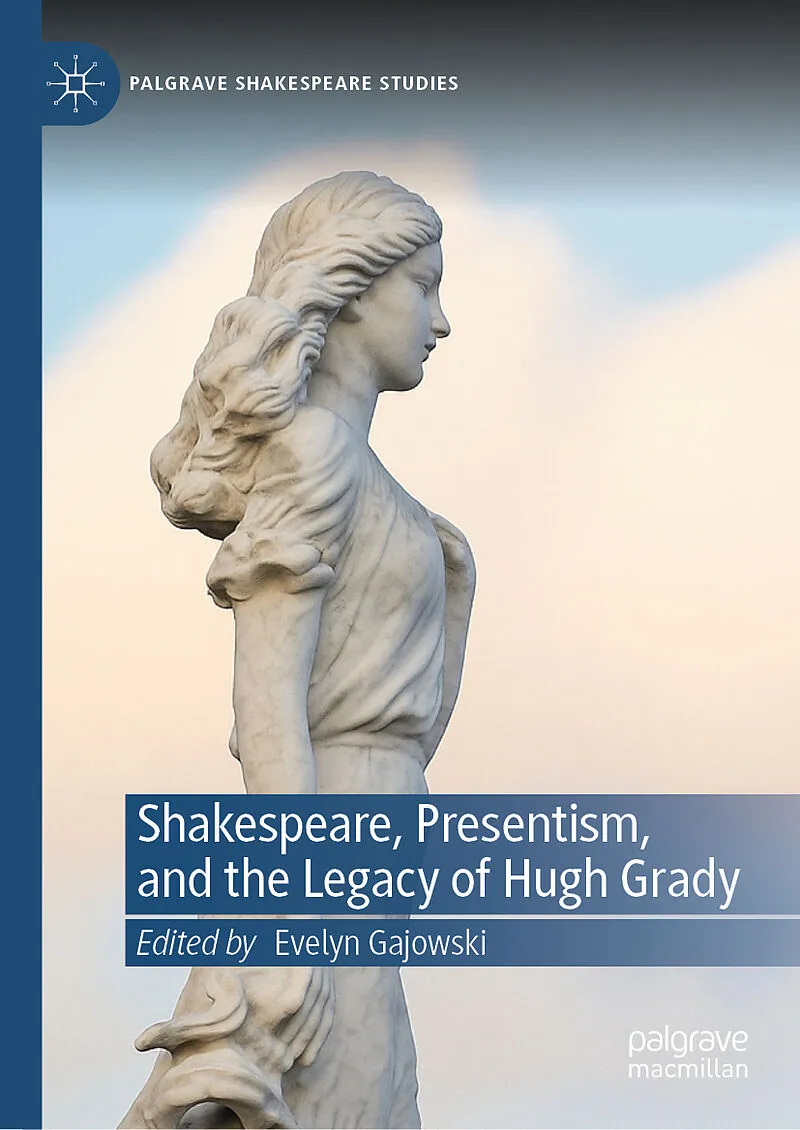
Beschreibung
This edited collection of essays analyses the contributions that presentist theory and criticism have made to the field of Shakespeare studies in recent years while simultaneously highlighting the contributions of Hugh Grady to that intellectual endeavour. Th...This edited collection of essays analyses the contributions that presentist theory and criticism have made to the field of Shakespeare studies in recent years while simultaneously highlighting the contributions of Hugh Grady to that intellectual endeavour. The book is comprised of eleven core chapters authored by a mix of renowned Shakespeare scholars and early career scholars in a global context, complemented by a Foreword, an interview with Hugh Grady, and an Afterword.
Explains and defines presentism as a theoretical and critical strategy for analysing Shakespeare's texts Elucidates Hugh Grady's contributions to presentist Shakespeare Suggests the value of presentism for analysing Shakespeare's texts in the context of 21st-century existential crises
Autorentext
Evelyn Gajowski is Professor of English Emerita and Barrick Distinguished Scholar at the University of Nevada, Las Vegas, USA. She has published five books on Shakespeare, including The Arden Research Handbook of Contemporary Shakespeare Criticism (2021); The Merry Wives of Windsor: New Critical Essays , co-edited with Phyllis Rackin (2015); and Presentism, Gender, and Sexuality in Shakespeare (Palgrave Macmillan, 2009). She serves as Series Editor of the Arden Shakespeare and Theory Series.
Klappentext
Hugh Grady is the most important US scholar to connect with and develop the UK cultural materialist project under the umbrella of presentism. An exemplary blend of philosophical depth and critical insight characterizes his writing. His explorations of Shakespeare's relevance to us now feed back into an equally relevant understanding of early modern dramatists' art. In this sense, Grady enacts a unique dialectic between Shakespeare and us. As such, his oeuvre comprises an exemplary intellectual wisdom. What makes the essays collected here both engaging and important are the diverse ways in which they extrapolate that wisdom. JONATHAN DOLLIMORE, Independent Scholar, UK Hugh Grady's luminous intelligence and generosity of spirit are everywhere present in this volume. We see them refracted in the incisive and humane essays that friends and colleagues have written to honor the many facets of his intellectual legacy. Politics,aesthetics, utopian dreaming, theoretical speculation, presentist methods, and deep historical knowledge -- Grady was committed to them all, and all appear in fascinating new combinations in this volume. It's an impressive achievement, one worthy of the person it honors. JEAN HOWARD, Columbia University, USA This edited collection of essays analyses the contributions that presentist theory and criticism have made to the field of Shakespeare studies in recent years while simultaneously highlighting the contributions of Hugh Grady to that intellectual endeavour. The book is comprised of eleven core chapters authored by a mix of renowned Shakespeare scholars and early career scholars in a global context, complemented by a Foreword, an interview with Hugh Grady, and an Afterword. Evelyn Gajowski is Professor of English Emerita and Barrick Distinguished Scholar at the University of Nevada, Las Vegas, USA. She has published five books on Shakespeare, including The Arden Research Handbook of Contemporary Shakespeare Criticism (2021); The Merry Wives of Windsor: New Critical Essays, co-edited with Phyllis Rackin (2015); and Presentism, Gender, and Sexuality in Shakespeare (Palgrave Macmillan, 2009). She serves as Series Editor of the Arden Shakespeare and Theory Series.
Inhalt
Introduction.- In conversation with Hugh Grady.- Impure aesthetics.- Hugh Grady and Shakespeare's Impure Aesthetics.- In Troy There Lies the Present: The Presentism of Shakespearean Aesthetics.- Impure utopias.- Shakespeare's Impure Ethics: Love, Exile, and the Crisis of Moral Luck in As You Like It.-Psychological Utopia in The Taming of the Shrew.- Utopia in the here and now: On Bloch, Job and Lear.- Benjamin's Messianic Violence and Shakespeare's As You Like It.- Sexed and raced economies.- Love's Usury: Non-reproductive Sex and Auto-reproductive Money in John Donne.-The Rape of Lucrece in the Context of the European Migrant Crisis.- Presentist prospects.- Presentism Today: Dylan, Shakespeare, Rice and Bread.- 'The point is to change it' The Imperative for Activist Literary Studies.- Hugh Grady, Presentism, and Animal Studies.