
IHR WARENKORB IST AKTUELL LEER.
Haben Sie noch nichts passendes gefunden? Stöbern Sie durch unser komplettes Sortiment.
Oder melden Sie sich an bzw. registrieren Sie sich.
- Kostenlose Lieferung
- Kauf auf Rechnung
- Ex Libris Tiefpreis
- Filiallieferung und 650+ Abholorte
- Rabatt-Bons als Club-Mitglied
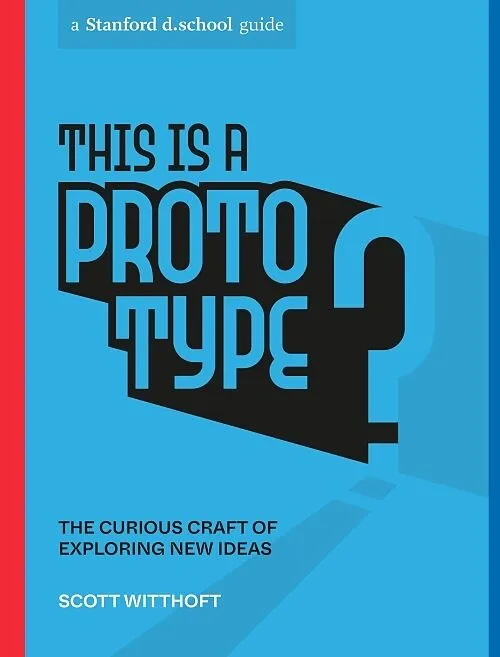
This Is a Prototype
Beschreibung
Informationen zum Autor Scott Witthoft works as an educator, designer, and author. Drawing from his past practice of forensic structural engineering, he incorporates that expertise with current pursuits in space, furniture, and product designteaching and speak...Format auswählen
- Kartonierter EinbandCHF 19.20

Wird oft zusammen gekauft
Andere Kunden kauften auch
Beschreibung
Informationen zum Autor Scott Witthoft works as an educator, designer, and author. Drawing from his past practice of forensic structural engineering, he incorporates that expertise with current pursuits in space, furniture, and product designteaching and speaking widely. He is the co-author of Make Space, a tool for creating collaborative environments. His work has been featured in The Design Museum and publications such as Fast Company , Architecture and Urbanism , and Metropolis . The Hasso Plattner Institute of Design , known as the d.school , was founded at Stanford University in 2005. Each year, nearly a thousand students from all disciplines attend classes, workshops, and programs to learn how design can enrich their own work and unlock their creative potential. Klappentext A practical guide to prototyping as a way to revolutionize your work and creative life, from Stanford University's world-renowned Hasso Plattner Institute of Design, aka the d.school. Prototyping is a way to test an idea to see if it can be successful before investing too much time and too many resources. But it's not only designers who "prototype" as they work. A skateboarder tries a new trick; that's a prototype experience. A chef experiments with a new dish and new ingredients; that's a prototype experience, too. Once a prototype is made, the creator gains knowledge about what worked and what didn't, what should be used again and what should be trimmed from the experience. This is a book about becoming better at prototyping by building things and experiences that will help you learn from your attempts, no matter what you're aiming to achieve. Readers will learn how to not only create prototypes but also how to reflect on the success and failure of those attempts. Scott Witthoft, who teaches courses in design and prototyping to students around the world, introduces a comprehensive number of tools and materials for prototyping, including digital platforms and physical objects. And he breaks down real-life examples of prototype experiments with accompanying photographs for the reader to observe large- and small-scale prototyping in action. With Witthoft as your guide , you'll put the principles of design into practice and bring your vision to lifeone prototype at a time. Leseprobe Introduction How do you close the gap between I wonder and I know ? You make a prototype. A prototype is a tool that gives you a chance to investigate your ideas and explore what could, should, or would come next, whether you are designing a new product, working out a new routine, or rearranging your furniture. It's a modest tool for the lofty goal of testing the future, or for at least testing a question you have about your future. Prototyping helps lower the stakes for exploring new questions by reducing riskusing fewer resources like time, money, and emotional commitment especially when anxiety about outcomes might keep you from starting. Prototyping is a primary tactic for designers, but it's a tool that also shows up in faraway fields. Skateboarders and chefs, for example, know that being intentional doesn't require being perfect at first. A skateboarder tries a new trick: that's a prototype experience. A chef experiments with a new recipe: that's a prototype experience. We know from watching both the skater and the chef that the next try comes after understanding what happened the first time. This is a strategy of repetition, not a singular performance. This is also a strategy of learning, with discovery embedded in every outcome. Through knowingly imperfect attempts, prototype experiences illuminate possibilities for your next move. Unlike finished products ready for purchase, prototypes are imperfect and impermanent by design. Their value comes from efficiency, helping you learn the...
Autorentext
Scott Witthoft works as an educator, designer, and author. Drawing from his past practice of forensic structural engineering, he incorporates that expertise with current pursuits in space, furniture, and product design—teaching and speaking widely. He is the co-author of Make Space, a tool for creating collaborative environments. His work has been featured in The Design Museum and publications such as Fast Company, Architecture and Urbanism, and Metropolis.
The Hasso Plattner Institute of Design, known as the d.school, was founded at Stanford University in 2005. Each year, nearly a thousand students from all disciplines attend classes, workshops, and programs to learn how design can enrich their own work and unlock their creative potential.
Klappentext
A practical guide to prototyping as a way to revolutionize your work and creative life, from Stanford University's world-renowned Hasso Plattner Institute of Design, aka the d.school.
Prototyping is a way to test an idea to see if it can be successful before investing too much time and too many resources. But it's not only designers who "prototype" as they work. A skateboarder tries a new trick; that's a prototype experience. A chef experiments with a new dish and new ingredients; that's a prototype experience, too. Once a prototype is made, the creator gains knowledge about what worked and what didn't, what should be used again and what should be trimmed from the experience.
This is a book about becoming better at prototyping by building things and experiences that will help you learn from your attempts, no matter what you're aiming to achieve. Readers will learn how to not only create prototypes but also how to reflect on the success and failure of those attempts. Scott Witthoft, who teaches courses in design and prototyping to students around the world, introduces a comprehensive number of tools and materials for prototyping, including digital platforms and physical objects. And he breaks down real-life examples of prototype experiments with accompanying photographs for the reader to observe large- and small-scale prototyping in action.
With Witthoft as your guide*,* you'll put the principles of design into practice and bring your vision to life—one prototype at a time.
Leseprobe
Introduction
How do you close the gap between I wonder and I know? You make a prototype. A prototype is a tool that gives you a chance to investigate your ideas and explore what could, should, or would come next, whether you are designing a new product, working out a new routine, or rearranging your furniture. It’s a modest tool for the lofty goal of testing the future, or for at least testing a question you have about your future.
Prototyping helps lower the stakes for exploring new questions by reducing risk—using fewer resources like time, money, and emotional commitment— especially when anxiety about outcomes might keep you from starting. Prototyping is a primary tactic for designers, but it’s a tool that also shows up in faraway fields. Skateboarders and chefs, for example, know that being intentional doesn’t require being perfect at first. A skateboarder tries a new trick: that’s a prototype experience. A chef experiments with a new recipe: that’s a prototype experience. We know from watching both the skater and the chef that the next try comes after understanding what happened the first time. This is a strategy of repetition, not a singular performance. This is also a strategy of learning, with discovery embedded in every outcome. Through knowingly imperfect attempts, prototype experiences illuminate possibilities for your next move.
Unlike finished products ready for purchase, prototypes are imperfect and impermanent by design. Their value comes from efficiency, helping you learn the most from the fewest resources. This makes them a unique type of tool, such that the best prototype doesn’t have to be of “best-built” quality right now.
The low-resolution…