
IHR WARENKORB IST AKTUELL LEER.
Haben Sie noch nichts passendes gefunden? Stöbern Sie durch unser komplettes Sortiment.
Oder melden Sie sich an bzw. registrieren Sie sich.
- Kostenlose Lieferung
- Kauf auf Rechnung
- Ex Libris Tiefpreis
- Filiallieferung und 650+ Abholorte
- Rabatt-Bons als Club-Mitglied
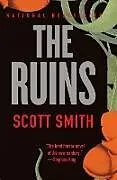
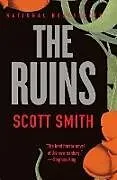
The Ruins
Beschreibung
Zusatztext 41786109 Informationen zum Autor Scott Smith was educated at Dartmouth College and Columbia University. He lives in New York City. Klappentext NATIONAL BESTSELLER • Trapped in the Mexican jungle, a group of friends stumble upon a creeping horro...Format auswählen
- Poche format BCHF 21.10

Wird oft zusammen gekauft
Andere Kunden kauften auch
Beschreibung
Zusatztext 41786109 Informationen zum Autor Scott Smith was educated at Dartmouth College and Columbia University. He lives in New York City. Klappentext NATIONAL BESTSELLER • Trapped in the Mexican jungle, a group of friends stumble upon a creeping horror unlike anything they could ever imagine in "the best horror novel of the new century" (Stephen King). Also a major motion picture! Two young couples are on a lazy Mexican vacationsun-drenched days, drunken nights, making friends with fellow tourists. When the brother of one of those friends disappears, they decide to venture into the jungle to look for him. What started out as a fun day-trip slowly spirals into a nightmare when they find an ancient ruins site ... and the terrifying presence that lurks there. " The Ruins does for Mexican vacations what Jaws did for New England beaches. Entertainment Weekly Smith's nail-biting tension is a pleasure all its own.... This stuff isn't for the faint of heart. New York Post A story so scary you may never want to go on vacation, or dig around in your garden, again. USA Today Leseprobe They met Mathias on a day trip to Cozumel. They'd hired a guide to take them snorkeling over a local wreck, but the buoy marking its location had broken off in a storm, and the guide was having difficulty finding it. So they were just swimming about, looking at nothing in particular. Then Mathias rose toward them from the depths, like a merman, a scuba tank on his back. He smiled when they told him their situation, and led them to the wreck. He was German, dark from the sun, and very tall, with a blond crew cut and pale blue eyes. He had a tattoo of an eagle on his right forearm, black with red wings. He let them take turns borrowing his tank so they could drop down thirty feet and see the wreck up close. He was friendly in a quiet way, and his English was only slightly accented, and when they pulled themselves into their guide's boat to head back to shore, he climbed in, too.They met the Greeks two nights later, back in Cancun, on the beach near their hotel. Stacy got drunk and made out with one of them. Nothing happened beyond that, but the Greeks always seemed to be turning up afterward, no matter where they went or what they were doing. None of them spoke Greek, of course, and the Greeks didn't speak English, so it was mostly smiling and nodding and the occasional sharing of food or drinks. There were three Greeksin their early twenties, like Mathias and the rest of themand they seemed friendly enough, even if they did appear to be following them about.The Greeks not only didn't know English; they couldn't speak Spanish, either. They'd adopted Spanish names, though, which they seemed to find very amusing. Pablo and Juan and Don Quixote was how they introduced themselves, saying the names in their odd accents and gesturing at their chests. Don Quixote was the one Stacy made out with. All three looked enough alike, howeverwide-shouldered and slightly padded, with their dark hair grown long and tied back in ponytailsthat even Stacy had a hard time keeping track of who was who. It also seemed possible that they were trading the names around, that this was part of the joke, so the one who answered to Pablo on Tuesday would smilingly insist on Wednesday that he was Juan.They were visiting Mexico for three weeks. It was August, a foolish time to travel to the Yucatán. The weather was too hot, too humid. There were sudden rainstorms nearly every afternoon, downpours that could flood a street in a matter of seconds. And with darkness, the mosquitoes arrived, vast humming clouds of them. In the beginning, Amy complained about all these things, wishing they'd gone to San Francisco, which had been her idea. But then Jeff lost h...
"The best horror novel of the new century."
—Stephen King
"The Ruins does for Mexican vacations what Jaws did for New England beaches.”
—Entertainment Weekly
“The most disturbing novel of the year.” —Time
“Smith’s nail-biting tension is a pleasure all its own. . . . This stuff isn’t for the faint of heart.” —New York Post
“A story so scary you may never want to go on vacation, or dig around in your garden, again.” —USA Today
“A smart, clean-burning horror machine.”
—New York Times Book Review
“A classic horror story, told with mounting, detail. Smith spins it out relentlessly, piling chill on chill on chill. . . . What happens, and needless to say it’s not good, is something readers will race page after flapping page to discover. When they do, they will find–well, better set aside eight or nine hours reading time, keep the lights on, and make sure the plants are still in their pots.”
—Bill Bell, The Daily News
“A fast-paced suspense novel that grabs you and refuses to let go. . . Smith’s characterization and timing–the ability to deliver one quick blow after antoher–makes the book so freakishly fun. . . . The story turns grotesque, but Smith’s command of his characters and their demons is masterful. . . . The Ruins is chilling, an icy dissection of human nature in a hot, horrifying place.”
—John Caniglia, The Cleveland Plain Dealer
“An exercise in unremitting tension . . . Smith writes in clear, vivid language with elegant sentences.”
—Diane Scharper, The Baltimore Sun
“One of the most terrifying, creepy, riveting novels that will hit the bookstores this summer. . . . Smith sculpts each of the characters, making us care very much about what happens to these young, naive and sometimes selfish individuals. . . . The Ruins has a claustrophobic feel, which adds to the palpatations of suspense. The great outdoors might as well be a dark, dingy basement full of things that go bump in the night as Smith finds new ways to frighten with his setting.”
—Oline H. Cogdill, The Sun-Sentinel
“Reading Scott Smith is like having a rope tied firmly round your middle, as you’re pulled on protesting tiptoes toward a door marked DOOM. . . . Smith is a master of the ‘if only’ scenario, that most foolish and pungent form of regret . . . At its heart, The Ruins is an old-fashioned horror story, and it’s the invasive, intuitive killer that provides the ice-water dread. . . . It’s Thomas Harris meets Poe in a decidedly timely story: Smith has tapped into our anxieties about global warming, lethal weather, supergerms–our collective fear that nature is finally battling back–and given us a decidedly organic nightmare. Grade: A-.
—Gillian Flynn, Entertainment Weekly
“Once again, Smith (A Simple Plan) deftly explores psychological tension and insidious fears. A perfect beach read; just don’t stray too far from the lifeguard.”
—Library Journal
“A word of caution to readers, gentle and otherwise: Do not pick up a copy of Scott Smith’s The Ruins if you have anything else you need to do in the next eight hours or so. Don’t start this book if you’re especially weak of stomach or nerves, and above all don’t pick it up if you’re not willing to tolerate some deviation from the usual conventions of thrillers and horror stories. . . . The Ruins is like all great genre fiction in its irresistible storytelling momentum, but in its lack of mercy, it’s more like real life. . . . The Ruins is ruthlessly frank about how most of us really behave in extremis. The escalating nightmare of the group’s fate evolves inexorably from their personalities, in a way reminiscent of Greek tragedy, so Smith couldn’t get away with the flimsy figurines that populate more genre fiction. In The Ruins, all of the charac…