
IHR WARENKORB IST AKTUELL LEER.
Haben Sie noch nichts passendes gefunden? Stöbern Sie durch unser komplettes Sortiment.
Oder melden Sie sich an bzw. registrieren Sie sich.
- Kostenlose Lieferung
- Kauf auf Rechnung
- Ex Libris Tiefpreis
- Filiallieferung und 650+ Abholorte
- Rabatt-Bons als Club-Mitglied
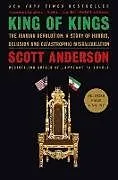
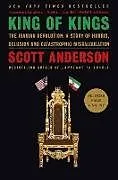
King of Kings
Beschreibung
Autorentext Scott Anderson Klappentext NEW YORK TIMES BESTSELLER • WINNER OF THE KIRKUS PRIZE • From the author of the landmark bestseller Lawrence in Arabia comes a stunningly revelatory narrative history of the Iranian Revolution, one of ...Format auswählen
- Kartonierter EinbandCHF 26.80
- Fester EinbandCHF 37.20
- TaschenbuchCHF 42.80
Wird oft zusammen gekauft
Andere Kunden kauften auch
Beschreibung
Autorentext
Scott Anderson
Klappentext
NEW YORK TIMES BESTSELLER • WINNER OF THE KIRKUS PRIZE • From the author of the landmark bestseller Lawrence in Arabia comes a stunningly revelatory narrative history of the Iranian Revolution, one of the most momentous events in modern times. This groundbreaking work exposes the jaw-dropping stupidity of the American government and traces the rise of religious nationalism, offering essential insights into today's global unrest.
On New Year’s Eve 1977, President Jimmy Carter toasted Shah Mohammad Reza Pahlavi, extolling Iran as “an island of stability” due to “your leadership and to the respect and the admiration and love which your people give to you.” The shah, known as the King of Kings, seemed invulnerable, and he was invaluable to the United States as an ally in the Cold War. Twelve and a half months later, the shah fled Iran into exile, forced from the throne by a volcanic religious revolution led by a fiery cleric named Ayatollah Khomeini. How could the United States have been so blind?
Based on voluminous research and dozens of interviews, Scott Anderson weaves the spellbinding story of a dictator oblivious to the disdain of his subjects and a superpower blundering into disaster. The Iranian Revolution, Anderson convincingly argues, was as world-shattering an event as the French and Russian Revolutions. Around the globe, including in the United States, the hatred of economically marginalized, religiously fervent masses for a wealthy secular elite has led to violence and upheaval—and Iran was the template. King of Kings is a bravura work of history, and a warning.
Zusammenfassung
**PULITZER PRIZE FINALIST • A NEW YORK TIMES NOTABLE BOOK • NEW YORK TIMES BESTSELLER • FINALIST FOR THE NATIONAL BOOK CRITICS CIRCLE AWARD FOR NONFICTION • KIRKUS PRIZE WINNER • From the author of the landmark bestseller Lawrence in Arabia comes a stunningly revelatory narrative history of the Iranian Revolution, one of the most momentous events in modern times. This groundbreaking work exposes the jaw-dropping stupidity of the American government and traces the rise of religious nationalism, offering essential insights into today's global unrest.
“A masterful and propulsive account that chronicles a devastatingly transformative series of events whose aftereffects reverberate to this day.” —The Kirkus Prize 2025 Jury
“An exceptional and important book. Scrupulous and enterprising reporting rarely combine with such superb storytelling.” —The New York Times Book Review
“A masterful and gripping account. Anderson gives us a page-turning history lesson that is more relevant than ever.” —Rajiv Chandrasekaran, author Imperial Life in the Emerald City, a finalist for the National Book Award**
On New Year’s Eve, 1977, on a state visit to Iran, President Jimmy Carter toasted Shah Mohammad Reza Pahlavi, King of Kings, Light of the Aryans, Shadow of God on Earth, praising Iran as “an island of stability “ due to “your leadership and the respect and admiration and love which your people give to you.” Iran had the world’s fifth largest army and was awash in billions of dollars in oil revenues. Construction cranes dotted the skyline of its booming capital, Tehran. The regime’s feared secret police force SAVAK had crushed communist opposition, and the Shah had bought off the conservative Muslim clergy inside the country. He seemed invulnerable, and invaluable to the United States as an ally in the Cold War. Fourteen months later the Shah fled Iran into exile, forced from the throne by a volcanic religious revolution led by a fiery cleric named Ayatollah Khomeini. The ensuing hostage crisis forever damaged America’s standing in the world. How could the United States, which had one of the largest CIA stations in the world and thousands of military personnel in Iran, have been so blind?
The spellbinding story Scott Anderson weaves is one of a dictator blind to the disdain of his subjects and a superpower blundering into disaster. Scott Anderson tells this astonishing tale with the narrative brio, mordant wit, and keen analysis that made his bestselling Lawrence of Arabia one of the key texts in understanding the modern Middle East. The Iranian Revolution, Anderson convincingly argues, was as world-shattering an event as the French and Russian revolutions. In the Middle East, in India, in Southeast Asia, in Europe, and now in the United States, the hatred of economically-marginalized, religiously-fervent masses for a wealthy secular elite has led to violence and upheaval – and Iran was the template. King of Kings is a bravura work of history, and a warning.
Leseprobe
PREFACE
“The Shah will be an active participant in Iranian life well into the 1980s. . . . There will be no radical change in Iranian political behavior in the near future.” —secret CIA report, “Iran in the 1980s,” August 1977, five months before the start of revolution
At about 10:20 on the morning of November 15, 1977, two Sikorsky Sea King helicopters came in low across the Potomac River and made for the flat grassy expanse at the southern base of the Washington Monument. The green- and-white helicopters with their military insignia were part of the presidential fleet known as HMX-1, and on board the lead aircraft was the shah of Iran, Mohammad Reza Pahlavi, together with his wife, Farah, and a small royal entourage. The primary purpose of the trailing helicopter was to serve as a decoy.
Waiting alongside the helipad were half a dozen black limousines, along with several Secret Service vehicles and a phalanx of motorcycle police outriders. For security reasons, only a handful of officials knew which limousine would transport the shah to the White House, a mere half a mile away. It was the Iranian monarch’s twelfth visit to the United States since assuming the imperial throne thirty-six years before. Over the course of those visits, he had met at the White House with six different American presidents, beginning with Harry Truman. He was now about to meet his seventh: Jimmy Carter.
The shah had been apprehensive about this trip, and for two good reasons. In winning the presidency the previous year, Carter had campaigned on a reformist, clean-government platform. This included, the former governor of Georgia promised, a new emphasis on protecting human rights around the world and a critical reexamination of American arms sales to dictatorial regimes. Both these promises cast an uncomfortable spotlight on Iran. In recent years, a number of organizations had harshly assailed the shah’s regime over its human rights record, and Iran was far and away the largest purchaser of American weapons systems, accounting for nearly half of all such sales in recent years. Senior Carter administration officials had quietly offered the shah reassurances that these high-minded pledges did not apply to him, but the Iranian leader was understandably anxious to hear this from the president personally.
This was joined by a more immediate concern. By 1977, some fifty thousand Iranian students were studying at colleges and universities in the United States, and in recent days a sizable portion of them—as many as four thousand, by some reports—had begun converging on Washington to protest his visit. While overwhelmingly young leftists, their numbers were augmented by a smattering of older Iranian dissidents and exiles, as well as American human rights activists, and they had vowed to give the shah a noisy and embarrassing reception. In fact, they had already…