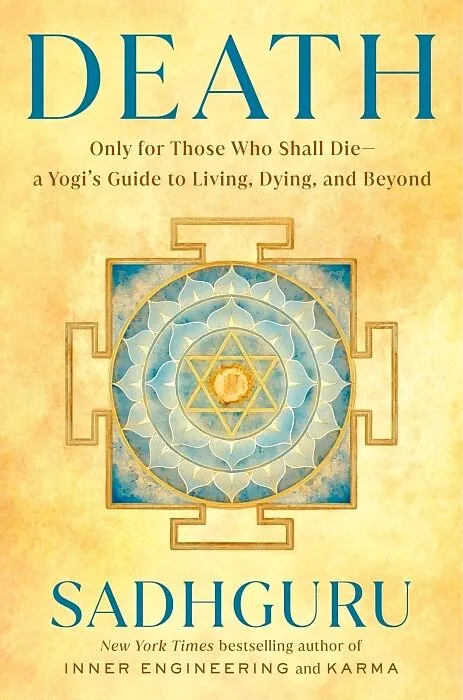
Death
Beschreibung
Yogi, mystic, and bestselling author Sadhguru provides a deeper understanding of death so that we can live more fulfilling lives. Death is an inevitable part of our lives, yet most societies have struggled to come to terms with it. Today, we continue to grappl...Format auswählen
- Fester EinbandCHF 31.60

Wird oft zusammen gekauft
Andere Kunden kauften auch
Beschreibung
Yogi, mystic, and bestselling author Sadhguru provides a deeper understanding of death so that we can live more fulfilling lives.
Death is an inevitable part of our lives, yet most societies have struggled to come to terms with it. Today, we continue to grapple with the enduring questions: What is death? Why do we fear it? What happens after death? Is it an end or a doorway to something beyond?
In this unique, clear-sighted exploration of death, Sadhguru dwells extensively upon his inner experience as he expounds on the deeper aspects of death that are rarely spoken about. What if death is not the catastrophe it is made out to be, but an essential aspect of life, rife with spiritual possibilities for transcendence? Avoiding death is avoiding life. Our fear of death is really a fear of loss. Sadhguru shows us how to go beyond that fear so that it no longer rules our behavior. He invites you to explore how living with an awareness of mortality can allow you to experience life more deeply. Coming to terms with death will ensure that you live purposefully, striving to make each moment as beautiful as it can be.
Sadhguru also breaks down the mysteries surrounding death, including practical aspects such as what preparations one can make for one’s death, how best we can assist someone who is dying, and how we can continue to support their journey even after death. Drawing from profound wisdom and his own transformative journey, Sadhguru delivers an entirely new and necessary perspective—death not as an end, but part of the continuum of existence.
Autorentext
Sadhguru
Zusammenfassung
NATIONAL BESTSELLER • Yogi, mystic, and bestselling author Sadhguru provides a deeper understanding of death so that we can live more fulfilling lives.
Death is an inevitable part of our lives, yet most societies have struggled to come to terms with it. Today, we continue to grapple with the enduring questions: What is death? Why do we fear it? What happens after death? Is it an end or a doorway to something beyond?
In this unique, clear-sighted exploration of death, Sadhguru dwells extensively upon his inner experience as he expounds on the deeper aspects of death that are rarely spoken about. What if death is not the catastrophe it is made out to be, but an essential aspect of life, rife with spiritual possibilities for transcendence? Avoiding death is avoiding life. Our fear of death is really a fear of loss. Sadhguru shows us how to go beyond that fear so that it no longer rules our behavior. He invites you to explore how living with an awareness of mortality can allow you to experience life more deeply. Coming to terms with death will ensure that you live purposefully, striving to make each moment as beautiful as it can be.
Sadhguru also breaks down the mysteries surrounding death, including practical aspects such as what preparations one can make for one’s death, how best we can assist someone who is dying, and how we can continue to support their journey even after death. Drawing from profound wisdom and his own transformative journey, Sadhguru delivers an entirely new and necessary perspective—death not as an end, but part of the continuum of existence.
Leseprobe
Chapter 1
What Is Death?
Death is the most fundamental question. Yet, people can ignore it, avoid it, and just live on in their ignorance simply because all kinds of idiotic stories have been spread in the world in the name of religion.
Death: The Most Fundamental Question
Do you know you will die one day? Oh, I bless you with a long life, but anyway, you will die one day. We cannot be sure about other things in your life. We don’t know if you will get married or not, or if you will get a job or not, if you will be successful or not, but this one thing is guaranteed in your life: You will go straight to your grave! One of the biggest human follies is to engage with death in the third person, as though it is an abstract event that happens to other people, not us. Do you know that about one hundred and sixty thousand people who were alive in the world yesterday are not there today? Each second, two people die in the world. And one day, it is going to happen to you and me too. It does not take enormous research or intelligence or even education to know this. This knowledge is built into every human being. Yet, we think we have an unlimited lease on life. This situation is best expressed in the Hindu epic Mahabharata.
The five Pandava princes, who are the protagonists, are lost in the forest. Severely starved and parched, they scour the nearby hills for water and food. They spot a lake, and as they try to drink from it, they are confronted by a yaksha (a celestial being) in the form of a white crane who insists they answer his questions first. Refusing to be stopped by a mere bird, one by one they try to drink from the lake and drop dead. Only Yudhishthira, the eldest of them, is left. Always the humble and righteous one, Yudhishthira ignores his thirst and engages with the yaksha, who fires a volley of questions about life at him. One of those questions being, “What is the biggest wonder of life?” Without hesitation, Yudhishthira famously answers, “Hundreds and thousands of living beings meet death at every moment, yet the foolish man thinks himself deathless and does not prepare for death. This is the biggest wonder of life.” The yaksha is pleased with this answer, so he allows him to drink from the lake and also restores the lives of his dead brothers. This happened five thousand years ago, but the human psyche regarding death has changed very little since then.
Death is a very fundamental question. Actually, death is closer to us than the statistics we read about it. Each moment, death is happening in us at the organ and cellular levels. This is how, with just one look at your insides, your doctor knows how old you are. In fact, death began in us even before we were born. Only if you are ignorant and unaware does it seem like death will come to you someday later. If you are aware, you will see that both life and death are happening every moment. If you breathe just a little more consciously, you will notice that with every inhalation there is life, with every exhalation there is death. Upon birth, the first thing that a child does is inhale, take in a gasp of air. And the last thing that you will do in your life is an exhalation. You exhale now, and if you do not take the next inhalation, you will be dead. If you do not get this, just do an exhalation, hold your nose, and do not do the next inhalation. Within a few moments, every cell in your body will start screaming for life. Life and death are happening all the time. They exist together, inseparably, in the same breath. This relationship goes even beyond the breath. Breath is only a supporting actor; the real process is that of the life energy, or prana, that controls physical existence. With certain mastery over prana, one can exist beyond breath for substantial amounts of time. Breath is a bit more immediate in its requirement, but in the same category as food and water.
Death is such a fundamental concept, because if one small thing happens, you can be gone tomorrow morning. Forget about tomorrow morning—one small thing now and you could be off the next moment. If you were like any other creature, maybe you would be unable to think about all this, but once one is endowed with human intelligence, how can you just ignore such a significant aspect of your life? How can you avoid it and live on as if you were going to be here forever? How is it that after living here for millions of years, human beings still don’t know a damn thing about death? Well, they know nothing about life either. You know all about the trappings of life, but what do you know about life as…