Beschreibung
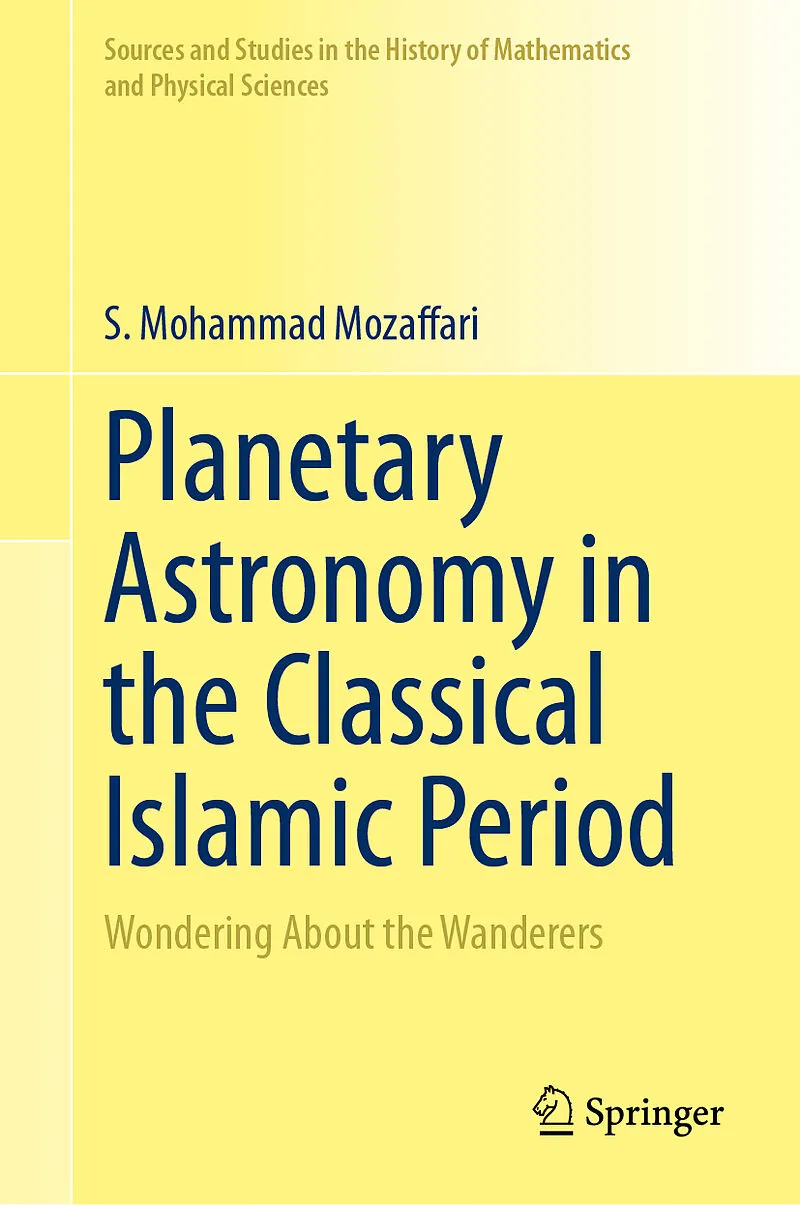
This book provides the first comprehensive analysis of planetary observations preserved in Ibn Ynus's (d. 1009 CE) kim zj , a unique treasure from the classical period of Islamic astronomy (9th -10th centuries). It offers readers a detailed reconstruction of ...This book provides the first comprehensive analysis of planetary observations preserved in Ibn Ynus's (d. 1009 CE) kim zj , a unique treasure from the classical period of Islamic astronomy (9th -10th centuries). It offers readers a detailed reconstruction of how medieval astronomers observed, tested, and refined quantitative planetary theories developed on the basis of Ptolemaic models, revealing the dynamic interplay between empirical practice and theoretical innovation.
The study focuses on the observational records of abash, al-Mhn, Ibn Ynus, and the Ban Amjr family, situating them within the broader intellectual tradition of early Islamic astronomy. By examining these selective but invaluable reports, the book demonstrates how astronomers used conjunctions, appulses, and occultations to evaluate the accuracy of planetary theories and to propose corrective strategies to refine them. The analysis is broadened to include other prominent figures, such as Battn, Ibn al-Alam, Kshyr, and Brn, in order to assess whether and in what manner their theories were contingent upon observational activities and empirical methodologies.
The main topics include: the methodological link between observation and theory in Islamic astronomy; technical reconstructions of sky configurations to assess visibility, precision, and instrument capability; the identification of anomalies in Ptolemaic planetary models and the corrective strategies ( istidrk / ta ) devised by Islamic astronomers; and the transformation of toolsfrom printed ephemerides to modern sky-simulation softwarethat now allow scholars to revisit ancient records with clarity.
These topics are important and relevant because they challenge the prevailing narrative of Islamic astronomy. The evidence shows a vibrant culture of empirical testing, methodological innovation, and theoretical refinement. The book highlights how Islamic astronomers recognized deep-seated deficiencies in Ptolemaic models and developed heuristic remedies, anticipating later scientific transformations.
Historians of science, scholars of Islamic intellectual history, astronomers interested in the evolution of observational practice, and early-career researchers seeking methodological clarity in the study of historical astronomy will find great value in this text.
Reconstructs medieval planetary observations with modern sky-simulation tools for clarity Demonstrates how Islamic astronomers tested and corrected planetary theories based on Ptolemaic models Links empirical records directly to theoretical innovations across the 9th and 10th centuries
Autorentext
S. Mohammad Mozaffari is an Iranian historian of medieval astronomy whose research centers on the growth and development of observational practices, their relationship to theoretical models in the Medieval Middle East, and their diffusion across the lands from India to Spain. He has published widely in leading journals such as the Journal for the History of Astronomy and the Archive for History of Exact Sciences, contributing to the study of solar theories, star tables, planetary parameters, and the instruments and techniques of medieval observers. His work has also offered new perspectives on the systematic programs of observation at the Maragha and Samarqand observatories, reshaping our understanding of how empirical data informed theoretical innovation. His most recent book, Reflections on Observational Astronomy in the Islamic Period (Routledge, 2025), provides a comprehensive synthesis of these themes and situates Islamic astronomy within the broader history of science. He is a member of the International Astronomical Union and serves as Advisory Editor of the Journal for the History of Astronomy, Associate Editor of SCIAMVS: Sources and Commentaries in the Exact Sciences, and Associate Editor of the Journal of Astronomical History and Heritage.
Inhalt
Preface.- Introduction.- Initial Testing Steps: abash al-sib and al-Mhn.- The Ban Amjr: Discovery of Confusions.- Al-Battn: Consolidation of the Conception of Systematic Correction.- Ibn al-Alam: Groundbreaking Planetary Theories.- Great Archivist: Ibn Ynus.- Kshyr and Brn: Unconventional Ways of Correction.- Epilogue.- Glossary.