
IHR WARENKORB IST AKTUELL LEER.
Haben Sie noch nichts passendes gefunden? Stöbern Sie durch unser komplettes Sortiment.
Oder melden Sie sich an bzw. registrieren Sie sich.
- Kostenlose Lieferung
- Kauf auf Rechnung
- Ex Libris Tiefpreis
- Filiallieferung und 650+ Abholorte
- Rabatt-Bons als Club-Mitglied
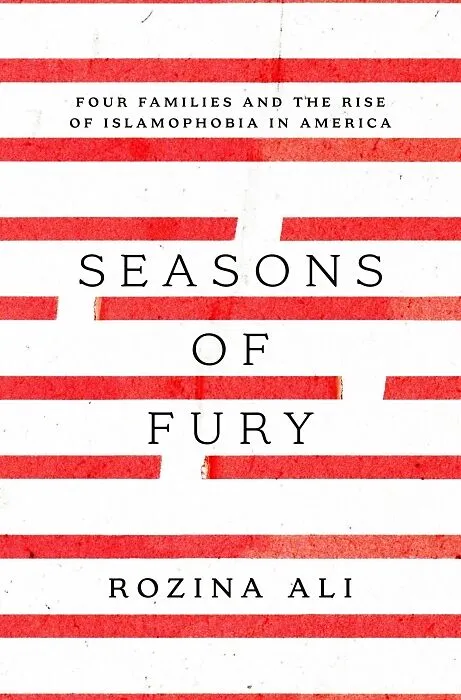
Seasons of Fury
Beschreibung
This sweeping narrative history chronicles the U.S. government’s broken compact with its Muslim citizens, culminating in the post-9/11 era of mass surveillance and increased violence—from an award-winning <New York Times Magazine <journalis...Format auswählen
- Fester EinbandCHF 33.20
Wird oft zusammen gekauft
Andere Kunden kauften auch
Beschreibung
This sweeping narrative history chronicles the U.S. government’s broken compact with its Muslim citizens, culminating in the post-9/11 era of mass surveillance and increased violence—from an award-winning <New York Times Magazine <journalist.
In this closely reported and devastatingly written book, Rozina Ali shows how the War on Terror conceived in the wake of the September 11 attacks only accelerated long-standing conflicts between American law enforcement and Muslim communities around the country.
Through the powerful stories of four families across eight decades, Ali narrates a range of Muslim experiences shaped by relentless suspicion and prejudice. Introducing readers to Abdeen Jabara, Mohammad Ali Chaudry, Shahina and Matin Siraj, and the pseudonymous Omar family, she shows how fears about American Muslims have always been inextricable from the Israel–Palestine conflict, stoking the idea of a religious war between Muslims and the west. <Seasons of Fury< is a history of policies that warped the American imagination, from laws in the 1990s that broadened the definition of terrorism, to mass detention and surveillance of entire Muslim communities in the 2000s, to the rise of think tanks and nonprofits that sowed panic about the threat of Islam itself.
Ultimately, the U.S. political machine disillusioned generations of Muslims who sought the promise of the American dream only to find their communities torn apart, their relatives imprisoned, and their religion villainized by politicians and media. This is the story of how we got to our terrifying present—the inevitable consequence of the country’s willingness to turn its back on the founding principle of religious equality.
Autorentext
Rozina Ali
Klappentext
*LONGLISTED FOR THE NATIONAL BOOK AWARD • An “unforgettable” history of the U.S. government’s broken compact with its Muslim citizens, culminating in the post-9/11 era of mass surveillance and increased violence—from an award-winning New York Times Magazine journalist.
“A deeply reported tale of hysteria, bigotry, surveillance, and persecution.”—Patrick Radden Keefe, bestselling author of London Is Falling**
*“By bringing the ordeal of American Muslims out from the margins, Seasons of Fury indicts the society that sacrificed them on the altar of 9/11.”—The New York Times Book Review *
In this closely reported and elegantly written book, Rozina Ali shows how the War on Terror, conceived in the wake of the September 11 attacks, only accelerated long-standing conflicts between American law enforcement and Muslim communities around the country. From the surveillance of Arab activists that began in the 1960s and laws in the 90s that broadened the definition of terrorism, to the mass detention of entire Muslim communities in the 2000s and the rise of think tanks and nonprofits that sowed panic about the threat of Islam itself, Seasons of Fury shows that the history of policies that have warped the American perception of Muslim communities reaches deep into our past.
Through the powerful stories of four families across eight decades, Ali narrates a range of Muslim experiences shaped by relentless suspicion and prejudice. Introducing readers to Abdeen Jabara, Mohammad Ali Chaudry, Shahina and Matin Siraj, and the pseudonymous Omar family, she shows how fears about American Muslims have always been inextricable from the Israel–Palestine conflict, stoking the idea of a religious war between Muslims and the West.
Ultimately, the U.S. government’s Islamophobic policies disillusioned generations of Muslims who sought the promise of the American dream only to find their communities torn apart, their relatives imprisoned, and their religion villainized by politicians and media. Ali’s story of how we got to our terrifying present is a magisterial accomplishment and a damning indictment of the United States’ abandonment of its core principles in the face of fear.
Leseprobe
1
Jabara: Memories
Abdeen Jabara stretched out his crimson-stained fingers. Balancing on his toes, the eight-year-old met the tree branch that his elder brother, Khalid, lowered for him. Quickly, he pulled off a few plump mulberries and dropped them into the basket below.
The two trees that the Jabara family was circling sat on a patch of land in northern Michigan owned by an elderly couple who didn’t quite know what to do with these berries. But their wide, leafy trees were a boon to Abdeen’s mother, Mymonie. The fondness for their sweet tartness was a family inheritance, passed down from her Syrian mother. Mymonie would bake the mulberries into a cobbler when the Jabaras returned home to Mancelona.
Abdeen sneaked a couple into his mouth, with one eye on his sister, who stood nearby. Mymonie had been so busy raising six other children that when Abdeen was born, Essie, the eldest, became a second mother to him. Brother and sister had fifteen years between them, and it was Essie who rocked Abdeen to sleep, read him his favorite book about a lion in the jungle, turned her gaze away from his mischiefs.
In front of the Jabara family, the turquoise waters of Torch Lake gleamed alluringly in the July heat. While their father Sam took the kids for a swim, Mymonie would saunter by the road and search for wild grape leaves. Maybe next week the boys would wade into the river near town for her and collect bushels of the watercress that carpeted the water. Abdeen was sure his mother was the only one in town with two ovens: an electric stove for cooking, just like everyone else, and a wood-burning one that she used to make flatbread. Their table was always lined with fatayer of spinach and meat and warm plain pitas that would be dipped in dense yogurt.
Soon the days would cool, and the boys would start hunting. Khalid had handed Abdeen a toy rifle a short while ago. Donning a white cap over his golden curls, Abdeen studied Khalid as he crouched down to the dirt and aimed at a rabbit. In a few months, his brothers, cousins, and uncles and Sam would go off on their annual Christmastime hunts.
But not yet. For now, there was still summer to be had. The Jabara family loaded their treasure of berries and themselves onto Sam’s black Dodge truck and headed back toward Mancelona.
•
S.A. Jabara Grocery store stood on the corner of State and Maple streets, just west of the post office. On windy days, whiffs of smelting iron reached town from the factory, just beyond the tracks, that produced ingots and carbon iron for the rest of the United States. Technically, the area around the factory was unincorporated land, but workers and their families settled there in bare-bones housing—Abdeen was shocked to learn they lacked indoor plumbing—and came into Mancelona to attend school or buy groceries. Jabara may have been an unusual name to the visitors, but perhaps not more so than Moeke or Rahilly or Ludwig, whose businesses also lined the streets.
The first time Sam and Mymonie met was on their wedding day, in 1924. Sam had been twenty when he traveled from Greater Syria to the United States. He had left an entire life behind, one in which he was born Mohammed Ali Jabara. His parents mortgaged a bit of land to pay for his ship passage from the Beirut harbor to Marseilles to New York, where he became Sam. He peddled, worked at a tannery, got injured and spent his recovery learning English, joined the army just like fourteen thousand other Arabs, then was medically discharged for severe asthma. Now a merchant, it was time to settle down. Sam phoned relatives in Flint, Michigan. Did they know of a nice Arab girl? They did, in fact, know a family in Ross, North Dakota, who had…