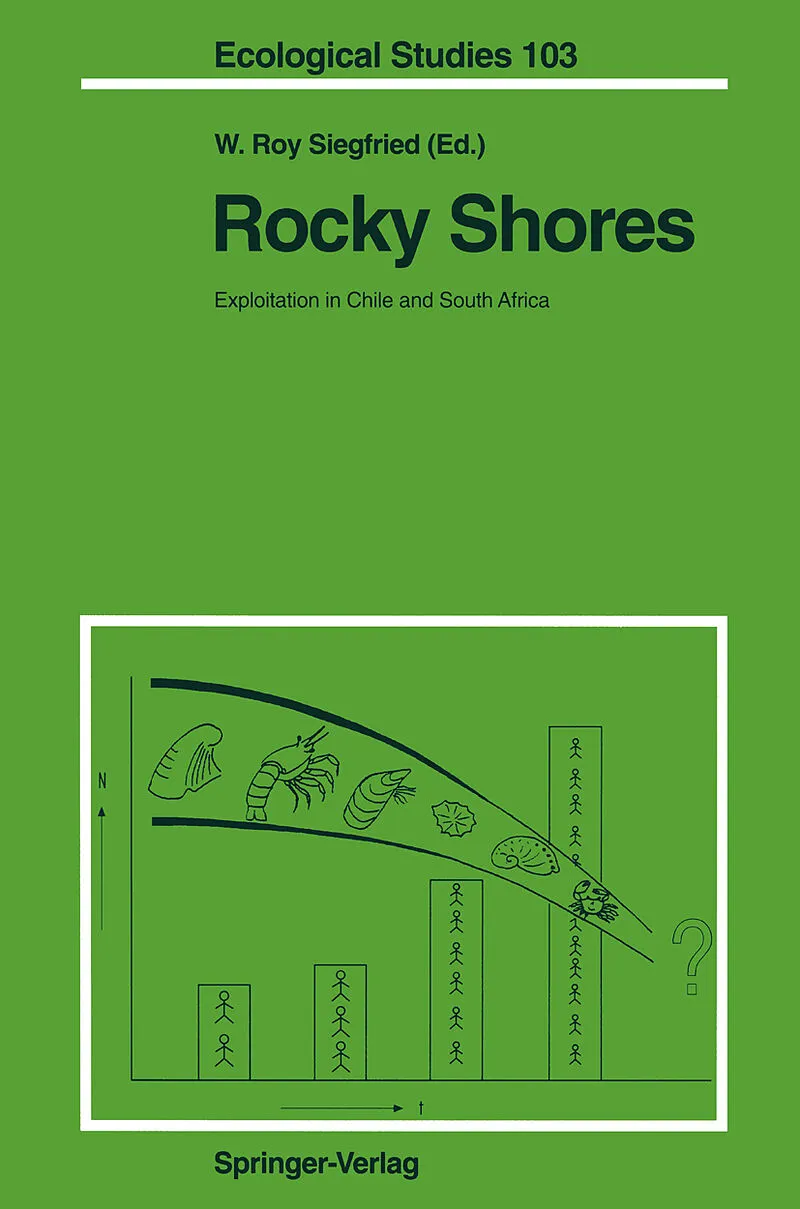
Rocky Shores: Exploitation in Chile and South Africa
Beschreibung
It seems almost trite to introduce this book by saying that man has been exploiting the intertidal zone for food for a long time. Just how long nobody knows for sure but the prehistoric inhabitants of Terra Amata, on the Mediterranean coast near Nice, ate mari...Format auswählen
- Kartonierter EinbandCHF 120.80

Wird oft zusammen gekauft
Andere Kunden kauften auch
Beschreibung
It seems almost trite to introduce this book by saying that man has been exploiting the intertidal zone for food for a long time. Just how long nobody knows for sure but the prehistoric inhabitants of Terra Amata, on the Mediterranean coast near Nice, ate marine intertidal animals at least 300 000 years ago. Similar impressive evidence, going back to at least 100000 years, exists for prehistoric man's consumption of intertidal animals along the South African coast. However, early man's dependence on intertidal resources probably goes back much further in time. During the last 2 million or so years temperate Eurasia experienced some 20 glaciations interspersed by warm equable periods. Different modes of life were open to man in colonizing the northern temperate zone. One was to become a "big-game" hunter, specializing, for example, on mammoths, the other to exploit marine intertidal resources. Of the two, probably the shoreline offered an easier environment for an original scavenging food-gatherer.
Klappentext
The use of marine organisms as food by man is almost as oldas man himself. Treated here are ecological andsocio-economic aspects of the human exploitation ofnearshore and intertidal resources on rocky shores,excluding fish, in South Africa and Chile. Impacts both ontarget species and ecosystem functioning are considered. Thesubsistence and commercial benefits of exploitation arediscussed, and management options are reviewed in thecontexts of conservation biology and socioeconomics. Animportant feature of the book is the intercontinentalcomparison, which highlights both the similarities anddifferences in the types of organisms exploited and theconsequencesfor community-level interaction. The scientificframework for a sound littoral resource management isprovided, and the principles derived cover asufficientlydiverse array of ecological processes to researchers in thefield of littoral exploitation, of marine and communityecology, anthropology and socioeconomics.
Inhalt
1 The Exploitation of Intertidal and Subtidal Biotic Resources of Rocky Shores in Chile and South Africa An Overview.- 1.1 Introduction.- 1.2 Prehistorical and Historical Exploitation.- 1.3 Scope of Modern Exploitation.- References.- 2 Man as a Component of the Littoral Predator Spectrum: A Conceptual Overview.- 2.1 Introduction.- 2.2 Stability and Equilibria in Natural Systems.- 2.3 Co-evolution, Adaptation and Exaptation as Variables in Intertidal Predator-Prey Interactions.- 2.4 Characteristics of Human Predation in the Intertidal Zone.- 2.5 Consequences of Human Predation in the Intertidal Zone.- 2.6 Conclusions.- References.- 3 Seaweeds as Resources.- 3.1 Introduction.- 3.2 The Nature and Historical Development of Seaweed Industries.- 3.3 Ecological Effects of Seaweed Removal.- 3.4 General Patterns.- References.- 4 Intertidal and Subtidal Filter-Feeders in Southern Africa.- 4.1 Introduction.- 4.2 The Principal Filter-Feeders.- References.- 5 Intertidal and Subtidal Grazers.- 5.1 Introduction.- 5.2 The History of Modern Exploitation.- 5.3 Target Species.- 5.4 Direct Effects of Human Exploitation on the Target Species.- 5.5 The Value of Reserves.- 5.6 Changes in Density, Size and Intrinsic Attributes of Grazers.- 5.7 Indirect Interspecific Effects of Exploitation.- 5.8 Ripple Effects and Multispecies Fisheries.- 5.9 Overall Comparisons Between South Africa and Chile.- References.- 6 Exploitation of Two Critical Predators: The Gastropod Concholepas concholepas and the Rock Lobster Jasus lalandii.- 6.1 Introduction.- 6.2 Biology of the Loco.- 6.3 The Loco Fishery.- 6.4 Biology of the Rock Lobster.- 6.5 The Rock Lobster Fishery.- 6.6 The Effects of the Loco on Its Biotic Community.- 6.7 The Effects of the Rock Lobster on Its Biotic Community.- 6.8 ComparisonsBetween the Loco and the Rock Lobster.- 6.9 Alternative Stable States.- References.- 7 Biological Options for the Management of the Exploitation of Intertidal and Subtidal Resources.- 7.1 Introduction.- 7.2 The Vulnerability of Different Species.- 7.3 Objectives of Management.- 7.4 Techniques for Management.- 7.5 Problems Attending Management Methods.- 7.6 Functions of Reserves.- 7.7 Selection Criteria for Reserves.- References.- 8 Socio-Economic Options for the Management of the Exploitation of Intertidal and Subtidal Resources.- 8.1 Introduction.- 8.2 The Problem of Managing Intertidal Resources Through Legislation.- 8.3 Common-Property Exploitation in the Intertidal: A Certain Recipe for Disaster.- 8.4 From Common Property to Private Ownership: The Focus Shifts to Fewer Individuals.- 8.5 The Co-operative Option: Can Social Feedback Lead to Mutual Coercion and Self-Restraint?.- 8.6 Can a Co-operative Management Structure Lead to the Protection of Coastal Resources by Social Feedback?.- 8.7 Private Incentive in the Co-operative System.- 8.8 A Gentle Harvest.- 8.9 Coastal Marine Reserves.- 8.10 The Efficacy of Co-operatives.- 8.11 Conclusions.- References.- Index of Scientific Names.- Locality Index.


