
IHR WARENKORB IST AKTUELL LEER.
Haben Sie noch nichts passendes gefunden? Stöbern Sie durch unser komplettes Sortiment.
Oder melden Sie sich an bzw. registrieren Sie sich.
- Kostenlose Lieferung
- Kauf auf Rechnung
- Ex Libris Tiefpreis
- Filiallieferung und 650+ Abholorte
- Rabatt-Bons als Club-Mitglied
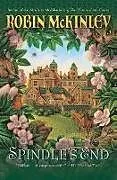
Spindle's End
Beschreibung
Informationen zum Autor Robin McKinley Klappentext Uncover a hidden tale of magic and enchantment in this brilliant ( The New York Times Book Review ) retelling of the classic fairy tale, Sleeping Beauty. Full of humor and romance as well as magic and adventur...Format auswählen
- Kartonierter EinbandCHF 14.60

Wird oft zusammen gekauft
Andere Kunden kauften auch
Beschreibung
Informationen zum Autor Robin McKinley Klappentext Uncover a hidden tale of magic and enchantment in this brilliant ( The New York Times Book Review ) retelling of the classic fairy tale, Sleeping Beauty. Full of humor and romance as well as magic and adventure . . . A spellbinding novel. Booklist , starred review A princess in hiding All the creatures of the forest and field and riverbank knew the infant was special. She was the princess Briar-Rose, spirited away from the evil fairy Pernicia on her name-day. But the curse was cast: Some unknown time in the future, Rosie would prick her finger on the spindle of a spinning wheel and fall into a poisoned sleep from which no one could rouse her. Katriona is the princess's kidnapperand savior. A young fairy, she is apprenticed to and lives with her aunt in the small village of Foggy Bottom. The two of them raise the princess as if she were their own in order to protect her. No other human, not even Rosie herself, knows her true identity. But Pernicia is looking for her, and Pernicia is formidably powerful and tirelessly intent on revenge for a defeat four hundred years old. Two village fairies and all the animals in the realm may not be able to save Rosie. . . . Chapter I The magic in that country was so thick and tenacious that it settled over the land like chalk-dust and over floors and shelves like slightly sticky plaster-dust. (Housecleaners in that country earned unusually good wages.) If you lived in that country, you had to de-scale your kettle of its encrustation of magic at least once a week, because if you didn't, you might find yourself pouring hissing snakes or pond slime into your teapot instead of water. (It didn't have to be anything scary or unpleasant, like snakes or slime, especially in a cheerful householdmagic tended to reflect the atmosphere of the place in which it found itselfbut if you want a cup of tea, a cup of lavender-and-gold pansies or ivory thimbles is unsatisfactory. And while the pansiesput dry in a vasewould probably last a day, looking like ordinary pansies, before they went greyish-dun and collapsed into magic dust, something like an ivory thimble would begin to smudge and crumble as soon as you picked it up.) The best way to do it was to have a fairy as a member of your household, because she (it was usually a she) could lay a finger on the kettle just as it came to a boil (absentminded fairies could often be recognised by a pad of scar-tissue on the finger they favoured for kettle-cleaning) and murmur a few counter-magical words. There would be a tiny inaudible thock, like a seed-pod bursting, and the water would stay water for another week or (maybe) ten days. De-magicking a kettle was much too little and fussy and frequent a job for any professional fairy to be willing to be hired to do it, so if you weren't related to one you had to dig up a root of the dja vine, and dry it, and grate it, producing a white powder rather like plaster dust or magic, and add a pinch of that to your kettle once a week. More often than that would give everyone in the household cramp. You could tell the households that didn't have a fairy by the dja vines growing over them. Possibly because they were always having their roots disturbed, djas developed a reputation for being tricky to grow, and prone to sudden collapse; fortunately they rerooted easily from cuttings. She'd give me her last dja root was a common saying about a good friend. People either loved that country and couldn't imagine living anywhere else, or hated it, left it as soon as they could, and never came back. If you loved it, you loved coming over the last hill before your village one day in early autumn and hearing the corn-field singing madrigals, and that day became a story you told your grandchildren, the way in other countries other grandparents told the ...
Autorentext
Robin McKinley has won various awards and citations for her writing, including the Newbery Medal for The Hero and the Crown and a Newbery Honor for The Blue Sword. Her other books include Sunshine; the New York Times bestseller Spindle's End; two novel-length retellings of the fairy tale Beauty and the Beast, Beauty and Rose Daughter; and a retelling of the Robin Hood legend, The Outlaws of Sherwood. She lives with her husband, the English writer Peter Dickinson.
Klappentext
**Uncover a hidden tale of magic and enchantment in this “brilliant” (The New York Times Book Review) retelling of the classic fairy tale, Sleeping Beauty.
“Full of humor and romance as well as magic and adventure . . . A spellbinding novel.”—Booklist, starred review
**
A princess in hiding
All the creatures of the forest and field and riverbank knew the infant was special. She was the princess Briar-Rose, spirited away from the evil fairy Pernicia on her name-day. But the curse was cast: Some unknown time in the future, Rosie would prick her finger on the spindle of a spinning wheel and fall into a poisoned sleep from which no one could rouse her.
Katriona is the princess’s kidnapper—and savior. A young fairy, she is apprenticed to and lives with her aunt in the small village of Foggy Bottom. The two of them raise the princess as if she were their own in order to protect her. No other human, not even Rosie herself, knows her true identity.
But Pernicia is looking for her, and Pernicia is formidably powerful and tirelessly intent on revenge for a defeat four hundred years old. Two village fairies and all the animals in the realm may not be able to save Rosie. . . .
Leseprobe
Chapter I
The magic in that country was so thick and tenacious that it settled over the land like chalk-dust and over floors and shelves like slightly sticky plaster-dust. (Housecleaners in that country earned unusually good wages.) If you lived in that country, you had to de-scale your kettle of its encrustation of magic at least once a week, because if you didn’t, you might find yourself pouring hissing snakes or pond slime into your teapot instead of water. (It didn’t have to be anything scary or unpleasant, like snakes or slime, especially in a cheerful household—magic tended to reflect the atmosphere of the place in which it found itself—but if you want a cup of tea, a cup of lavender-and-gold pansies or ivory thimbles is unsatisfactory. And while the pansies—put dry in a vase—would probably last a day, looking like ordinary pansies, before they went greyish-dun and collapsed into magic dust, something like an ivory thimble would begin to smudge and crumble as soon as you picked it up.)
The best way to do it was to have a fairy as a member of your household, because she (it was usually a she) could lay a finger on the kettle just as it came to a boil (absentminded fairies could often be recognised by a pad of scar-tissue on the finger they favoured for kettle-cleaning) and murmur a few counter-magical words. There would be a tiny inaudible thock, like a seed-pod bursting, and the water would stay water for another week or (maybe) ten days.
De-magicking a kettle was much too little and fussy and frequent a job for any professional fairy to be willing to be hired to do it, so if you weren’t related to one you had to dig up a root of the dja vine, and dry it, and grate it, producing a white powder rather like plaster dust or magic, and add a pinch of that to your kettle once a week. More often than that would give everyone in the household cramp. You could tell the households that didn’t have a fairy by the dja vines growing over them. Possibly because they were always having their roots disturbed, djas developed a reputation for being tricky to grow, and prone to sudden collapse; fortunately they rerooted easily from cuttings. “She’d give me her last dja root” was a common saying about …