
IHR WARENKORB IST AKTUELL LEER.
Haben Sie noch nichts passendes gefunden? Stöbern Sie durch unser komplettes Sortiment.
Oder melden Sie sich an bzw. registrieren Sie sich.
- Kostenlose Lieferung
- Kauf auf Rechnung
- Ex Libris Tiefpreis
- Filiallieferung und 650+ Abholorte
- Rabatt-Bons als Club-Mitglied
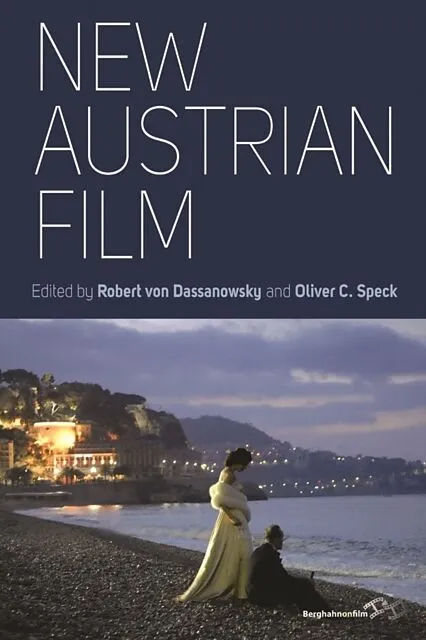
New Austrian Film
Beschreibung
Zusatztext 68803410 Informationen zum Autor Robert von Dassanowsky is Professor of German and Film Studies at the University of Colorado, Colorado Springs and also works as an independent film producer. He is the author of Austrian Cinema: A History (2005), th...Format auswählen
- Fester EinbandCHF 165.20

Wird oft zusammen gekauft
Andere Kunden kauften auch
Beschreibung
Zusatztext 68803410 Informationen zum Autor Robert von Dassanowsky is Professor of German and Film Studies at the University of Colorado, Colorado Springs and also works as an independent film producer. He is the author of Austrian Cinema: A History (2005), the first English language survey of that nation's film art. Other books include The Nameable and the Unnameable: Hugo von Hofmannsthal's "Der Schwierige" Revisited (co-ed., 2011), Quentin Tarantino's Inglourious Basterds: A Manipulation of Metafilm (ed., 2012), World Film Locations: Vienna (ed., 2012), and Screening Transcendence: Film Under Austrofascism and the Hollywood Hope 1933-38 (2014). Klappentext First English language study on New Austrian Film 1990s to the present A collection of critical essays on New Austrian filmmakers and films by international cinema and culture scholars Introduces and examines New Austrian Film in cinematic, cultural, theoretical and film historical contexts Zusammenfassung From its scattered beginnings in the 1980s the Austrian new wave has developed into a cinema with broad international recognition. Inhaltsverzeichnis Introduction: New Austrian Film: The Non-Exceptional Exception PART I: EARLY VISIONS/INFLUENTIAL SITES Chapter 1. "The Experiment is Not Yet Finished": VALIE EXPORT's Avant Garde Film Margarete Lamb-Faffelberger Chapter 2. Franz Antel's Bockerer Series: Constructing the Historical Myth of the Austrian Second Republic Joseph Moser Chapter 3. Historical Drama of a Well-Intentioned Kind: Wolfgang Glück's: 38: Auch das war Wien Felix Tweraser Chapter 4. Cartographies of Identity: Memory and History in Ruth Beckermann's Documentary Films Christina Guenther PART II: BARBARA ALBERT AND THE FEMALE RE-FOCUS Chapter 5. A New Community of Women: Barbara Albert's Nordrand/Northern Skirts Dagmar Lorenz Chapter 6. Metonymic Visions: Globalization, Consumer Culture, and Mediated Affect in Barbara Albert's Böse Zellen/Free Radicals Imke Meyer Chapter 7. Place and Space of Contemporary Austria in Barbara Albert's Feature Films Mary Wauchope Chapter 8. Connecting with Others; Mirroring Difference: Films by Kathrin Resetarits - Director, Actress, and Writer Verena Mund Chapter 9. Not Politics but People: The "Feminine Aesthetic" of Valeska Grisebach and Jessica Hausner Catherine Wheatley PART III: MICHAEL HANEKE AND ULRICH SEIDL: A QUESTION OF SPECTATORIAL DESTINATION Chapter 10. Allegory in Michael Haneke's The Seventh Continent Eva Kuttenberg Chapter 11. "What-Goes-Without-Saying": Michael Haneke's Confrontation with Myths in Funny Games Gabi Wurmitzer Chapter 12. Unseen/Obscene: The (Non-) Framing of the Sexual Act in Michael Haneke's La Pianiste Catherine Wheatley Chapter 13. The Possibility of Desire in a Conformist World: The Cinema of Ulrich Seidl Matthias Frey Chapter 14. Dog Days : Ulrich Seidl's Fin-de-Siecle Vision Justin Vicari Chapter 15. Import and Export: Ulrich Seidl's Indiscreet Anthropology of Migration Martin Brady and Helen Hughes PART IV: RE-VISIONS, SHIFTING CENTERS, CROSSING BORDERS Chapter 16. Crossing Borders in Austrian Cinema at the Turn of the Century: Flicker, Allahyari, Albert Nikhil Sathe Chapter 17. The Resentment of One's Fellow Citizens Intensified into a Strong Sense of Community: Psychology and Misanthropy in T...
In this excellent collection of essays on recent Austrian cinema the first to attempt to define this body of films as a coherent whole the editors Robert Dassanowsky and Oliver C. Speck settle upon the term New Austrian Film*. They have assembled an impressive team of scholars with diverse backgrounds, interests and perspectives to offer 27 chapters analysing various aspects of Austrian cinema at the turn of the 21st century[The editors] have done an exemplary editorial job, bringing the contributions together nicely without forcing them into a monotonous similarity of style, approach, or argument. Like the best examples of the films it analyses,* New Austrian Film**weaves together a wide variety of narratives and perspectives to challenge its audience to see things differently. The volume is as handsome and professionally presented as we have come to expect from the publisher, Berghahn Books. · Senses of Cinema
highly recommended to scholars, students, and film lovers. · Monatshefte
This volume is unreservedly recommended to those who are already familiar with Austrian film to some extent. They will welcome the in-depth treatment and overview of Austrian cinema and its most important representatives. · Media Studies
This is a rich volume that will broaden understanding and appreciation of Austrian film and Austrian-trained filmmakers. · Austrian Studies
A substantive, coherent, and nuanced volume that brings together first-class authors and presents up-to-date research not only by German-speaking but also by foreign scholars - a reflection of the growing awareness of Austrian film internationally The scholarly expertise to be found in these rich contributions make reading this volume a pleasant experience. · RAY Magazine
**Almost all of the essays are well written and argued; they are well worth the attention of anyone interested in contemporary German-language cinema or in the contemporary German-speaking world. They provide a useful introduction to a national cinema that should be of interest to cinephiles everywhere. ·Journal of Austrian Studies
This book opens by referencing a 2006 New York Times**article that characterized Austria as the 'world capital of feel-bad cinema,' and then sets out to complicate this aesthetic, an objective which the diverse and engaging contributions more than accomplish Beyond the pessimistic storylines, it seems, there is another level on which these films function, a productive, didactic and perhaps even optimistic level that is tested and chronicled in this unique and valuable collection of current perspectives. · Austrian Studies Newsletter
**New Austrian Film introduces a generation of Austrian and Austrian-trained Central European filmmakers to world cinema scholars and cinephiles, opening a vista on a resolutely political and multicultural cinema This volume is well-balanced and conceived to provide historical, theoretical, and aesthetic frameworks that will draw both the professional and the enthusiast into a contemporary cinema too long overlooked as a distinctive voice on the international stage. · Katherine Arens, University of Texas at Austin
The essays in this volume provide both historical context and critical analysis for the politically and aesthetically significant filmmaking now being done in Austria. This is an exemplary collection, comprehensive in scope and rich in fascinating detail, that will help bring closer attention to a remarkable national cinema. · Chris Fujiwara, editor of the International Federation of Film Critics journal, Undercurrents
Autorentext
Robert von Dassanowsky is Professor of German and Film Studies at the University of Colorado, Colorado Springs and also works as an independent film producer. He is the author of Austrian Cinema: A History (2005), the first English language survey of that nation's film art. Other books include The Nameable and the Unnameable: Hugo von Hofmannsthal's "Der Schwierige" Revisited (co-ed., 2011), Quentin Tarantino's Inglourious Basterds: A Manipulation of Metafilm (ed., 2012), World Film Locations: Vienna (ed., 2012), and Screening Transcendence: Film Under Austrofascism and the Hollywood Hope 1933-38 (2014).
Klappentext
First English language study on New Austrian Film 1990s to the present A collection of critical essays on New Austrian filmmakers and films by international cinema and culture scholars Introduces and examines New Austrian Film in cinematic, cultural, theoretical and film historical contexts
Zusammenfassung
From its scattered beginnings in the 1980…