
IHR WARENKORB IST AKTUELL LEER.
Haben Sie noch nichts passendes gefunden? Stöbern Sie durch unser komplettes Sortiment.
Oder melden Sie sich an bzw. registrieren Sie sich.
- Kostenlose Lieferung
- Kauf auf Rechnung
- Ex Libris Tiefpreis
- Filiallieferung und 650+ Abholorte
- Rabatt-Bons als Club-Mitglied
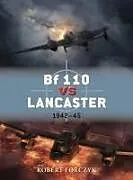
Bf 110 vs Lancaster
Beschreibung
Informationen zum Autor Robert Forczyk has a PhD in International Relations and National Security from the University of Maryland and a strong background in European and Asian military history. He retired as a lieutenant colonel from the US Army Reserves havin...Format auswählen
- Kartonierter Einband (Kt)CHF 24.80

Wird oft zusammen gekauft
Andere Kunden kauften auch
Beschreibung
Informationen zum Autor Robert Forczyk has a PhD in International Relations and National Security from the University of Maryland and a strong background in European and Asian military history. He retired as a lieutenant colonel from the US Army Reserves having served 18 years as an armour officer in the US 2nd and 4th infantry divisions and as an intelligence officer in the 29th Infantry Division (Light). Dr Forczyk is currently a consultant in the Washington, DC area. Klappentext Unable to conduct ground operations on the European continent until Allied strength was marshalled for a full-scale invasion, the British government based its grand strategy in World War II on a protracted campaign of aerial bombardment of Nazi Germany's cities in order to bring the Third Reich to its knees. At the heart of this strategy were the emerging technologies of the heavy bomber, combined with night-navigation and precision-bombing techniques. The RAF introduced the huge four-engined Avro Lancaster in 1942 and used it to spearhead this aerial offensive. In response, the Luftwaffe created an elite nightfighter force based primarily upon the Bf 110 to counter the RAF bombers. Although the Bf 110 had failed miserably as a day fighter over England in 1940, it found its niche as a nightfighter. The Luftwaffe was quick to equip it with airborne radar that allowed it to intercept and destroy Lancasters over Germany. In turn, the RAF adopted countermeasures such as the Monica rearward-looking radar to alert Lancaster crews to the approach of nightfighters. The Lancaster heavy bomber was equipped with rear and dorsal turrets that gave it some chance to drive off nightfighters employing the standard tactic of attacking from above and behind. In May 1943, though, the Luftwaffe suddenly developed a novel technical and tactical approach to attacking RAF bombers - the Schräge Musik weapon system, which mounted upward-firing 20mm cannons in a Bf 110 nightfighter. The new tactic proved amazingly successful, and British bombers could be attacked from below with no warning. Soon, the Luftwaffe decided to equip a third of its nightfighters with Schräge Musik and began to inflict grievous losses upon Lancaster bomber units in the period from August 1943 to March 1944. For its part, the RAF failed to detect the new German tactic for six crucial months, during which time its Lancaster bombers were almost defenceless against this new threat. In time, however, the German advantage of surprise was lost and the RAF developed countermeasures to deal with the new threat. The duel between upgraded Bf 110s and Lancasters in the night skies over Germany became increasingly dominated by cutting-edge technology, which would determine the efficacy of strategic bombing. "This is an excellent book for the modeler or diorama builder with all of the details and photographs. Within the pages you are provided with detailed drawings of the Bf 110 and Lancaster cockpits. COmbine this with all of the other information provded and you have a reference work that is colorful and informative."- Richard Mataka, www.mataka.org Featuring specially commissioned full-colour artwork, this is the gripping story of the struggle between the British Commonwealth's mighty four-engined Avro Lancaster heavy bomber and Nazi Germany's Bf 110 nightfighter, equipped with airborne radar and innovative weaponry, in the night skies over Germany in 1942-45. Zusammenfassung Featuring specially commissioned full-colour artwork, this is the gripping story of the struggle between the British Commonwealth's mighty four-engined Avro Lancaster heavy bomber and Nazi Germany's Bf 110 nightfighter, equipped with airborne radar and innovative weaponry. Inhaltsverzeichnis Introduction Chronology Design and Development Technical Specifications The Strategic Situation The Combatants Combat Statistics and Analysis A...
Vorwort
Featuring specially commissioned full-colour artwork, this is the gripping story of the struggle between the British Commonwealth's mighty four-engined Avro Lancaster heavy bomber and Nazi Germany's Bf 110 nightfighter, equipped with airborne radar and innovative weaponry, in the night skies over Germany in 1942-45.
Klappentext
Unable to conduct ground operations on the European continent until Allied strength was marshalled for a full-scale invasion, the British government based its grand strategy in World War II on a protracted campaign of aerial bombardment of Nazi Germany's cities in order to bring the Third Reich to its knees. At the heart of this strategy were the emerging technologies of the heavy bomber, combined with night-navigation and precision-bombing techniques. The RAF introduced the huge four-engined Avro Lancaster in 1942 and used it to spearhead this aerial offensive. In response, the Luftwaffe created an elite nightfighter force based primarily upon the Bf 110 to counter the RAF bombers. Although the Bf 110 had failed miserably as a day fighter over England in 1940, it found its niche as a nightfighter. The Luftwaffe was quick to equip it with airborne radar that allowed it to intercept and destroy Lancasters over Germany. In turn, the RAF adopted countermeasures such as the Monica rearward-looking radar to alert Lancaster crews to the approach of nightfighters. The Lancaster heavy bomber was equipped with rear and dorsal turrets that gave it some chance to drive off nightfighters employing the standard tactic of attacking from above and behind.
In May 1943, though, the Luftwaffe suddenly developed a novel technical and tactical approach to attacking RAF bombers - the Schräge Musik weapon system, which mounted upward-firing 20mm cannons in a Bf 110 nightfighter. The new tactic proved amazingly successful, and British bombers could be attacked from below with no warning. Soon, the Luftwaffe decided to equip a third of its nightfighters with Schräge Musik and began to inflict grievous losses upon Lancaster bomber units in the period from August 1943 to March 1944. For its part, the RAF failed to detect the new German tactic for six crucial months, during which time its Lancaster bombers were almost defenceless against this new threat. In time, however, the German advantage of surprise was lost and the RAF developed countermeasures to deal with the new threat. The duel between upgraded Bf 110s and Lancasters in the night skies over Germany became increasingly dominated by cutting-edge technology, which would determine the efficacy of strategic bombing.
Inhalt
Introduction
Chronology
Design and Development
Technical Specifications
The Strategic Situation
The Combatants
Combat
Statistics and Analysis
Aftermath
Bibliography
Index