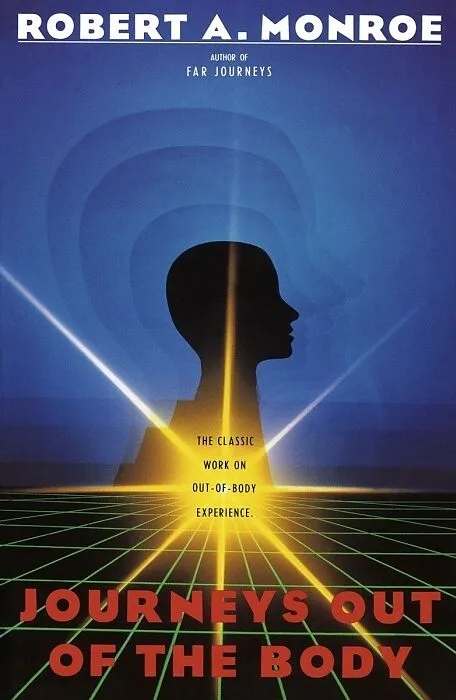
Journeys out of the Body
Beschreibung
Informationen zum Autor Robert Monroe Klappentext The definitive work on the extraordinary phenomenon of out-of-body experiences, by the founder of the internationally known Monroe Institute. Robert Monroe, a Virginia businessman, began to have experiences tha...Format auswählen
- Poche format BCHF 24.00

Wird oft zusammen gekauft
Andere Kunden kauften auch
Beschreibung
Informationen zum Autor Robert Monroe Klappentext The definitive work on the extraordinary phenomenon of out-of-body experiences, by the founder of the internationally known Monroe Institute. Robert Monroe, a Virginia businessman, began to have experiences that drastically altered his life. Unpredictably, and without his willing it, Monroe found himself leaving his physical body to travel via a "second body" to locales far removed from the physical and spiritual realities of his life. He was inhabiting a place unbound by time or death. Praise for Journeys Out of the Body "Monroe's account of his travels, Journeys Out of the Body, jam-packed with parasitic goblins and dead humans, astral sex, scary trips into mind-boggling other dimensions, and practical tips on how to get out of your body, all told with wry humor, quickly became a cult sensation with its publication in 1971, and has been through many printings. Whatever their 'real' explanation, Monroe's trips made for splendid reading." -Michael Hutchinson, author of Megabrain "Robert Monroe's experiences are probably the most intriguing of any person's of our time, with the possible exception of Carlos Castaneda's." -Joseph Chilton Pierce, author of Magical Child "This book is by a person who's clearly a sensible man and who's trying to tell it like it is. No ego trips. Just a solid citizen who's been 'out' a thousand times now and wants to pass his experiences to others." -The Last Whole Earth Catalog Leseprobe Introduction In our action-oriented society, when a man lies down to sleep, he is effectively out of the picture. He will lie still for six to eight hours, so he is not behaving, thinking productively, or doing anything significant. We all know that people dream, but we raise our children to regard dreams and other experiences occurring during sleep as unimportant, as not real in the way that the events of the day are. Thus most people are in the habit of forgetting their dreams, and, on the occasions when they do remember them, they usually regard them as mere oddities. It is true that psychologists and psychiatrists regard the dreams of patients as useful clues to the malfunctioning of their personalities; but even in this application dreams and other nocturnal experiences are generally not treated as real in any sense, but only as some sort of internal data processing of the human computer. There are some important exceptions to this general put-down of dreams, but for the vast majority of people in our society today, dreams are not things that serious people concern themselves with.What are we to make of a person who takes exception to this general belief, who claims to have had experiences during sleep or other forms of unconsciousness that were not only impressive to him, but which he feels were real? Suppose this person claims that on the previous night he had an experience of flying through the air over a large city which he soon recognized as New York. Further, he tells us that not only was this dream intensely vivid, but that he knew at the time that it was not a dream, that he was really in the air over New York City. And this conviction that he was really there sticks with him for the rest of his life, despite our reminding him that a sleeping man couldn't really be flying by himself in the air over New York City. Probably we will ignore a person who makes such a report, or we will politely (or not so politely) inform him that he is becoming a little weak in the head or crazy, and suggest that he see a psychotherapist. If he is insistent about the reality of his experience, especially if he has other strange experiences too, we may with the best of intentions see about committing him to a mental hospital. Our traveler, on the other hand, if he is smart, will quickly learn not to talk abo...
Autorentext
Robert Monroe
Klappentext
The definitive work on the extraordinary phenomenon of out-of-body experiences, by the founder of the internationally known Monroe Institute.
Robert Monroe, a Virginia businessman, began to have experiences that drastically altered his life. Unpredictably, and without his willing it, Monroe found himself leaving his physical body to travel via a "second body" to locales far removed from the physical and spiritual realities of his life. He was inhabiting a place unbound by time or death.
Praise for Journeys Out of the Body
"Monroe's account of his travels, Journeys Out of the Body, jam-packed with parasitic goblins and dead humans, astral sex, scary trips into mind-boggling other dimensions, and practical tips on how to get out of your body, all told with wry humor, quickly became a cult sensation with its publication in 1971, and has been through many printings. Whatever their 'real' explanation, Monroe's trips made for splendid reading." -Michael Hutchinson, author of Megabrain
"Robert Monroe's experiences are probably the most intriguing of any person's of our time, with the possible exception of Carlos Castaneda's." -Joseph Chilton Pierce, author of Magical Child
"This book is by a person who's clearly a sensible man and who's trying to tell it like it is. No ego trips. Just a solid citizen who's been 'out' a thousand times now and wants to pass his experiences to others." -The Last Whole Earth Catalog
Leseprobe
Introduction
In our action-oriented society, when a man lies down to sleep, he is effectively out of the picture. He will lie still for six to eight hours, so he is not “behaving,” “thinking productively,” or doing anything “significant.” We all know that people dream, but we raise our children to regard dreams and other experiences occurring during sleep as unimportant, as not real in the way that the events of the day are. Thus most people are in the habit of forgetting their dreams, and, on the occasions when they do remember them, they usually regard them as mere oddities.
It is true that psychologists and psychiatrists regard the dreams of patients as useful clues to the malfunctioning of their personalities; but even in this application dreams and other nocturnal experiences are generally not treated as real in any sense, but only as some sort of internal data processing of the human computer.
There are some important exceptions to this general put-down of dreams, but for the vast majority of people in our society today, dreams are not things that serious people concern themselves with.What are we to make of a person who takes exception to this general belief, who claims to have had experiences during sleep or other forms of unconsciousness that were not only impressive to him, but which he feels were real?
Suppose this person claims that on the previous night he had an experience of flying through the air over a large city which he soon recognized as New York. Further, he tells us that not only was this “dream” “intensely vivid, but that he knew at the time that it was not a dream, that he was really in the air over New York City. And this conviction that he was really there sticks with him for the rest of his life, despite our reminding him that a sleeping man couldn’t really be flying by himself in the air over New York City.
Probably we will ignore a person who makes such a report, or we will politely (or not so politely) inform him that he is becoming a little weak in the head or crazy, and suggest that he see a psychotherapist. If he is insistent about the reality of his experience, especially if he has other strange experiences too, we may with the best of intentions see about committing him to a mental hospital.
Our “traveler,” on the other hand, if he is smart, will quickly learn not to talk about his experiences. The only problem with that, as I have found from talking to many such people, is that he may worry about whether he’s going cra…