
IHR WARENKORB IST AKTUELL LEER.
Haben Sie noch nichts passendes gefunden? Stöbern Sie durch unser komplettes Sortiment.
Oder melden Sie sich an bzw. registrieren Sie sich.
- Kostenlose Lieferung
- Kauf auf Rechnung
- Ex Libris Tiefpreis
- Filiallieferung und 650+ Abholorte
- Rabatt-Bons als Club-Mitglied
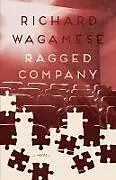
Ragged Company
Beschreibung
Four chronically homeless people-Amelia One Sky, Timber, Double Dick and Digger-seek refuge in a warm movie theatre when a severe Arctic Front descends on the city. During what is supposed to be a one-time event, this temporary refuge transfixes them. They fal...Format auswählen
- Poche format BCHF 25.50
Wird oft zusammen gekauft
Andere Kunden kauften auch
Beschreibung
Four chronically homeless people-Amelia One Sky, Timber, Double Dick and Digger-seek refuge in a warm movie theatre when a severe Arctic Front descends on the city. During what is supposed to be a one-time event, this temporary refuge transfixes them. They fall in love with this new world, and once the weather clears, continue their trips to the cinema. On one of these outings they meet Granite, a jaded and lonely journalist who has turned his back on writing "the same story over and over again" in favour of the escapist qualities of film, and an unlikely friendship is struck. A found cigarette package (contents: some unsmoked cigarettes, three $20 bills, and a lottery ticket) changes the fortune of this struggling set. The ragged company discovers they have won $13.5 million, but none of them can claim the money for lack proper identification. Enlisting the help of Granite, their lives, and fortunes, become forever changed. Ragged Company is a journey into both the future and the past. Richard Wagamese deftly explores the nature of the comforts these friends find in their ideas of "home," as he reconnects them to their histories.
#8220;Wagamese writes with brutal clarity…. [and] finds alleviating balance through magical legend and poetic swells of sensate imagery.”
— The Globe and Mail
“[Ragged Company] has … melancholy tenderness and spiritual yearning. Wagamese evokes each character’s consciousness and history with compassion, deep understanding and a knowledge of street life.”
— Vancouver Sun
Autorentext
RICHARD WAGAMESE, an Ojibway from the Wabaseemoong First Nation in northwestern Ontario, was one of Canada's foremost writers. His acclaimed, bestselling novels included Keeper'n Me; Indian Horse, which was a Canada Reads finalist, winner of the inaugural Burt Award for First Nations, Métis and Inuit Literature, and made into a feature film; and Medicine Walk. He was also the author of acclaimed memoirs, including For Joshua; One Native Life; and One Story, One Song, which won the George Ryga Award for Social Awareness in Literature; as well as a collection of personal reflections, Embers, which received the Bill Duthie Booksellers' Choice Award. He won numerous awards and recognition for his writing, including the National Aboriginal Achievement Award for Media and Communications, the Canada Council for the Arts Molson Prize, the Canada Reads People's Choice Award, and the Writers' Trust of Canada's Matt Cohen Award. Wagamese died on March 10, 2017, in Kamloops, B.C.
Zusammenfassung
Four chronically homeless people–Amelia One Sky, Timber, Double Dick and Digger–seek refuge in a warm movie theatre when a severe Arctic Front descends on the city. During what is supposed to be a one-time event, this temporary refuge transfixes them. They fall in love with this new world, and once the weather clears, continue their trips to the cinema. On one of these outings they meet Granite, a jaded and lonely journalist who has turned his back on writing “the same story over and over again” in favour of the escapist qualities of film, and an unlikely friendship is struck.
A found cigarette package (contents: some unsmoked cigarettes, three $20 bills, and a lottery ticket) changes the fortune of this struggling set. The ragged company discovers they have won $13.5 million, but none of them can claim the money for lack proper identification. Enlisting the help of Granite, their lives, and fortunes, become forever changed.
Ragged Company is a journey into both the future and the past. Richard Wagamese deftly explores the nature of the comforts these friends find in their ideas of “home,” as he reconnects them to their histories.
Leseprobe
*Is it you?
Yes.
Where have you been?
Travelling.
Yes. Of course. Where did you get to?
Everywhere. Everywhere I always wanted to go, everywhere I ever heard about.
Did you like it?
I loved it. I never knew the world was so big or that it held so much.
Yes. It’s an incredible thing.
Absolutely.
What did you think about all that time?
Everything. I guess I thought about everything. But I thought about one thing the most.
What was that?
A movie. Actually, a line from a movie.
Really?
Yes. Funny, isn’t it? Out of all the things I could have thought about over and over, I thought about a line from a movie.
Which one?
Casablanca. When Bogie says to Bergman, “The world don’t amount to a hill of beans to two small people like us?” Remember that?
Yes. I remember. Why?
Because that’s what I think it’s all about in the end.
What?
Well, you live, you experience, you become, and sometimes, at the end of things, maybe you feel deprived, like maybe you missed out somehow, like maybe there was more you could have–should have–had. You know?
Yes. Yes, I do.
But the thing is, at least you get to finger the beans.
Yes. I like that–you get to finger the beans.
Do you ever do that?
All the time.
Me too.
Let’s do that now. Let’s hear all of it all over again.
Okay. Do you remember it?
All of it. Everything. Every moment.
Then that’s all we need.
The beans.
Yes. The beans.
*
Book One
Shelter
One For The Dead
It was Irwin that started all the dying. He was my eldest brother, and when I was a little girl he was my hero, the one whose shoulders I was always carried on and whose funny faces made me smile even when I didn’t want to. There were five of us. We lived on an Ojibway reserve called Big River and our family, the One Sky family, went back as far in tribal history as anyone could recall. I was named Amelia, after my grandmother. We were a known family–respected, honoured–and Irwin was our shining hope. I was the only girl, and Irwin made me feel special, like I was his hero. Love is such a simple word, so limited, that I never use it when I think of him, never consider it when I remember what I lost.
He was a swimmer. A great one. That’s not surprising when you consider that our tribal clan was the Fish Clan. But Irwin swam like an otter. Like he loved it. Like the water was a second skin. No one ever beat my brother in a race, though there were many who tried. Even grown men–bigger, stronger kickers–would never see anything but the flashing bottoms of my brother’s feet. He was a legend.
The cost of a tribal life is high and our family paid in frequent times of hunger. Often the gill net came up empty, the moose wouldn’t move to the marshes, and the snares stayed set. The oldest boys left school for work, to make enough to get us through those times. They hired themselves out to a local farmer to clear bush and break new ground. It was man’s work, really, and Irwin and John were only boys, so the work took its toll.
It was hot that day. Hot as it ever got in those summers of my girlhood, and even the farmer couldn’t bear up under the heat. He let my brothers go midway through the afternoon and they walked the three miles back to our place. Tired as they were, all Irwin could think about was a swim in the river. So a big group of us kids headed toward the broad, flat stretch below the rapids where we’d all learned to swim. I was allowed to go because there were so many of us.
There was a boy named Ferlin Axe who had challenged my brother to race hundreds of times and had even come close a few of those times. That day, he figured Irwin would be so tired from the heat and the work that he could win in one of two ways. First, he could beat Irwin because he was so tired, or second, Irwin could decline the challenge. Either way was a vic…