
IHR WARENKORB IST AKTUELL LEER.
Haben Sie noch nichts passendes gefunden? Stöbern Sie durch unser komplettes Sortiment.
Oder melden Sie sich an bzw. registrieren Sie sich.
- Kostenlose Lieferung
- Kauf auf Rechnung
- Ex Libris Tiefpreis
- Filiallieferung und 650+ Abholorte
- Rabatt-Bons als Club-Mitglied
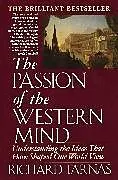
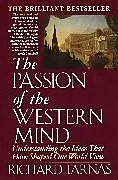
Passion of the Western Mind
Beschreibung
Zusatztext "No other such overview provides! in equal compass! as clear and cogent a survey. Its scholarship is impeccable....For its length it is the best intellectual history of the West I have ever seen." --Huston Smith! Graduate Theological Union at Berkel...Format auswählen
- BroschiertCHF 30.70

Wird oft zusammen gekauft
Andere Kunden kauften auch
Beschreibung
Zusatztext "No other such overview provides! in equal compass! as clear and cogent a survey. Its scholarship is impeccable....For its length it is the best intellectual history of the West I have ever seen." --Huston Smith! Graduate Theological Union at Berkeley "The most lucid and concise presentation I have read of the grand lines of what every student should know about the history of Western thought."--Joseph Campbell Informationen zum Autor Richard Tarnas is a Harvard-educated historian and professor of philosophy and psychology, and the author of The Passion of the Western Mind. In 2006 he published Cosmos and Psyche: Intimations of a New World View , which received the Book of the Year Prize from the Scientific and Medical Network in the UK . He is the founding director of the Philosophy, Cosmology, and Consciousness graduate studies program at the California Institute of Integral Studies, and also teaches on the faculty of Pacifica Graduate Institute. Klappentext "[This] magnificent critical survey, with its inherent respect for both the 'Westt's mainstream high culture' and the 'radically changing world' of the 1990s, offers a new breakthrough for lay and scholarly readers alike....Allows readers to grasp the big picture of Western culture for the first time." SAN FRANCISCO CHRONICLE Here are the great minds of Western civilization and their pivotal ideas, from Plato to Hegel, from Augustine to Nietzsche, from Copernicus to Freud. Richard Tarnas performs the near-miracle of describing profound philosophical concepts simply but without simplifying them. Ten years in the making and already hailed as a classic, THE PASSION OF THE WESERN MIND is truly a complete liberal education in a single volume.The Greek World View To approach what was distinctive in a vision as complex and protean as that of the Greeks, let us begin by examining one of its most striking characteristicsa sustained, highly diversified tendency to interpret the world in terms of archetypal principles. This tendency was in evidence throughout Greek culture from the Homeric epics onward, though it first emerged in philosophically elaborate form in the intellectual crucible of Athens between the latter part of the fifth century B.C. and the middle of the fourth. Associated with the figure of Socrates, it there received its foundational and in some respects definitive formulation in the dialogues of Plato. At its basis was a view of the cosmos as an ordered expression of certain primordial essences or transcendent first principles, variously conceived as Forms, Ideas, universals, changeless absolutes, immortal deities, divine archai, and archetypes. Although this perspective took on a number of distinct inflections, and although there were important countercurrents to this view, it would appear that not only Socrates, Plato, and Aristotle, and Pythagoras before them and Plotinus after, but indeed Homer and Hesiod, Aeschylus and Sophocles all expressed something like a common vision, reflecting a typically Greek propensity to see clarifying universals in the chaos of life. Speaking in these broad terms, and mindful of the inexactness of such generalities, we may say that the Greek universe was ordered by a plurality of timeless essences which underlay concrete reality, giving it form and meaning. These archetypal principles included the mathematical forms of geometry and arithmetic; cosmic opposites such as light and dark, male and female, love and hate, unity and multiplicity; the forms of man (anthropos) and other living creatures; and the Ideas of the Good, the Beautiful, the Just, and other absolute moral and aesthetic values. In the pre-philosophical Greek mind, these archetypal principles took the form of mythic personifications such as Eros, Chaos, Heaven and Earth (Ouranos and Gaia), as well as more fully personified figures such as Zeus, Promethe...
"No other such overview provides, in equal compass, as clear and cogent a survey. Its scholarship is impeccable....For its length it is the best intellectual history of the West I have ever seen." --Huston Smith, Graduate Theological Union at Berkeley
"The most lucid and concise presentation I have read of the grand lines of what every student should know about the history of Western thought."--Joseph Campbell
Autorentext
Richard Tarnas is a Harvard-educated historian and professor of philosophy and psychology, and the author of The Passion of the Western Mind. In 2006 he published Cosmos and Psyche: Intimations of a New World View, which received the Book of the Year Prize from the Scientific and Medical Network in the UK*. *He is the founding director of the Philosophy, Cosmology, and Consciousness graduate studies program at the California Institute of Integral Studies, and also teaches on the faculty of Pacifica Graduate Institute.
Klappentext
"[This] magnificent critical survey, with its inherent respect for both the 'Westt's mainstream high culture' and the 'radically changing world' of the 1990s, offers a new breakthrough for lay and scholarly readers alike....Allows readers to grasp the big picture of Western culture for the first time."
SAN FRANCISCO CHRONICLE
Here are the great minds of Western civilization and their pivotal ideas, from Plato to Hegel, from Augustine to Nietzsche, from Copernicus to Freud. Richard Tarnas performs the near-miracle of describing profound philosophical concepts simply but without simplifying them. Ten years in the making and already hailed as a classic, THE PASSION OF THE WESERN MIND is truly a complete liberal education in a single volume.
Leseprobe
The Greek World View
To approach what was distinctive in a vision as complex and protean as that of the Greeks, let us begin by examining one of its most striking characteristics—a sustained, highly diversified tendency to interpret the world in terms of archetypal principles. This tendency was in evidence throughout Greek culture from the Homeric epics onward, though it first emerged in philosophically elaborate form in the intellectual crucible of Athens between the latter part of the fifth century B.C. and the middle of the fourth. Associated with the figure of Socrates, it there received its foundational and in some respects definitive formulation in the dialogues of Plato. At its basis was a view of the cosmos as an ordered expression of certain primordial essences or transcendent first principles, variously conceived as Forms, Ideas, universals, changeless absolutes, immortal deities, divine archai, and archetypes. Although this perspective took on a number of distinct inflections, and although there were important countercurrents to this view, it would appear that not only Socrates, Plato, and Aristotle, and Pythagoras before them and Plotinus after, but indeed Homer and Hesiod, Aeschylus and Sophocles all expressed something like a common vision, reflecting a typically Greek propensity to see clarifying universals in the chaos of life.
Speaking in these broad terms, and mindful of the inexactness of such generalities, we may say that the Greek universe was ordered by a plurality of timeless essences which underlay concrete reality, giving it form and meaning. These archetypal principles included the mathematical forms of geometry and arithmetic; cosmic opposites such as light and dark, male and female, love and hate, unity and multiplicity; the forms of man (anthrōpos) and other living creatures; and the Ideas of the Good, the Beautiful, the Just, and other absolute moral and aesthetic values. In the pre-philosophical Greek mind, these archetypal principles took the form of mythic personifications such as Eros, Chaos, Heaven and Earth (Ouranos and Gaia), as well as more fully personified figures such as Zeus, Prometheus, and Aphrodite. In this perspective, every aspect of existence was patterned and permeated by such fundamenta…