Haben Sie noch nichts passendes gefunden? Stöbern Sie durch unser komplettes Sortiment.
Oder melden Sie sich an bzw. registrieren Sie sich.


Beschreibung
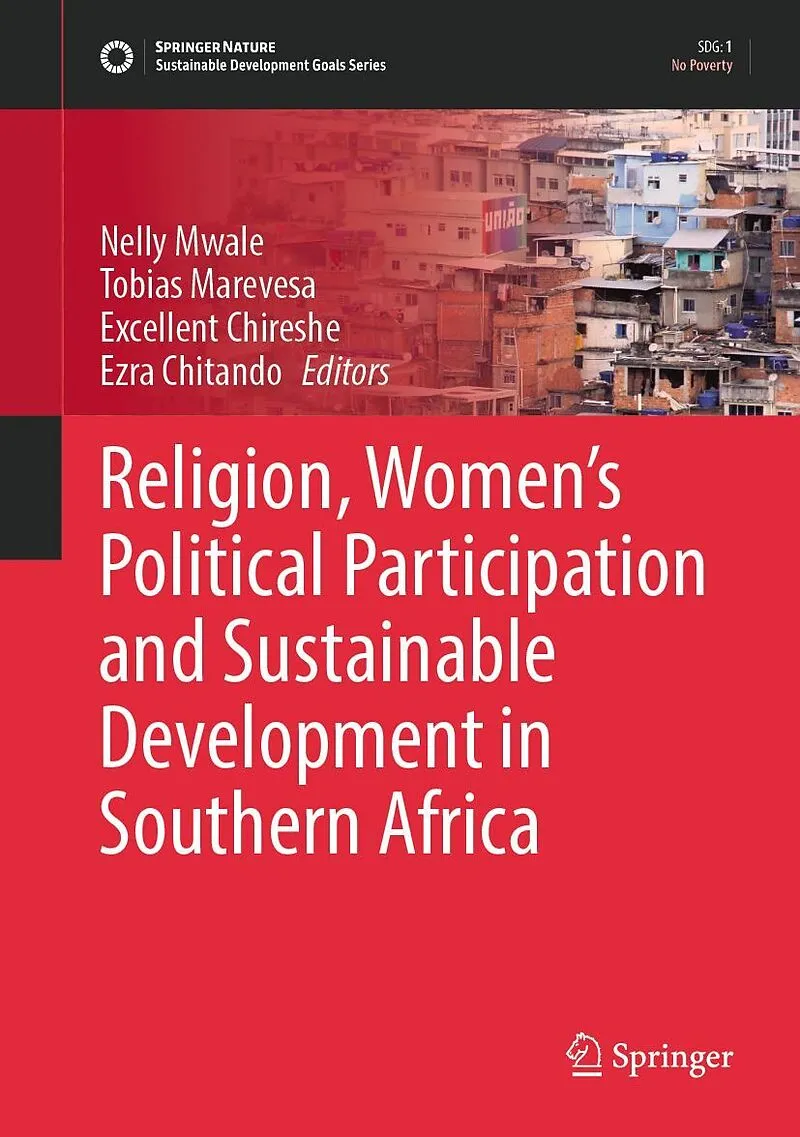
This collection focuses specifically on the intersection of religion and women's equal access to political power. Drawing on case studies from Southern Africa, and engaging multiple religious traditions: including Christianity, Islam, and African Indigenous R...
This collection focuses specifically on the intersection of religion and women's equal access to political power. Drawing on case studies from Southern Africa, and engaging multiple religious traditions: including Christianity, Islam, and African Indigenous Religions, the volume offers a critical and comparative analysis of how faith-based contexts shape women's political agency. It serves as both a diagnostic and forward-looking resource, offering valuable insights for scholars, policymakers, and practitioners committed to gender justice in religious and political spheres.
The volume draws on multi-disciplinary methodologies and empirical evidence from different countries in Africa Brings out valuable lessons towards the realisation of gender equality in relation to women's political participation The volume is unique as it shifts the focus to a special target within SDG 5 on women's political participation.
Autorentext
Nelly Mwale is a senior lecturer in the department of Religious Studies at the University of Zambia. Her Research interests are religion in the public sphere, religion, gender and development, religion and education, church history, religion and environment and African Indigenous Religions. She is the co-editor for the Journal for the Study of Religion. She is also a member of the African Association for the Study of Religion (AASR), Association for the Study of Religion in Southern Africa (ASRSA), The Circle of Concerned African Women Theologians and African Consortium for Law and Religion Studies (ACLARS).
Tobias Marevesa is a New Testament Senior Lecturer in the Department of New Testament and Related literature, under the Faculty of Theology and Religion at the University of Pretoria where he teaches New Testament Studies and New Testament Greek. He holds a PhD with the University of Pretoria in South Africa. His areas of interest are New Testament studies and politics, Pentecostal expressions in Zimbabwean Christianity, culture, human rights, and gender-based violence. He has also published in the area of New Testament studies and conflict-resolution in the Zimbabwean political landscape.
Excellent Chireshe is an Associate Professor of Religion and Gender in the Department of Ethics, Philosophy, Religion and Theology of Great Zimbabwe University. She is also a research fellow at the University of South Africa (UNISA) in the Research Institute for Theology and Religion. She holds a PhD in Religious Studies from the University of South Africa. Her research interests include religion and gender, and the sociology of religion. She is a member of the following professional associations: The Circle of Concerned African Women Theologians, Association for the Study of Religion in Southern Africa (ASRSA), African Consortium for Law and Religion Studies (ACLARS), and Southern African Society for Education (SASE). Furthermore, she has attended and presented papers at several local and international conferences.
Ezra Chitando is Professor of Religious Studies at the University of Zimbabwe and Extraordinary Professor at the Desmond Tutu Centre for Religion and Social Justice at the University of the Western Cape (South Africa). He has published on religion, gender, culture, politics, health, climate change, leadership and development.
Inhalt
Chapter 1. Religion, Women's Political Participation and Sustainable Development: A Glimpse from Southern Africa (Mwale, Marevesa, Chireshe, and Chitando).- Part 1: Religion, Women's Political Participation and Gender Equality.- Chapter 2. The Role of Religion in Women's Political Involvement in the Democratic Republic of Congo (Umubyeyi).- Chapter 3. Religion, Women and Political Participation in Zimbabwe: Elections And Beyond (Chireshe).- Chapter 4. Gendered Religious Politics in Zambia (2016-2021) (Mulima, Muyuni, Moonga, and Tembo).- Chapter 5. The Role of Religion in Women's Political Involvement in Zambia: An Analysis of Women's Voices in Funeral Cultural and Religious Discourses (Masaiti).- Chapter 6. The Dominant Influence of Religion and Male Leadership on Females' Political Roles in Zimbabwe: Towards Sustainable Development and Reduction of Gender-Based Violence (Rugwiji).- Chapter 7. Harmonising Cultural Contestations in Women's Political Participation in Southern Africa: Sociological and Cultural Perspectives (Ringson and Gwenzi).- Chapter 8. The Intersectionality of Gender, Religion, and Impeding Political Stereotypes of Women in Contemporary Politics: A Study of Selected African Countries (Ibrahim and Iddrisu).- Part 2: Christianity, Women's Political Participation and Sustainable Development.- Chapter 9. Re-Reading Galatians 3:28 In Light of Narratives on Women's Political Participation and Violence in Zimbabwe (Marevesa).- Chapter 10. Dominion Theology and Gender Equality: A Framework for Sustainable Development. (Jasper).- Chapter 11. Women, Christianity, and Politics in Nigeria: Pathways to Sustainable Development (Saleh JNR).- Chapter 12. Christianity and Women's Political Participation in Ghana (Nyarko-Mensah and Zogbator).- Chapter 13. Silencing Women's Political Ambitions: A Socio-Religious Analysis in Zimbabwe (Mundenda).- Chapter 14. Religious Beliefs of Isaiah Shembe and Women's Political Participation in South Africa (Msomi and Dlamini).- Part 3: African Indigenous Religions and Knowledge Systems.- Chapter 15. African Indigenous Religion as a Platform for Women's Political Participation: Nehanda and Queen Modjadji (Makaudze).- Chapter 16. Shona Traditional Religion and Gender in Literature (Viriri).- Chapter 17. From Rituals to Rights: Indigenous Religions and Women's Political Participation in Zimbabwe (Nhambure).- Chapter 18. Hunhu/Ubuntu, Women's Political Involvement and Sustainable Development in Zimbabwe (Rutsviga).- Chapter 19. Conclusion: Towards The Future in Religion, Gender, Women's Political Participation and Sustainable Development in Southern Africa (Chireshe, Marevesa, Mwale and Chitando).