
IHR WARENKORB IST AKTUELL LEER.
Haben Sie noch nichts passendes gefunden? Stöbern Sie durch unser komplettes Sortiment.
Oder melden Sie sich an bzw. registrieren Sie sich.
- Kostenlose Lieferung
- Kauf auf Rechnung
- Ex Libris Tiefpreis
- Filiallieferung und 650+ Abholorte
- Rabatt-Bons als Club-Mitglied
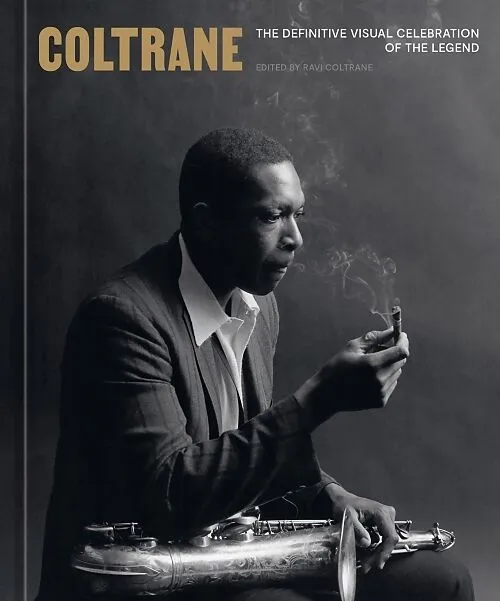
Coltrane
Beschreibung
The definitive photographic celebration of John Coltrane''s life and music, featuring exclusive contributions written by Ravi Coltrane, Wayne Coyne, Dev Hynes, Phil Lesh, Julie Mehretu, Carlos Santana, and Patti Smith. John Coltrane''s impact on music and cult...Format auswählen
- Fester EinbandCHF 54.40

Wird oft zusammen gekauft
Andere Kunden kauften auch
Beschreibung
The definitive photographic celebration of John Coltrane''s life and music, featuring exclusive contributions written by Ravi Coltrane, Wayne Coyne, Dev Hynes, Phil Lesh, Julie Mehretu, Carlos Santana, and Patti Smith. John Coltrane''s impact on music and culture endures far beyond his prolific career and untimely death in 1967 at age forty. His masterful saxophone style and groundbreaking jazz compositions had a profound effect on the evolution of music through the decades, and it continues to resonate across styles and genres to this day. This beautiful photography book offers an intimate and in-depth look at his life with over one hundred expertly curated images taken by renowned photographers such as Francis Wolff and Chuck Stewart. The selection includes outtakes from the album cover photoshoot for <Ascension<, in-studio candid shots taken during the recording of <Blue Train, <a glimpse backstage with Alice Coltrane before their first performance together, and more. <Coltrane <is a visual celebration of John Coltrane''s musical legacy, complete with an introduction by his son and fellow musician Ravi Coltrane, along with personal stories from other musicians, artists, and writers who have been moved by his work.
Autorentext
Ravi Coltrane is a critically acclaimed Grammy-nominated saxophonist, bandleader, and composer. Born on Long Island, the second son of John Coltrane and Alice Coltrane, Ravi was named after Indian sitar legend Ravi Shankar. He was raised in Los Angeles, where his family moved after his father's death in 1967. Ravi maintains a fast-paced touring, recording, composing, and performance schedule. He leads the effort to restore the John Coltrane Home in Dix Hills, Long Island, and presides over important reissues of his parents' recordings.
Klappentext
The definitive photographic celebration of John Coltrane's life and music, featuring exclusive contributions written by Ravi Coltrane, Wayne Coyne, Dev Hynes, Phil Lesh, Julie Mehretu, Carlos Santana, and Patti Smith.
John Coltrane's impact on music and culture endures far beyond his prolific career and untimely death in 1967 at age forty. His masterful saxophone style and groundbreaking jazz compositions had a profound effect on the evolution of music through the decades, and it continues to resonate across styles and genres to this day.
This beautiful photography book offers an intimate and in-depth look at his life with over one hundred expertly curated images taken by renowned photographers such as Chuck Stewart and Francis Wolff. The selection includes outtakes from the album cover photoshoot for Ascension, in-studio candid shots taken during the recording of Blue Train, a glimpse backstage with Alice Coltrane before their first performance together, and more. Coltrane is a visual celebration of John Coltrane's musical legacy, complete with an introduction by his son and fellow musician Ravi Coltrane, along with personal stories from other musicians, artists, and writers who have been moved by his work.
Leseprobe
John Coltrane's Music Spoke My Words
Kareen Abdul-Jabbar
When I was about fourteen years old living in New York City, I used to tune into WJZ (later WABC) and listen to “the dean of jazz radio,” Symphony Sid, a Jewish DJ who was responsible for introducing and promoting some of the greatest jazz musicians, including Nat King Cole, Sarah Vaughn, Charlie Parker, and Billie Eckstine. Symphony Sid, whose real name was Sid Torin, had such an infectious passion for jazz that he is credited with popularizing bebop through his show, which reached thirty states.
I didn’t know about any of that. I tuned in to hear John Coltrane’s album My Favorite Things, which Symphony Sid played every night. And every night I eagerly tuned the radio dial to eighty so I could be transported by the edgy energy of Coltrane’s sassy saxophone.
This was not my first exposure to jazz. My father was a jazz musician who had graduated from Juilliard. And even though he was an imposing transit cop by day, he was still a swinging musician by night, playing with the likes of Sonny Rollins and Bill Lee (director Spike Lee’s father). Sometimes he took me with him to a gig and introduced me to his fellow musicians, including Tito Puente, Kenny Durham, and Ernie Henry. Ordinarily, my father was a quiet man, miserly with words as if each one cost him money. But when he played his music, he was speaking all the words he’d stored in his emotional vault. And the notes he bent and blasted spoke in a way that words could never quite equal. I heard what he had to say.
I, too, was a quiet person. My attempts at being a musician didn’t bear any sweet fruit, just some sour notes. If I couldn’t speak through music, listening to jazz was like hearing all my inner thoughts and feelings being spoken aloud. And no one spoke the mystical language of young Kareem better than John Coltrane.
I don’t think I was aware at the time that the title song from that album, My Favorite Things, originated in the 1959 Broadway musical. So when I first heard Julie Andrews’s chipper version, which has become a perennial Christmas hit, it was nothing like my experience with Coltrane’s version. Andrews’s song was whimsical and childlike (as befits lyrics about “whiskers on kittens”), while Coltrane blared a much more mature song that conveyed both longing and celebration. When Andrews’s version ended, the musical experience was over. But when Coltrane’s ended, the listener was still riding the aftermath as it lingered in their minds and bodies.
I finally met Coltrane when I was a freshman at UCLA at the famous It Club on West Washington Boulevard. I’d already heard of the It Club from Thelonious Monk’s 1964 album Live at the It Club. And I knew Miles Davis, another of my favorites, played there. There were also rumors that the owner, John McClain, had been friends with gangster “Bugsy” Siegel. For a college freshman, that just made it hipper.
After their set, I approached the band because the drummer, Elvin Jones, was friends with my uncle Steve. Elvin was happy to see me and introduced me to the boys in the band, including John Coltrane, who was as gracious as I could have hoped for. Jimmy Garrison, the bass player, even gave me an impromptu bass lesson, which, for white kids my age, would be akin to having Paul McCartney pull you onstage for a bass lesson.
That was the only time I saw him in person, though I did see his band several times again. A year and a half later, on July 17, 1967, John Coltrane died of liver cancer. He was only forty years old.
For me, fifty-four years have passed since I saw him, yet he still has the same power over me that he had when I was fourteen and tuning in nightly to Symphony Sid. In those five and a half decades, I’ve had time to reflect on why Coltrane had such an enduring effect on me and on his many fans.
To me, the essence of Coltrane is that he elevated every song he covered to a richer, more complex level. He took songs that were merely entertaining and made them inspiring. And his own compositions had that same innovative DNA that left the listener feeling like they’d descended deeper into a song than was possible and yet came out uplifted and invigorated. Those feelings are what inspired me to name my autobiography after one of his iconic compositions, “Giant Steps.”
Of course, today I recognize the irony that, while I’d used the title to poke fun at my height as well as my progress through life, it was really Coltrane who was taking giant steps and that with each massive stride forward, he was taking jazz and Black culture with him. He had been my voice when I was growing up, but he was also the voice o…