
IHR WARENKORB IST AKTUELL LEER.
Haben Sie noch nichts passendes gefunden? Stöbern Sie durch unser komplettes Sortiment.
Oder melden Sie sich an bzw. registrieren Sie sich.
- Kostenlose Lieferung
- Kauf auf Rechnung
- Ex Libris Tiefpreis
- Filiallieferung und 650+ Abholorte
- Rabatt-Bons als Club-Mitglied
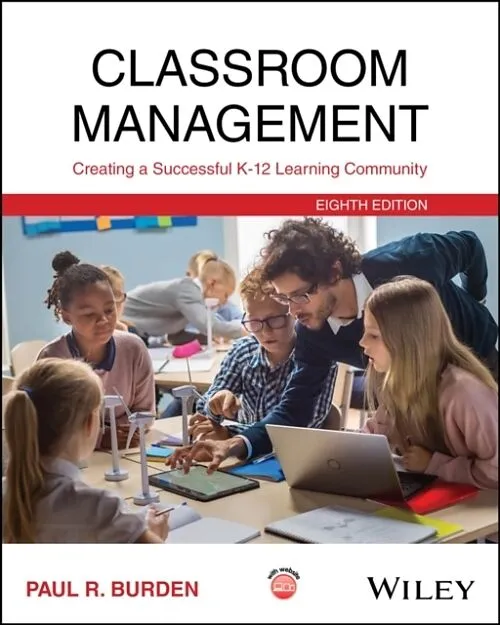
Classroom Management
Beschreibung
Autorentext PAUL R. BURDEN is an award-winning teacher and an emeritus professor in the College of Education at Kansas State University, where he was a professor and assistant dean. Previously, he was a middle-level science teacher. His publications include Me...Format auswählen
- Kartonierter EinbandCHF 167.60

Wird oft zusammen gekauft
Andere Kunden kauften auch
Beschreibung
Autorentext
PAUL R. BURDEN is an award-winning teacher and an emeritus professor in the College of Education at Kansas State University, where he was a professor and assistant dean. Previously, he was a middle-level science teacher. His publications include Methods for Effective Teaching (2025, Pearson) and Powerful Classroom Management Strategies: Motivating Students to Learn (2000, Corwin Press). He served for 11 years as the editor of the Journal of Staff Development, a quarterly journal sponsored by the National Staff Development Council/Learning Forward.
Klappentext
Enables K-12 educators to create successful learning communities - a fully updated new edition Effective classroom management plans are essential for creating environments that foster appropriate social interactions and engaged learning for students in K-12 settings. New and early-career teachers often face difficulties addressing student discipline, upholding classroom rules and procedures, and establishing positive teacher-student relationships. The eighth edition of Classroom Management is the leading resource for helping educators establish a positive classroom environment, prevent student misbehavior, respond to challenging situations, and involve their students in building positive classroom communities. This popular textbook covers every vital aspect of classroom management, from planning for the school year and conducting instruction, to managing diverse classrooms and collaborating with colleagues and families. Fully revised to reflect recent changes in K-12 education and address the needs of today's educators, this edition features new and updated methods with a new emphasis on student well-being, equity, student diversity, connecting with and supporting students, and creating an inclusive classroom. Written by a respected expert in teaching methods and classroom management, this valuable teacher's reference:
- Provides comprehensive coverage of the central concepts of classroom management and discipline in K-12 classrooms with practical, classroom-oriented discussions.
- Reflects current InTASC Model Core Teaching Standards and Praxis assessments
- Features descriptions of classroom management methods used by elementary, middle, and high school teachers in various regions and communities
- Includes a new emphasis on student well-being, equity, motivation, and meeting student needs when applying classroom management strategies
- Offers end-of-chapter summaries, questions, supplemental activities, further reading suggestions, and complete references
- Is reader-friendly and accessible due to its numerous features, tables, lists of recommendations, and headings and subheadings. Classroom Management: Creating a Successful K-12 Learning Community, Eighth Edition is an ideal text for teachers in training and early career K-12 educators.
Inhalt
About the Author xi
Preface xiii
Acknowledgments xvii
About the Companion Website xix
1 Understanding Management and Discipline in the Classroom 1
What Is Classroom Management? 2
Components of Classroom Management 3
Areas of Responsibility in Classroom Management 4
Principles for Working with Students and Preventing Misbehavior 6
Creating Student Learning Communities 7
Misbehavior and Discipline 9
Order in the Classroom 9
Misbehavior in Context 10
Types of Misbehavior 10
Causes of Misbehavior 11
Degrees of Severity 13
Disparities in Discipline 14
Classroom Management for Equity 16
Apply Culturally Responsive Teaching 16
Enact Effective Instruction 17
Create a Caring Environment 18
Foster a Sense of Belonging 19
Major Concepts 20
Discussion/Reflective Questions 21
Suggested Activities 21
Further Reading 21
2 Models of Discipline 22
The Degree of Control 24
Low Teacher Control Approaches 25
Congruent Communication: Haim Ginott 26
Discipline as Self- Control: Thomas Gordon 28
Teaching with Love and Logic: Jim Fay and Charles Fay 28
Inner Discipline: Barbara Coloroso 29
From Discipline to Community: Alfie Kohn 30
Medium Teacher Control Approaches 30
Logical Consequences: Rudolf Dreikurs 31
Cooperative Discipline: Linda Albert 32
Positive Discipline: Jane Nelsen, Lynn Lott, and Stephen Glenn 33
Noncoercive Discipline: William Glasser 34
Discipline with Dignity: Richard Curwin, Allen Mendler, and Brian Mendler 35
Win-Win Discipline: Spencer Kagan 36
High Teacher Control Approaches 37
Behavior Modification: B. F. Skinner 37
Assertive Discipline: Lee and Marlene Canter 38
Positive Discipline: Fredric Jones 40
Discipline Without Stress: Marvin Marshall 41
Determining Your Management Plan 42
Your Management Philosophy 43
Your Management Plan 43
Major Concepts 44
Discussion/Reflective Questions 45
Suggested Activities 45
Further Reading 45
3 Preparing for the School Year 46
Making Management and Instructional Preparations 47
Making Management Preparations 47
Making Instructional Preparations 50
Managing Assessment, Record Keeping, and Reporting 54
Establishing a Plan to Deal with Misbehavior 55
Preparing for the First Day 57
Planning for the First Day 57
Conducting the First Day 59
Organizing Your Classroom and Materials 62
Floor Space 64
Storage Space 67
Bulletin Boards and Wall Space 68
Major Concepts 68
Discussion/Reflective Questions 68
Suggested Activities 68
Further Reading 69
4 Choosing Rules and Procedures 70
Rules in the Classroom 71
Examine the Need for Rules 72
Select the Rules 72
Teach and Review the Rules 75
Obtain Commitments 78
Procedures in the Classroom 78
Examine the Need for Procedures 78
Select the Procedures 80
Teach and Review the Procedures 80
Helping Students Assume Responsibility for Their Behavior 82
Supporting Self- Regulation 85
Major Concepts 86
Discussion/Reflective Questions 86
Suggested Activities 87
Further Reading 87
5 Supporting Student Behavior and Learning 88
Having a Mental Set for Management 89
Withitness 89
Emotional Objectivity 91
Building Positive Teacher-Student Relationships 91
Level of Dominance 92
Level of Co operation 93
Communicating Caring and Support 94
Managing Whole- Group Instruction 97
Guiding Behavior 97
Managing Movement Through the Lesson 98
Maintaining a Group Focus 99
Maintaining Student Attention and Involvement 100
Improving Classroom Climate with Reinforcers 104
Types of Reinforcers 105
Using Reinforcers Effectively 107
Major Concepts 107
Discussion/Reflective Questions 107
Suggested Activities 107
Further Reading 108
6 Communication Skills for Teaching 109
The Power of Language 110
Guidelines for Teacher Language 111
Communicating Firm Limits for Behavior 114
Soft Limits 114
Firm Limits 116
Using Statements or Directives 117
Characteristics of Verbal Communication 118
Clarity 118
Appropriateness 119
Verbal Delivery 119
Using Supportive Language 120
Being Intentionally Inviting 120
Reinforcing Language 121
Reminding Language 122
Redirecting Language 124
Listening 124
What Is Listening? 124
Why Listen? 125
Listening Strategies 126
Using Nonverbal Communication 127
Types of Nonverbal Communication 127
Teachers' Use of Nonverbal Communication 128
Nonverbal Teacher Behaviors 130
Major Concepts 131
Discussion/Reflective Questions 131
Suggested Activities 131
Further Reading 132
7 Connecting with and Supporting Your Students 133
Getting to Know Your Students 134
Types of Information 135
Sources of Information 137
Using the Information 137
Promoting Student Well- Being 138
What Is Well- Being? 139
Trauma- Sensitive Classrooms 139
Social-Emotional Learning 142
Equity and Culturally Responsive Teaching 144
Building Supportive Relationships 145
Teacher- Student Relationships 145
Student-Student Relationships 147
Re…