
IHR WARENKORB IST AKTUELL LEER.
Haben Sie noch nichts passendes gefunden? Stöbern Sie durch unser komplettes Sortiment.
Oder melden Sie sich an bzw. registrieren Sie sich.
- Kostenlose Lieferung
- Kauf auf Rechnung
- Ex Libris Tiefpreis
- Filiallieferung und 650+ Abholorte
- Rabatt-Bons als Club-Mitglied
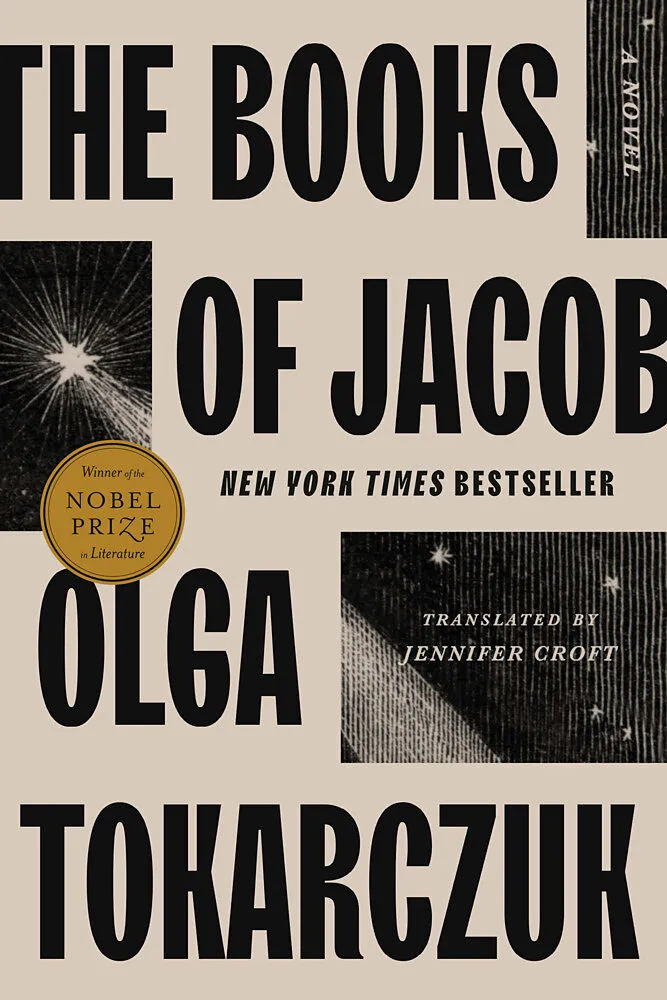
The Books of Jacob
Beschreibung
Informationen zum Autor Olga Tokarczuk; Translated by Jennifer Croft Klappentext A NEW YORKER ESSENTIAL READ Just as awe-inspiring as the Nobel judges claimed. The Washington Post Olga Tokarczuk is one of our greatest living fiction writers. . . This could wel...Format auswählen
- Kartonierter EinbandCHF 22.70
- Fester EinbandCHF 38.80
Wird oft zusammen gekauft
Andere Kunden kauften auch
Beschreibung
Informationen zum Autor Olga Tokarczuk; Translated by Jennifer Croft Klappentext A NEW YORKER ESSENTIAL READ Just as awe-inspiring as the Nobel judges claimed. The Washington Post Olga Tokarczuk is one of our greatest living fiction writers. . . This could well be a decade-defining book akin to Bolaño's 2666 . AV Club Sophisticated and ribald and brimming with folk wit. . . The comedy in this novel blends, as it does in life, with genuine tragedy. Dwight Garner, The New York Times LONGLISTED FOR THE 2022 NATIONAL BOOK AWARD NAMED A BEST BOOK OF THE YEAR BY THE NEW YORK TIMES, THE WALL STREET JOURNAL, TIME, THE NEW YORKER , AND NPR The Nobel Prizewinner's richest, most sweeping and ambitious novel yet follows the comet-like rise and fall of a mysterious, messianic religious leader as he blazes his way across eighteenth-century Europe. In the mid-eighteenth century, as new ideasand a new unrestbegin to sweep the Continent, a young Jew of mysterious origins arrives in a village in Poland. Before long, he has changed not only his name but his persona; visited by what seem to be ecstatic experiences, Jacob Frank casts a charismatic spell that attracts an increasingly fervent following. In the decade to come, Frank will traverse the Hapsburg and Ottoman empires with throngs of disciples in his thrall as he reinvents himself again and again, converts to Islam and then Catholicism, is pilloried as a heretic and revered as the Messiah, and wreaks havoc on the conventional order, Jewish and Christian alike, with scandalous rumors of his sect's secret rituals and the spread of his increasingly iconoclastic beliefs. The story of Franka real historical figure around whom mystery and controversy swirl to this dayis the perfect canvas for the genius and unparalleled reach of Olga Tokarczuk. Narrated through the perspectives of his contemporariesthose who revere him, those who revile him, the friend who betrays him, the lone woman who sees him for what he is The Books of Jacob captures a world on the cusp of precipitous change, searching for certainty and longing for transcendence. In a nod to books written in Hebrew, The Books of Jacob is paginated in reverse, beginning on p. 955 and ending on p. 1 but read traditionally, front cover to back. Leseprobe 1. 1752, Rohatyn It's early morning, near the close of October. The vicar forane is standing on the porch of the presbytery, waiting for his carriage. He's used to getting up at dawn, but today he feels just half awake and has no idea how he even ended up here, alone in an ocean of fog. He can't remember rising, or getting dressed, or whether he's had breakfast. He stares perplexed at the sturdy boots sticking out from underneath his cassock, at the tattered front of his faded woolen overcoat, at the gloves he's holding in his hands. He slips on the left one; it's warm and fits him perfectly, as though hand and glove have known each other many years. He breathes a sigh of relief. He feels for the bag slung over his shoulder, mechanically runs his fingers over the hard edges of the rectangle it contains, thickened like scars under the skin, and he remembers, slowly, what's inside-that heavy, friendly form. A good thing, the thing that's brought him here-those words, those signs, each with a profound connection to his life. Indeed, now he knows what's there, and this awareness slowly starts to warm him up, and as his body comes back, he starts to be able to see through the fog. Behind him, the dark aperture of the doors, one side shut. The cold must have already set in, perhaps even a light frost already, spoiling the plums in the orchard. Above the doors, there is a rough inscription, which he sees without looking, already knowing what it says-he commissioned it, after all. Those two ...
Autorentext
Olga Tokarczuk; Translated by Jennifer Croft
Klappentext
**A NEW YORKER **“ESSENTIAL READ”
**
“Just as awe-inspiring as the Nobel judges claimed.” – The Washington Post
“Olga Tokarczuk is one of our greatest living fiction writers. . . This could well be a decade-defining book akin to Bolaño’s 2666.” –AV Club
**“Sophisticated and ribald and brimming with folk wit. . . The comedy in this novel blends, as it does in life, with genuine tragedy.” –Dwight Garner, The New York Times
**LONGLISTED FOR THE 2022 NATIONAL BOOK AWARD
**NAMED A BEST BOOK OF THE YEAR BY THE NEW YORK TIMES, THE WALL STREET JOURNAL, TIME, THE NEW YORKER, AND NPR
The Nobel Prize–winner’s richest, most sweeping and ambitious novel yet follows the comet-like rise and fall of a mysterious, messianic religious leader as he blazes his way across eighteenth-century Europe.
In the mid-eighteenth century, as new ideas—and a new unrest—begin to sweep the Continent, a young Jew of mysterious origins arrives in a village in Poland. Before long, he has changed not only his name but his persona; visited by what seem to be ecstatic experiences, Jacob Frank casts a charismatic spell that attracts an increasingly fervent following. In the decade to come, Frank will traverse the Hapsburg and Ottoman empires with throngs of disciples in his thrall as he reinvents himself again and again, converts to Islam and then Catholicism, is pilloried as a heretic and revered as the Messiah, and wreaks havoc on the conventional order, Jewish and Christian alike, with scandalous rumors of his sect’s secret rituals and the spread of his increasingly iconoclastic beliefs. The story of Frank—a real historical figure around whom mystery and controversy swirl to this day—is the perfect canvas for the genius and unparalleled reach of Olga Tokarczuk. Narrated through the perspectives of his contemporaries—those who revere him, those who revile him, the friend who betrays him, the lone woman who sees him for what he is—The Books of Jacob captures a world on the cusp of precipitous change, searching for certainty and longing for transcendence.
In a nod to books written in Hebrew, The Books of Jacob is paginated in reverse, beginning on p. 955 and ending on p. 1 – but read traditionally, front cover to back.
Leseprobe
1.
1752, Rohatyn
It's early morning, near the close of October. The vicar forane is standing on the porch of the presbytery, waiting for his carriage. He's used to getting up at dawn, but today he feels just half awake and has no idea how he even ended up here, alone in an ocean of fog. He can't remember rising, or getting dressed, or whether he's had breakfast. He stares perplexed at the sturdy boots sticking out from underneath his cassock, at the tattered front of his faded woolen overcoat, at the gloves he's holding in his hands. He slips on the left one; it's warm and fits him perfectly, as though hand and glove have known each other many years. He breathes a sigh of relief. He feels for the bag slung over his shoulder, mechanically runs his fingers over the hard edges of the rectangle it contains, thickened like scars under the skin, and he remembers, slowly, what's inside-that heavy, friendly form. A good thing, the thing that's brought him here-those words, those signs, each with a profound connection to his life. Indeed, now he knows what's there, and this awareness slowly starts to warm him up, and as his body comes back, he starts to be able to see through the fog. Behind him, the dark aperture of the doors, one side shut. The cold must have already set in, perhaps even a light frost already, spoiling the plums in the orchard. Above the doors, there is a rough inscription, which he sees without looking, already knowing what it says-he commissioned it, after all. Those two craftsmen from Podhajce took an entire week to carve the letters into the wood. He had, of course, requested…