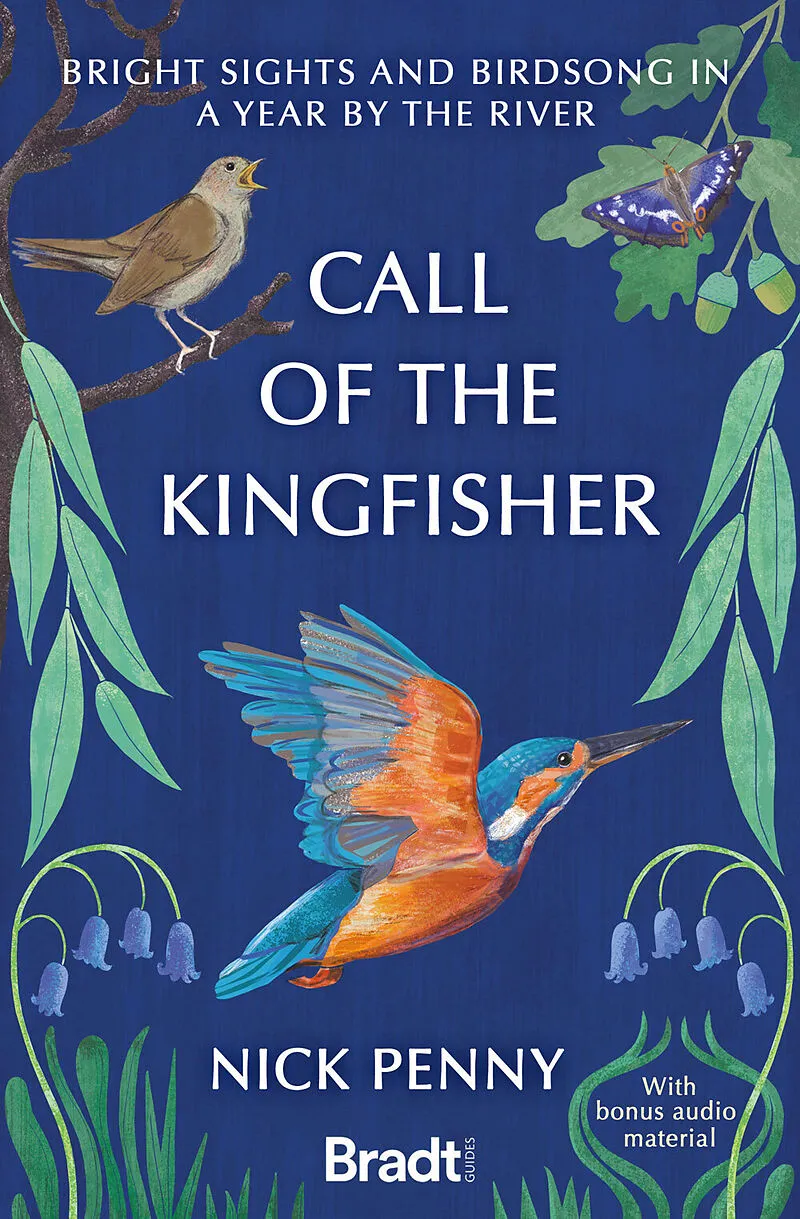
Call of the Kingfisher
Beschreibung
Call of the Kingfisher is the enchanting debut from composer and wildlife recordist, Nick Penny. This love letter to a short stretch of Northamptonshire's River Nene celebrates all the wild things that live there, especially the kingfishers. Uniquely, it comes...Format auswählen
- Poche format BCHF 18.70

Wird oft zusammen gekauft
Andere Kunden kauften auch
Beschreibung
Call of the Kingfisher is the enchanting debut from composer and wildlife recordist, Nick Penny. This love letter to a short stretch of Northamptonshire's River Nene celebrates all the wild things that live there, especially the kingfishers. Uniquely, it comes with bonus audio content to complement the text, accessed via QR codes. Nick has walked beside the river at Oundle for four decades. But for a whole year he gave the waterway all the time it asked for. The more attention he gave it, the more he saw the kingfishers and heard their high whistling calls. Set in a lovely but little-known part of England, Call of the Kingfisher relates a year by the river, the author's experiences there and the different people he meets. Other strands are woven around the elusive feathered protagonist: explorations of local history and landscape, from Roman and Bronze Age sites to watermills and centuries-old stone churches; visits at different times and to different places in the valley; homages to naturalists who lived nearby; forest dawns and dusks listening to the precious song of nightingales. But the background tapestry is the sights and sounds, and greens and browns, of the riverbank, shot through with the blue and orange threads of a kingfisher's glowing feathers. As a composer and wildlife recordist, Nick has a deep interest in sounds in the natural environment. He both uses the local landscape and wildlife sounds as inspiration, and brings fresh insights into the sounds of the countryside. The book includes access to a number of high-quality birdsong recordings made alongside the River Nene - audio soundbites of nature's riches, from kingfishers and nightingales to owls and cuckoos. This is a book about the things that can be seen and heard when we approach nature with patience and curiosity. It celebrates people who have used that focus to help preserve wildlife and pass on their knowledge to future generations. Above all, Call of the Kingfisher serves as a call to appreciate what we've got, wherever we are, and to use our ears as much as our eyes when we experience the natural world.
"All writers want the reader to see through their eyes, but few succeed in making them hear through their ears as successfully as Nick Penny. Very special." Country Life
"From the glimpses of kingfishers in a frosty January to the sweet-scented honeysuckle and nightingale song in early June, the book beautifully illustrates the joy of observing nature with patience. Complete with a suite of high-quality wildlife audio recordings, Call of the Kingfisher is a glorious homage to wildlife." CPRE website
"Penny's detailed observations and philosophical and historical musings fill this gentle book which seems to walk at its own pace through the gradually changing seasons" - Birdwatch Magazine
"[A] wonderful book. [Penny] brings his knowledge as a musician to this book too, and the sounds that he has recorded of specific birds and some of the dawn and evening choruses that he heard whilst researching this book. You can follow the link in the book and I thought this gave an excellent extra dimension" Paul Cheney, Halfman, Halfbook blog
"An utterly delightful, uplifting invitation to escape to a wonderful world of nature! Highly Recommended!" Escapelearncreate.co.uk
"Call of the Kingfisher is a beautiful book. he delights in what can be seen and heard when we approach nature with patience and curiosity." Julia Thorley, NN Journal
"Nick writes with honesty, a deep respect of and connection to his patch of the natural world... I highly recommend this book and especially suggest that readers explore the audio tracks listed within the chapters." P Stevens, Amazon review
Autorentext
Nick Penny grew up in many different parts of the world before doing an arts degree at Oxford University. He then set up his own workshop making musical instruments, as well as writing and playing the Paraguayan harp. After moving to rural Northamptonshire four decades ago, he became fascinated by the birdsong in his local woods, starting to record it and use the sounds in his own music. He also began to watch and photograph the kingfishers on the River Nene close to his home – experiences captured in his nature-writing debut, Bradt’s Call of the Kingfisher. Although not a trained naturalist, Penny is an inspiring speaker about wildlife and birdsong, and writes with a deep passion and concern for his subject. Always curious, always with his musician’s ear to the ground, Penny is keen to learn about nature – and delights in passing that knowledge on to others. Penny is from Peterborough, UK.
Zusammenfassung
Call of the Kingfisher - an enchanting nature-writing debut. This love letter to River Nene and the wild things that live there, especially kingfishers, celebrates a year's worth of Northamptonshire riverbank walks. Written with a musician's ear, the book includes access to a number of high-quality birdsong recordings made where the book is set.
Inhalt
Chapter 1 January
Nick Penny goes for a walk on New Year's Day and has a chance encounter with a kingfisher just minutes from home. He decides to spend a year looking out for them on his local stretch of the River Nene, describes his first kingfisher sighting as a boy, and gives broad introductions to the common kingfisher, the river and the town. He introduces the idea of “sound walks”, listening to birdsong and natural sounds, and how it relates to his life as a musician. He rediscovers the eighteenth century naturalist Gilbert White as an inspiration, gives tips on how to see and hear kingfishers, and reflects on the importance of stillness when observing nature. He walks by the river in the snow, ponders the dangers of ice for kingfishers, watches a huge flock of lapwings and reflects on what he's seen and heard during a wintry first month.
Chapter 2 February
He describes how certain sounds have affected him during a peripatetic childhood and in his later life. He talks about herons and cormorants, and visits the local church to illustrate a story about an eagle lectern dumped in the river during the Civil War. He describes a day in his music studio working on a piece inspired by a starling murmuration. He walks in nearby Rockingham Forest, and reflects on skylark sounds and a running stream. He has a very close encounter with a pair of kingfishers, and hears their courtship warbling. He introduces the idea of soundscapes, and the intrusion of human sounds into the natural world. It's Valentine's Day, and spring is definitely in the air. He records some woodpecker sounds in the woods. He goes to sit by the pond in a wood to meditate on its natural sounds, and watches a relaxed and resting kingfisher for more than half an hour on the last day of the month.
Chapter 3 March
He comes across a flock of fieldfares, looks closely at some cygnets' feathers and goes into detail about kingfisher plumage. He watches a blackbird nest building and reflects on their song. He discusses what the river means to him and what it might have meant to others in the past. He visits a Bronze Age site at nearby Flag Fen to get an insight into the practice of placing votive offerings into water, and speculates on how Romans in a settlement near Oundle and early Christians might have viewed the river. He describes uses of the river to the present day, and the dangers it faced, and still faces, from pollution. He reports the first spring arrival of migrant chiffchaffs from Africa and goes into the ambience of birdsong. He sees a male kingfisher carrying a fish as a courtship offering, and discovers a pair beginning to tunnel into the riverbank to make their unusual nest. He watches the mating dance of two swans, hears the first blackcap calls of the year and records some kingfisher sounds near the nest that suggest it's occupied and eggs m…


