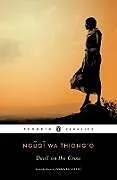
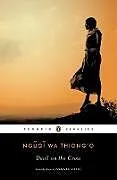
Devil on the Cross
Beschreibung
The great Kenyan writer and Nobel Prize nominee’s novel that he wrote in secret, on toilet paper, while in prison--featuring an introduction by Namwali Serpell, the author of the novel The Old Drift One of the cornerstones of Ngũgĩ wa Thiong&rs...Format auswählen
- Poche format BCHF 22.70
Wird oft zusammen gekauft
Andere Kunden kauften auch
Beschreibung
The great Kenyan writer and Nobel Prize nominee’s novel that he wrote in secret, on toilet paper, while in prison--featuring an introduction by Namwali Serpell, the author of the novel The Old Drift One of the cornerstones of Ngũgĩ wa Thiong’o’s fame, Devil on the Cross is a powerful fictional critique of capitalism. It tells the tragic story of Wariinga, a young woman who moves from a rural Kenyan town to the capital, Nairobi, only to be exploited by her boss and later by a corrupt businessman. As she struggles to survive, Wariinga begins to realize that her problems are only symptoms of a larger societal malaise and that much of the misfortune stems from the Western, capitalist influences on her country. An impassioned cry for a Kenya free of dictatorship and for African writers to work in their own local dialects, Devil on the Cross has had a profound influence on Africa and on post-colonial African literature. For more than seventy years, Penguin has been the leading publisher of classic literature in the English-speaking world. With more than 1,700 titles, Penguin Classics represents a global bookshelf of the best works throughout history and across genres and disciplines. Readers trust the series to provide authoritative texts enhanced by introductions and notes by distinguished scholars and contemporary authors, as well as up-to-date translations by award-winning translators.
ldquo;One of the greatest writers of our time.” —Chimamanda Ngozi Adichie, The Guardian
“His novels . . . have been deservedly canonized by the iconic [Penguin Classics] series.” —The Wall Street Journal
“One of our century’s great novels.” —Tribune (UK)
 
“Ngugi is the most celebrated of African novelists. What he offers is nothing less than a new direction for African writing.” —British Book News  
 
“Striking.” —**The Guardian
“Bold and disquieting and, like most great novels, wonderfully immersive. So immersive, in fact, that I dreamed about it. Devil on the Cross argues quite convincingly—so convincingly that, for a moment, I became a character in the novel, or perhaps Ngugi became the author of my life—that all of us are living within a dream. . . . This is not a well-behaved novel, the kind you might read with your book club while discussing character motivation over tea and biscuits. This is a novel that wants you to act. . . . It’s the perennial question: What is the point of literature? . . . I can’t say that Ngugi’s intention was to mount a defense of literature when he wrote this, but I can tell you what this novel did to me. He taught me that it’s time for us to build new dreams.” —Tolpe Folarin, Los Angeles Review of Books**
Autorentext
Ngugi wa Thiong'o (1938-2025) was born in Limuru, Kenya, and went on to become one of the leading writers and scholars of our times. He authored numerous works of fiction, memoir and essay, including A Grain of Wheat, Devil on the Cross and Decolonizing the Mind. Ngugi was the Distinguished Professor of English and Comparative Literature at the University of California, Irvine; he held fourteen honorary doctorates, among other awards, and was nominated for the Man Booker International Prize.
Klappentext
A legendary work of African literature, Devil on the Cross is one of the cornerstones of Ngugi wa Thiong'o's enduring fame - and at the heart of his perennial contention for the Nobel Prize. An impassioned cry for a Kenya free of dictatorship and for African writers to work in their own local dialects, it has had profound influences on Africa and on African literature.
Written on toilet paper while Ngugi wa Thiong'o was in prison, this novel tells the tragic story of Wariinga, a young woman who moves from a rural Kenyan town to the capital, Nairobi, only to be exploited by her boss and later a corrupt businessman. As Wariinga struggles to survive, she begins to realize that her problems are only symptoms of a larger societal malaise and that much of the misfortune stems from the Western, capitalist influences on her country. Climaxing in an unforgettable scene of the 'Devil's Feast', a satirical parable on Western culture and business practices, Devil on the Cross is an essential story of the post-colonial African experience.
Zusammenfassung
The great Kenyan writer and Nobel Prize nominee’s novel that he wrote in secret, on toilet paper, while in prison—featuring an introduction by Namwali Serpell, the author of the multiple prize–winning novel The Old Drift
****
One of the cornerstones of Ngũgĩ wa Thiong’o’s fame, Devil on the Cross is a powerful fictional critique of capitalism. It tells the tragic story of Wariinga, a young woman who moves from a rural Kenyan town to the capital, Nairobi, only to be exploited by her boss and later by a corrupt businessman. As she struggles to survive, Wariinga begins to realize that her problems are only symptoms of a larger societal malaise and that much of the misfortune stems from the Western, capitalist influences on her country. An impassioned cry for a Kenya free of dictatorship and for African writers to work in their own local dialects, Devil on the Cross has had a profound influence on Africa and on post-colonial African literature.
For more than seventy years, Penguin has been the leading publisher of classic literature in the English-speaking world. With more than 1,700 titles, Penguin Classics represents a global bookshelf of the best works throughout history and across genres and disciplines. Readers trust the series to provide authoritative texts enhanced by introductions and notes by distinguished scholars and contemporary authors, as well as up-to-date translations by award-winning translators.