
IHR WARENKORB IST AKTUELL LEER.
Haben Sie noch nichts passendes gefunden? Stöbern Sie durch unser komplettes Sortiment.
Oder melden Sie sich an bzw. registrieren Sie sich.
- Kostenlose Lieferung
- Kauf auf Rechnung
- Ex Libris Tiefpreis
- Filiallieferung und 650+ Abholorte
- Rabatt-Bons als Club-Mitglied
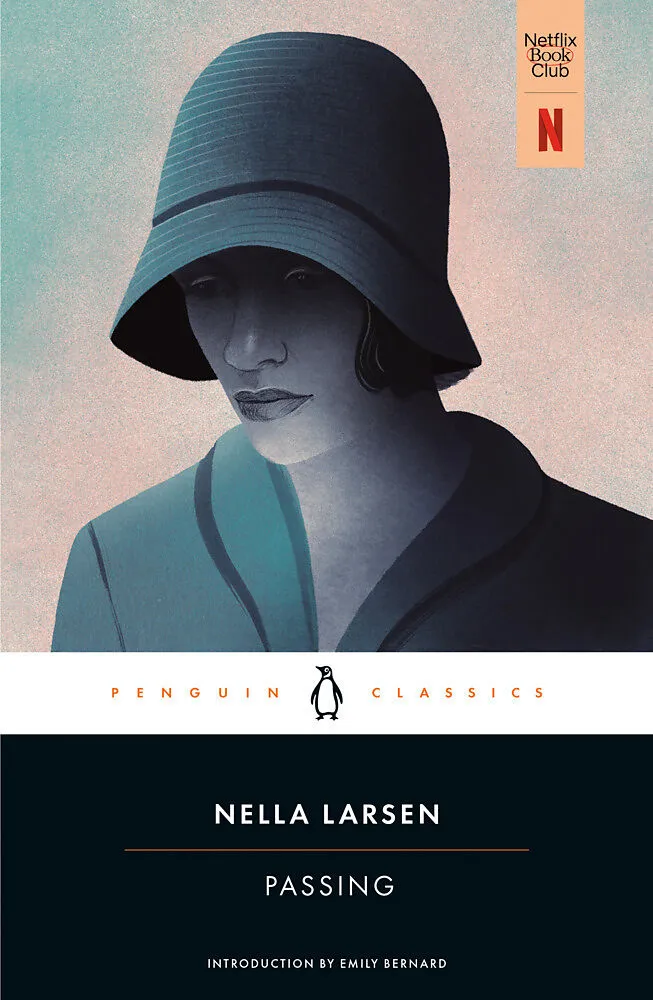
Passing
Beschreibung
Clare Kendry leads a dangerous life. Fair, elegant, and ambitious, she is married to a white man unaware of her African American heritage, and has severed all ties to her past. Clare's childhood friend, Irene Redfield, just as light-skinned, has chosen to...Format auswählen
- Poche format BCHF 18.40
Wird oft zusammen gekauft
Andere Kunden kauften auch
Beschreibung
Clare Kendry leads a dangerous life. Fair, elegant, and ambitious, she is married to a white man unaware of her African American heritage, and has severed all ties to her past. Clare's childhood friend, Irene Redfield, just as light-skinned, has chosen to remain within the African American community, but refuses to acknowledge the racism that continues to constrict her family's happiness. A chance encounter forces both women to confront the lies they have told others-and the secret fears they have buried within themselves.
Zusatztext It is a tragic story rooted in inescapable facts of American life: that whiteness conferred an almost universal unearned advantage! and that loyalty to a black racial identity was not only an act of pride but also one of courage. The New York Times Informationen zum Autor Nella Larsen (1891-1964) was an American novelist and major figure in the Harlem Renaissance. Born in Chicago, she attended university in Nashville and subsequently lived in Denmark and New York, where she worked as a nurse and librarian. Her two novels, Quicksand (1928) and Passing (1929), established her as one of the most important black female novelists in American history. Klappentext A classic, brilliant and layered novel that has been at the heart of racial identity discourse in America for almost a century. Clare Kendry leads a dangerous life. Fair, elegant, and ambitious, she is married to a white man unaware of her African American heritage and has severed all ties to her past. Clare's childhood friend, Irene Redfield, just as light-skinned, has chosen to remain within the African American community, but refuses to acknowledge the racism that continues to constrict her family's happiness. A chance encounter forces both women to confront the lies they have told others - and the secret fears they have buried within themselves. It was the last letter in Irene Redfield's little pile of morning mail. After her other ordinary and clearly directed letters the long envelope of thin Italian paper with its almost illegible scrawl seemed out of place and alien. And there was, too, something mysterious and slightly furtive about it. A thin sly thing which bore no return address to betray the sender. Not that she hadn't immediately known who its sender was. Some two years ago she had one very like it in outward appearance. Furtive, but yet in some peculiar, determined way a little flaunting. Purple ink. Foreign paper of extraordinary size. It had been, Irene noted, postmarked in New York the day before. Her brows came together in a tiny frown. The frown, however, was more from perplexity than from annoyance; though there was in her thoughts an element of both. She was wholly unable to comprehend such an attitude towards danger as she was sure the letter's contents would reveal; and she disliked the idea of opening and reading it. This, she reflected, was of a piece with all that she knew of Clare Kendry. Stepping always on the edge of danger. Always aware, but not drawing back or turning aside. Certainly not because of any alarms or feeling of outrage on the part of others. And for a swift moment Irene Redfield seemed to see a pale small girl sitting on a ragged blue sofa, sewing pieces of bright red cloth together, while her drunken father, a tall, powerfully built man, raged threateningly up and down the shabby room, bellowing curses and making spasmodic lunges at her which were not the less frightening because they were, for the most part, ineffectual. Sometimes he did manage to reach her. Butonly the fact that the child had edged herself and her poor sewing over to the farthermost corner of the sofa suggested that she was in any way perturbed by this menace to herself and her work. Clare had known well enough that it was unsafe to take a portion of the dollar that was her weekly wage for the doing of many errands for the dressmaker who lived on the top floor of the building of which Bob Kendry was janitor. But that knowledge had not deterred her. She wanted to go to her Sunday school's picnic, and she had made up her mind to wear a new dress. So, in spite of certain unpleasantness and possible danger, she had taken the money to buy the material for that pathetic little red frock. There had been, even in those days, nothing sacrificial in Clare Kendry's idea of life, no allegiance beyond her own immediate desire...
Autorentext
Nella Larsen (1891-1964) was an American novelist and major figure in the Harlem Renaissance. Born in Chicago, she attended university in Nashville and subsequently lived in Denmark and New York, where she worked as a nurse and librarian. Her two novels, Quicksand (1928) and Passing (1929), established her as one of the most important black female novelists in American history.
Klappentext
A classic, brilliant and layered novel that has been at the heart of racial identity discourse in America for almost a century.
Clare Kendry leads a dangerous life. Fair, elegant, and ambitious, she is married to a white man unaware of her African American heritage and has severed all ties to her past. Clare's childhood friend, Irene Redfield, just as light-skinned, has chosen to remain within the African American community, but refuses to acknowledge the racism that continues to constrict her family's happiness. A chance encounter forces both women to confront the lies they have told others - and the secret fears they have buried within themselves.
Zusammenfassung
**A NETFLIX BOOK CLUB PICK
Nella Larsen's powerful, thrilling, and tragic tale about the fluidity of racial identity that continues to resonate today. A New York Times Editors’ Choice. Now a major motion picture starring Tessa Thompson and Alexander Skarsgård**
One of The Atlantic’s Great American Novels of the Past 100 Years
Clare Kendry is living on the edge. Light-skinned, elegant, and ambitious, she is married to a racist white man unaware of her African American heritage, and has severed all ties to her past after deciding to “pass” as a white woman. Clare’s childhood friend, Irene Redfield, just as light-skinned, has chosen to remain within the African American community, and is simultaneously allured and repelled by Clare’s risky decision to engage in racial masquerade for personal and societal gain. After frequenting African American-centric gatherings together in Harlem, Clare’s interest in Irene turns into a longing for Irene’s black identity that she abandoned and can never embrace again, and she is forced to grapple with her decision to pass for white in a way that is both tragic and telling. This edition features a new introduction by Emily Bernard and notes by Thadious M. Davis.
For more than seventy years, Penguin has been the leading publisher of classic literature in the English-speaking world. With more than 1,700 titles, Penguin Classics represents a global bookshelf of the best works throughout history and across genres and disciplines. Readers trust the series to provide authoritative texts enhanced by introductions and notes by distinguished scholars and contemporary authors, as well as up-to-date translations by award-winning translators.
Leseprobe
It was the last letter in Irene Redfield's little pile of morning mail. After her other ordinary and clearly directed letters the long envelope of thin Italian paper with its almost illegible scrawl seemed out of place and alien. And there was, too, something mysterious and slightly furtive about it. A thin sly thing which bore no return address to betray the sender. Not that she hadn't immediately known who its sender was. Some two years ago she had one very like it in outward appearance. Furtive, but yet in some peculiar, determined way a little flaunting. Purple ink. Foreign paper of extraordinary size.
It had been, Irene noted, postmarked in New York the…