
IHR WARENKORB IST AKTUELL LEER.
Haben Sie noch nichts passendes gefunden? Stöbern Sie durch unser komplettes Sortiment.
Oder melden Sie sich an bzw. registrieren Sie sich.
- Kostenlose Lieferung
- Kauf auf Rechnung
- Ex Libris Tiefpreis
- Filiallieferung und 650+ Abholorte
- Rabatt-Bons als Club-Mitglied
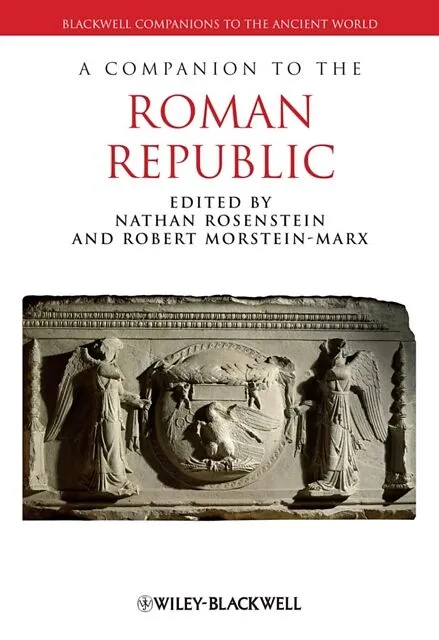
A Companion to the Roman Republic
Beschreibung
Informationen zum Autor Nathan Rosenstein is Professor of History at the Ohio State University. He is the author of Imperatores Victi (1990) and Rome at War (2004), and coeditor of War and Society in the Ancient and Medieval Worlds (2001). Robert Morstein-Marx...Format auswählen
- Kartonierter EinbandCHF 66.40
Wird oft zusammen gekauft
Andere Kunden kauften auch
Beschreibung
Informationen zum Autor Nathan Rosenstein is Professor of History at the Ohio State University. He is the author of Imperatores Victi (1990) and Rome at War (2004), and coeditor of War and Society in the Ancient and Medieval Worlds (2001). Robert Morstein-Marx is Professor of Classics at the University of California, Santa Barbara. He is the author of Hegemony to Empire: The Development of the Roman Imperium in the East (1995) and Mass Oratory and Political Power in the Late Roman Republic (2004). Klappentext This Companion provides an authoritative and up-to-date overview of Roman republican history as it is currently practiced. The volumetakes account of recent developments that have enriched our picture of the Republic. These include the continuing archaeological exploration of Italy, increasingly sophisticated approaches to textual sources, and the opening up of new areas of historical study and debate such as the nature of the republican political system, Roman identity formation, representation of the body, collective memory, and demography and social structure. At the same time, the book retains the drama of the Republic's rise and fall. The Companion is divided into three parts. The opening section emphasizes both the evidence of texts and physical remains, and the models and assumptions that scholars bring to these artifacts. This section includes coverage of the role played by the physical geography and environment of Italy. The second part offers a compact but detailed narrative of military and political developments from the birth of Rome through to the death of Julius Caesar; while the third and longest part highlights recent research and current controversies in the field. Zusammenfassung This Companion provides an authoritative and up-to-date overview of Roman Republican history as it is currently practiced. Highlights recent developments, including archaeological discoveries, fresh approaches to textual sources, and the opening up of new areas of historical study. Retains the drama of the Republic's rise and fall. Inhaltsverzeichnis List of Maps x List of Illustrations xi Notes on Contributors xiv Maps xix Abbreviations xxvii Preface xxviii Robert Morstein-Marx and Nathan Rosenstein Part I Introductory 1 1 Methods, Models, and Historiography 3 Martin Jehne Translated by Robert Morstein-Marx and Benjamin Wolkow 2 Literary Sources 29 Edward Bispham 3 Epigraphy and Numismatics 51 Mark Pobjoy 4 The Topography and Archaeology of Republican Rome 81 Mario Torelli Translated by Helena Fracchia 5 The Physical Geography and Environment of Republican Italy 102 Simon Stoddart Part II Narrative 123 6 Between Myth and History: Rome's Rise from Village to Empire (the Eighth Century to 264) 125 Kurt A. Raaflaub 7 Mediterranean Empire (264-134) 147 Daniel J. Gargola 8 From the Gracchi to the First Civil War (133-70) 167 C. F. Konrad 9 The Final Crisis (69-44) 190 W. Jeffrey Tatum Part III Civic Structures 213 10 Communicating with the Gods 215 Jörg Rüpke 11 Law in the Roman Republic 236 Michael C. Alexander 12 The Constitution of the Roman Republic 256 John A. North 13 Army and Society 278 Paul Erdkamp Part IV Society 297 14 Social Structure and Demography 299 Neville Morley 15 Finding Roman Women 324 Beryl Rawson Part V Political Culture 343 16 The City of Rome 345 John R. Patterson 17 Aristocratic Values 365 Nathan Rosenst...
Autorentext
Nathan Rosenstein is Professor of History at the Ohio State University. He is the author of Imperatores Victi (1990) and Rome at War (2004), and coeditor of War and Society in the Ancient and Medieval Worlds (2001).
Robert Morstein-Marx is Professor of Classics at the University of California, Santa Barbara. He is the author of Hegemony to Empire: The Development of the Roman Imperium in the East (1995) and Mass Oratory and Political Power in the Late Roman Republic (2004).
Klappentext
This Companion provides an authoritative and up-to-date overview of Roman republican history as it is currently practiced. The volumetakes account of recent developments that have enriched our picture of the Republic. These include the continuing archaeological exploration of Italy, increasingly sophisticated approaches to textual sources, and the opening up of new areas of historical study and debate such as the nature of the republican political system, Roman identity formation, representation of the body, collective memory, and demography and social structure. At the same time, the book retains the drama of the Republic's rise and fall.
The Companion is divided into three parts. The opening section emphasizes both the evidence of texts and physical remains, and the models and assumptions that scholars bring to these artifacts. This section includes coverage of the role played by the physical geography and environment of Italy. The second part offers a compact but detailed narrative of military and political developments from the birth of Rome through to the death of Julius Caesar; while the third and longest part highlights recent research and current controversies in the field.
Zusammenfassung
This Companion provides an authoritative and up-to-date overview of Roman Republican history as it is currently practiced. Highlights recent developments, including archaeological discoveries, fresh approaches to textual sources, and the opening up of new areas of historical study. Retains the drama of the Republic's rise and fall.
Inhalt
List of Maps x
List of Illustrations xi
Notes on Contributors xiv
Maps xix
Abbreviations xxvii
Preface xxviii
Robert Morstein-Marx and Nathan Rosenstein
Part I Introductory 1
1 Methods, Models, and Historiography 3
Martin Jehne
Translated by Robert Morstein-Marx and Benjamin Wolkow
2 Literary Sources 29
Edward Bispham
3 Epigraphy and Numismatics 51
Mark Pobjoy
4 The Topography and Archaeology of Republican Rome 81
Mario Torelli
Translated by Helena Fracchia
5 The Physical Geography and Environment of Republican Italy 102**
** Simon Stoddart
Part II Narrative 123
6 Between Myth and History: Rome's Rise from Village to Empire (the Eighth Century to 264) 125
Kurt A. Raaflaub
7 Mediterranean Empire (264-134) 147
Daniel J. Gargola
8 From the Gracchi to the First Civil War (133-70) 167
C. F. Konrad
9 The Final Crisis (69-44) 190**
** W. Jeffrey Tatum
Part III Civic Structures 213
10 Communicating with the Gods 215
Jörg Rüpke
11 Law in the Roman Republic 236
Michael C. Alexander
12 The Constitution of the Roman Republic 256
John A. North
13 Army and Society 278**
** Paul Erdkamp
Part IV Society 297
14 Social Structure and Demography 299
Neville Morley
15 Finding Roman Women 324
Beryl Rawson
Part V Political Culture 343
16 The City of Rome 345
John R. Patterson
17 Aristocratic Values 365
Nathan Rosenstein
18 Popular Power in the Roman Republic 383
Alexander Yakobson
19 Patronage 401
Elizabeth Deniaux
Translated by Robert Morstein-Marx and Robert Martz
20 Rhetoric and Public Life 421
Jean-Michel David
Translated by Robert Morstein-Marx and Robert Martz
21 The Republican Body 439**
** Anthony Corbeill
Part VI The Creation of a Roman Identity 457
22 Romans and Others 459
Erich S. Gruen
23 History and Collective Memory in the Middle Republic 478
Karl-J. Hölkeskamp
24 Art and Architecture in the Roman Republic 496
Katherine E. Welch
25 Literature 543**
** William W. Batstone
Part VII Controversies 565
26 Conceptualizing Roman Imperial Expansion under the Republic: An Introduction 567
Arthur M. Eckstein
27 The Economy: Agrarian Change During the Second Century 590
Luuk de Ligt
28 Rome and Italy 606
John R. Patterson
29 The Transformation of the Republic 625**
** *Robert…