
IHR WARENKORB IST AKTUELL LEER.
Haben Sie noch nichts passendes gefunden? Stöbern Sie durch unser komplettes Sortiment.
Oder melden Sie sich an bzw. registrieren Sie sich.
- Kostenlose Lieferung
- Kauf auf Rechnung
- Ex Libris Tiefpreis
- Filiallieferung und 650+ Abholorte
- Rabatt-Bons als Club-Mitglied
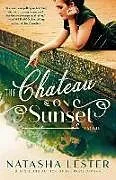
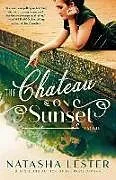
The Chateau on Sunset
Beschreibung
A orphan arrives at the Chateau Marmont and quickly falls under the spell of a scandalous, secretive man as all of Hollywood''s glamour swirls around her--a stunning feminist reimagining of In 1957, newly orphaned Jane Air is sent to live with her aunt, a fadi...Format auswählen
- Poche format BCHF 22.70
Wird oft zusammen gekauft
Andere Kunden kauften auch
Beschreibung
A orphan arrives at the Chateau Marmont and quickly falls under the spell of a scandalous, secretive man as all of Hollywood''s glamour swirls around her--a stunning feminist reimagining of In 1957, newly orphaned Jane Air is sent to live with her aunt, a fading star who hides away in Hollywood''s infamous Chateau Marmont. There, two aspiring actresses, Calliope and Flitter, take grieving Jane under their wing. But the Marmont isn''t meant for small girls with big hearts, and Jane''s first few nights reveal an insidious secret that continues to haunt her as she grows up in the hotel''s halls, where the bright lights of Hollywood cast even darker shadows. If Jane can just stay invisible and invite no trouble as she saves money, then she can leave the Marmont and live her own life on her own terms.; All her carefully laid plans are scattered when the hotel is bought by Ed Rochester: a reclusive rockstar turned unexpected caretaker of his niece Adele, and unlike any man Jane has met before. To earn the last bit of money she needs to be escape, Jane becomes Adele''s tutor, which brings Jane closer to Rochester. Suddenly, Jane finds herself wondering if she still wants to remain invisible, and if inviting trouble is a risk she''s willing to take to pursue what she truly desires.
Autorentext
Natasha Lester is the New York Times bestselling author of The Paris Seamstress, The Paris Orphan, and The Paris Secret, and a former marketing executive for L’Oréal. Her novels have been international bestsellers and are translated into twenty-one different languages and published all around the world. When she’s not writing, she loves collecting vintage fashion, practicing the art of fashion illustration, and traveling the world. Natasha lives with her husband and three children in Perth, Western Australia.
Klappentext
**A sheltered young woman living at the Chateau Marmont falls under the spell of a scandalous, secretive man as all of Hollywood’s glamour swirls around her—a stunning feminist reimagining of Jane Eyre from the New York Times bestselling author of The Paris Seamstress.
“A clever, compelling midcentury Gothic . . . a can’t-miss read for the madwoman in all of us.”—Layne Fargo, bestselling author of The Favorites**
In 1957, newly orphaned Aria Jones is sent to live with her aunt, a fading star who hides away in Hollywood’s infamous Chateau Marmont. There, two aspiring actresses, Calliope and Flitter, take the grieving Aria under their wing.
But the Marmont isn’t meant for small girls with big hearts, and Aria’s first few nights reveal an insidious secret that continues to haunt her as she grows up in the hotel’s halls, where the bright lights of Hollywood cast even darker shadows. If Aria can just stay invisible and invite no trouble as she saves money, then she can leave the Marmont and live life on her own terms—alone but free.
Her carefully laid plans fall apart when the hotel is bought by Theo Winchester, a reclusive rock star turned unexpected caretaker of his daughter, Adele, and unlike any man Aria has met before. To earn the last bit of money she needs to escape, Aria becomes Adele’s tutor, which brings Aria closer to Theo and ignites a passion she never expected.
Suddenly, Aria finds herself wondering if she still wants to remain invisible—and if inviting trouble is a risk she’s willing to take to pursue what she truly desires.
Leseprobe
Chapter 1
1957
It takes an hour of waiting for someone to claim her before Aria starts to believe. If you didn’t believe in wishing stars, then your wishes wouldn’t come true. If she didn’t believe that her parents were dead, then they couldn’t have been burned up by fire. She’d step off the airplane and there they’d be and she’d hold them and hold them and hold them—and she’d know to never let them visit a gas station.
But in the small dark cave of the lobby, as disregarded as the fringed gold lamp beside her, Aria finally understands that nobody will kiss her good night again. That to be motherless—parentless—is like being dropped into a void and no matter how much she scrabbles at the air, she’ll never stop falling.
What should I do? she wants to cry out. Just tell me what to do.
But she has nobody to advise her, not anymore. She tries to stop the snotty little sobs that soak her handkerchief and both her sleeves. But she can’t. In the end, she has to wipe her nose on her skirt and for the first time in two weeks she’s glad of something: that her mother can’t see how disgusting she is.
“Holy cow. A kid.”
A young woman, or perhaps an old girl, appears suddenly in front of Aria. She’s chasing beautiful, hasn’t quite caught it yet. Then another girl-woman glides over. She isn’t beautiful either—but this time it’s because that word is wholly inadequate.
“What are you doing here, honeybee?” she says to Aria.
The endearment makes more tears leak from Aria’s eyes. She points to the luggage tag on her suitcase: c/o Miss Devine Rey.
“You’re here for The-Legendary-Miss-Devine-Rey?” The not-quite-beautiful woman runs the words together. “Holy cow,” she repeats.
“You’d better come with us,” her excessively beautiful friend says, leading the way out of the lobby, which contains one witchy-looking chandelier, a baby grand piano, and a scattering of ancient chairs, as if only spells, musicians, and ghosts ordinarily occupy it. “I’m Calliope Burns,” she says. “And this is Flitter Reeve.”
Aria’s tears pause. Maybe, for the first time ever, her name will help rather than hinder her.
I wanted to add some sparkle to your surname, her mother used to say. Imagine if you were plain old Jane Jones.
Aria loved her mother so much she never said that, in a classroom full of Bettys and Marys, she’d much rather have been plain Jane.
Now, desperate to keep talking to anyone kind, but especially to these two, she whispers the name that finally fits in. “People think my name is weird. But yours . . .”
“They’re our stage names.” Calliope smiles, and Aria has the most peculiar urge to become one of her insignificant possessions, like a pocket perhaps, so she could travel always in the circle of her radiance.
Calliope is blue-eyed and blonde-haired, and her skin looks like soft apricot clouds. She somehow occupies both the space of her body and the space outside herself. Flitter also has a vibration of some kind, juvenile perhaps, but discernible if you pay attention. But she’s too precisely put together—her hair is more white than blonde, her brows are arrowheads, and her nails the startlingly red color of danger signs. Whereas Calliope—her nose is crooked or off-center, and it’s that imperfection that makes Aria keep staring, trying to figure out how nine-tenths extraordinary plus one-tenth flaw equals lightning plus auroras to the power of heaven.
“If I can’t have a face like hers,” Flitter says, indicating Calliope, “then I can at least have a beautiful name.”
“Is my aunt beautiful?” Aria blurts. They’ve stepped outside and into such a parade of gorgeousness that Aria needs to know if her aunt is lovely enough to pay what seems to be the entry price around here for short, brown-haired Aria too.
Calliope says, “Aria, next to your aunt, you are Marian Monti.”
Aria beams. Her father thought Ma…