
IHR WARENKORB IST AKTUELL LEER.
Haben Sie noch nichts passendes gefunden? Stöbern Sie durch unser komplettes Sortiment.
Oder melden Sie sich an bzw. registrieren Sie sich.
- Kostenlose Lieferung
- Kauf auf Rechnung
- Ex Libris Tiefpreis
- Filiallieferung und 650+ Abholorte
- Rabatt-Bons als Club-Mitglied
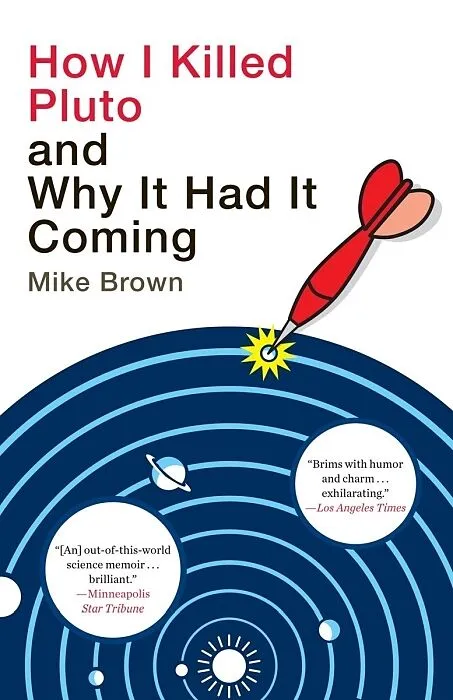
How I Killed Pluto and Why It Had It Coming
Beschreibung
Zusatztext Brims with humor and charm . . . exhilarating. Los Angeles Times [An] out-of-this-world science memoir . . . brilliant . . . brings clarity and elegance to the complexities of planetary science. Brown is also a surprisingly self-effacing and enterta...Format auswählen
- Poche format BCHF 23.90

Wird oft zusammen gekauft
Andere Kunden kauften auch
Beschreibung
Zusatztext Brims with humor and charm . . . exhilarating. Los Angeles Times [An] out-of-this-world science memoir . . . brilliant . . . brings clarity and elegance to the complexities of planetary science. Brown is also a surprisingly self-effacing and entertaining genius.Minneapolis Star Tribune Brown's brisk! enjoyable How I Killed Pluto and Why It Had It Coming chronicles the whole saga [of the demotion of Pluto] and! in the process! makes [its] sad fate easier to take. If we've lost a planet! we've gained a sprightly new voice for popular science. The Wall Street Journal Eminently readable and entertaining . . . blends elements of sleuthing! international intrigue! and the awe and wonder intrinsic to the exploration of space. The Oregonian An unlikely hybrid of Dennis Overbye's Lonely Hearts of the Cosmos and Anne Lamott's Operating Instructions . The New York Times Book Review [Brown] might be the finest scientist alive today. . . . We're all better off for this man's breathtaking commitment to science. The Boston Globe Informationen zum Autor Mike Brown is the Richard and Barbara Rosenberg Professor of Planetary Astronomy at the California Institute of Technology. In 2006 he was named one of Time magazine's 100 People Who Shape Our World as well as one of Los Angeles magazine's Most Influential People in L.A. He lives in Southern California with his wife and daughter. Klappentext The solar system most of us grew up with included nine planets, with Mercury closest to the sun and Pluto at the outer edge. Then, in 2005, astronomer Mike Brown made the discovery of a lifetime: a tenth planet, Eris, slightly bigger than Pluto. But instead of adding one more planet to our solar system, Brown's find ignited a firestorm of controversy that culminated in the demotion of Pluto from real planet to the newly coined category of "dwarf" planet. Suddenly Brown was receiving hate mail from schoolchildren and being bombarded by TV reporters-all because of the discovery he had spent years searching for and a lifetime dreaming about.A heartfelt and personal journey filled with both humor and drama, How I Killed Pluto and Why It Had It Coming is the book for anyone, young or old, who has ever imagined exploring the universe-and who among us hasn't? Chapter One What Is a Planet? One December night in 1999, a friend and I were sitting on a mountaintop east of San Diego inside a thirteen-story-tall dome. Only a few lights illuminated the uncluttered floor of the cavernous interior, but above you could vaguely see the bottom half of the massive Hale Telescope at Palomar Observatory. The Hale Telescope was, for almost fifty years, the largest telescope in the world, but from where we sat, with the weak yellow incandescent lighting being swallowed in the darkness above, you would never have guessed where you were. You might have thought you were deep in the interior of a pristine Hoover Dam, with cables and wire and pipes for directing the flow of water around. You might have believed that the steel structures around you were part of the far underground support and control of a spotlessly clean century-old subway system. Only when the entire building gently rumbled and a tiny sliver of the starry sky appeared far over your head and the telescope began to move soundlessly and swiftly to point to some new distant object in the universe, only then would you be able to make out the shadowy outline of the truss all the way to the top of the dome and realize that you were but a dot at the base of a giant machine whose only purpose was to gather the light from a single spot beyond the sky and focus it to a tiny point just over your head. Usually when I am working at the telescope I sit in the warm, well-lit control room, looking at comp...
“Brims with humor and charm . . . exhilarating.”—Los Angeles Times
“[An] out-of-this-world science memoir . . . brilliant . . . brings clarity and elegance to the complexities of planetary science. Brown is also a surprisingly self-effacing and entertaining genius.”—Minneapolis Star Tribune
“Brown’s brisk, enjoyable How I Killed Pluto and Why It Had It Coming chronicles the whole saga [of the demotion of Pluto] and, in the process, makes [its] sad fate easier to take. If we’ve lost a planet, we’ve gained a sprightly new voice for popular science.”—The Wall Street Journal
“Eminently readable and entertaining . . . blends elements of sleuthing, international intrigue, and the awe and wonder intrinsic to the exploration of space.”—The Oregonian
“An unlikely hybrid of Dennis Overbye’s Lonely Hearts of the Cosmos and Anne Lamott’s Operating Instructions.”—The New York Times Book Review
“[Brown] might be the finest scientist alive today. . . . We’re all better off for this man’s breathtaking commitment to science.”—The Boston Globe
Autorentext
Mike Brown is the Richard and Barbara Rosenberg Professor of Planetary Astronomy at the California Institute of Technology. In 2006 he was named one of Time magazine’s 100 People Who Shape Our World as well as one of Los Angeles magazine’s Most Influential People in L.A. He lives in Southern California with his wife and daughter.
Klappentext
The solar system most of us grew up with included nine planets, with Mercury closest to the sun and Pluto at the outer edge. Then, in 2005, astronomer Mike Brown made the discovery of a lifetime: a tenth planet, Eris, slightly bigger than Pluto. But instead of adding one more planet to our solar system, Brown's find ignited a firestorm of controversy that culminated in the demotion of Pluto from real planet to the newly coined category of "dwarf" planet. Suddenly Brown was receiving hate mail from schoolchildren and being bombarded by TV reporters-all because of the discovery he had spent years searching for and a lifetime dreaming about. A heartfelt and personal journey filled with both humor and drama, How I Killed Pluto and Why It Had It Coming is the book for anyone, young or old, who has ever imagined exploring the universe-and who among us hasn't?
Leseprobe
Chapter One
What Is a Planet?
One December night in 1999, a friend and I were sitting on a mountaintop east of San Diego inside a thirteen-story-tall dome. Only a few lights illuminated the uncluttered floor of the cavernous interior, but above you could vaguely see the bottom half of the massive Hale Telescope at Palomar Observatory. The Hale Telescope was, for almost fifty years, the largest telescope in the world, but from where we sat, with the weak yellow incandescent lighting being swallowed in the darkness above, you would never have guessed where you were. You might have thought you were deep in the interior of a pristine Hoover Dam, with cables and wire and pipes for directing the flow of water around. You might have believed that the steel structures around you were part of the far underground support and control of a spotlessly clean century-old subway system. Only when the entire building gently rumbled and a tiny sliver of the starry sky appeared far over your head and the telescope began to move soundlessly and swiftly to point to some new distant object in the universe, only then would you be able to make out the shadowy outline of the truss all the way to the top of the dome and realize that you were but a dot at the base of a giant machine whose only purpose was to gather the light from a single spot beyond the sky and focus it to a tiny point just over your head.
Usually when I am working at the telescope I sit in the warm, well-lit control room, looking at computer screens showing instrument readouts, staring at digital pictures just pulled from the sky, and pondering meteorological readings and forecasts for …