
IHR WARENKORB IST AKTUELL LEER.
Haben Sie noch nichts passendes gefunden? Stöbern Sie durch unser komplettes Sortiment.
Oder melden Sie sich an bzw. registrieren Sie sich.
- Kostenlose Lieferung
- Kauf auf Rechnung
- Ex Libris Tiefpreis
- Filiallieferung und 650+ Abholorte
- Rabatt-Bons als Club-Mitglied
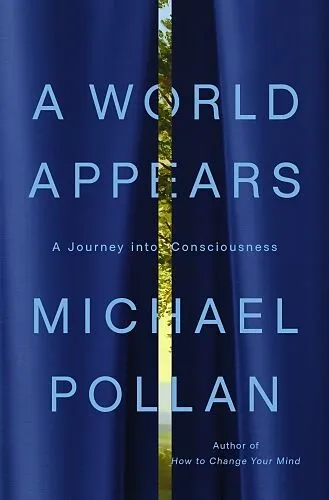

A World Appears
Beschreibung
From the #1 When it comes to the phenomenon that is consciousness, there is one point on which scientists, philosophers, and artists all agree: that it feels When neuroscientists began studying consciousness in the early 1990s, they sought to explain how and w...Format auswählen
- Fester EinbandCHF 33.50
- Kartonierter EinbandCHF 36.40
Wird oft zusammen gekauft
Andere Kunden kauften auch
Beschreibung
From the #1 When it comes to the phenomenon that is consciousness, there is one point on which scientists, philosophers, and artists all agree: that it feels When neuroscientists began studying consciousness in the early 1990s, they sought to explain how and why three pounds of spongy grey matter could generate a subjective point of view--assuming that the brain is the source of our felt reality. Pollan takes us to the cutting edge of the field, where scientists are entertaining more radical (and less materialist) theories of consciousness. He introduces us to “plant neurobiologists” searching for the first flicker of consciousness in plants; scientists striving to engineer feelings into AI, and psychologists and novelists seeking to capture the felt experience of our slippery stream of consciousness. In Pollan’s dazzling exploration of consciousness, he discovers a world far deeper and stranger than our everyday reality. Eye-opening and mind-expanding, <A World Appears< takes us into the laboratories of our own minds, ultimately showing us how we might make better use of the gift of awareness to more meaningfully connect with our deepest selves....
Autorentext
Michael Pollan
Klappentext
**The Instant New York Times Bestseller • One of Barack Obama's Favorite Books of the Summer • Finalist for the Kirkus Prize
"Pollan’s real genius—the word is not too strong—remains intact. That is his uncanny ability to scent the direction in which the culture is headed. He did it with food and psychedelics, and now, though A World Appears focuses on AI only intermittently, he has done it again." —Charles Finch, The Atlantic
From the #1 New York Times bestselling author of How to Change Your Mind, a panoptic exploration of consciousness—what it is, who has it, and why—and a meditation on the essence of our humanity
**
When it comes to the phenomenon that is consciousness, there is one point on which scientists, philosophers, and artists all agree: It feels like something to be us. Yet the fact that we have subjective experience of the world remains one of nature’s greatest mysteries. How is it that our mental operations are accompanied by feelings, thoughts, and a sense of self? What would a scientific investigation of our inner life look like when we have as little distance and perspective on it as fish do of the sea? In A World Appears, Michael Pollan traces the unmapped continent that is consciousness, bringing radically different perspectives—scientific, philosophical, literary, spiritual, and psychedelic—to see what each can teach us about this central fact of life.
Pollan takes us to the cutting edge of the field, where scientists are entertaining more radical (and less materialist) theories of consciousness. He introduces us to “plant neurobiologists” searching for the first flicker of consciousness in plants, scientists striving to engineer feelings into AI, and psychologists and novelists seeking to capture the felt experience of our slippery stream of consciousness. In Pollan’s dazzling exploration, he discovers a world far deeper and stranger than our everyday reality. Eye-opening and mind-expanding, A World Appears tunnels into the laboratories of our own minds, ultimately showing us how we might make better use of the gift of awareness to more meaningfully connect with the world and our deepest selves.
Leseprobe
Introduction
**The Wager
**
In 1998, at a time when the modern science of consciousness was not even a decade old, two of its leading lights made a bet at a bar in Bremen late one night. Christof Koch was an intense young German American neuroscientist who had been in hot pursuit of the “neural correlates” of consciousness since the late 1980s. That’s when he, as a twenty‑eight‑year‑old postdoc at MIT, had teamed up with Francis Crick, one of the most revered scientists in the world. It was Crick who had, along with his colleagues, discovered the double‑ helical structure of DNA, solving one of the deepest puzzles of biology: how traits get passed down from one generation to the next. The discovery earned Crick and his colleagues a Nobel Prize in 1962 and gave him the confidence to believe that consciousness, perhaps the greatest mystery in science, would yield to the power of the same reductive approach that had cracked the code of life. In Koch, Crick had found a brilliant and energetic collaborator. Born in the Midwest to German parents in 1956, Koch had a PhD in what is now called computational neuroscience from Germany’s Max Planck Institute for Biological Cybernetics and would soon join the faculty at Caltech.
With Koch at his side, Crick set out to explain how it is that a particular piece of brain tissue generates the feeling of being alive—the sense of a self in possession of subjective experience. If not for Crick’s willingness to spend his considerable intellectual capital on it, the scientific study of consciousness might still be an intellectual backwater, not to mention a suicidal career move for a young neuroscientist or philosopher. For a sense of the subject’s standing at the time, consider this tart entry on consciousness in The International Dictionary of Psychology, first published in 1989: “A fascinating but elusive phenomenon: it is impossible to specify what it is, what it does, or why it evolved. Nothing worth reading has been written on it.”
But by 1998, Crick and Koch had published important papers that linked various measures of brain activity, such as specific frequencies of brain waves, to aspects of consciousness. It seemed only a matter of time before this approach would identify the specific neurons responsible for subjective experience—a physical signature of consciousness in the brain.
Not so fast, Koch’s drinking partner had argued that night. David Chalmers, an Australian‑born philosopher, thirty‑two at the time, had made a splash four years earlier at a consciousness conference in Tucson—remarkably enough, the very first interdisciplinary conference devoted to the subject. Chalmers was an unknown postdoc at Washington University in St. Louis when he spotted a notice for the Tucson conference; he had written his dissertation on consciousness* and thought maybe he could wangle an invitation to do a poster session outlining his approach. To his surprise, he was offered a speaking slot on the main stage.
With his long, stringy hair and boxy black jacket (think David Byrne circa 1984) over a concert T‑shirt, Chalmers looked more like a rock and roller than a respectable philosopher.* Before teeing up his own theories, he spent ten or twenty minutes framing the larger question of how best to approach the subject of consciousness by proposing that it be divided into two types of problems. First, there were what he called the “easy problems” of consciousness, which included figuring out the workings of mental operations like learning, memory, discrimination, and perception. Not all that easy, but at least we had a proven scientific method for approaching such behavioral and cognitive functions in terms of specific measures of brain activity. And then there was what he memorably called the “hard problem” of consciousness: the puzzle of why any of these mental operations are accompanied by any conscious experience whatsoever. “Why doesn’t all this information‑processing go on ‘in the dark,’ free of any inner feel?” he asked in a subsequent paper. Science, organized around objective third‑person measurement, was ill‑equipped to explain a phenomenon that was inherently subjective, qualitative, and internal. The power of science …