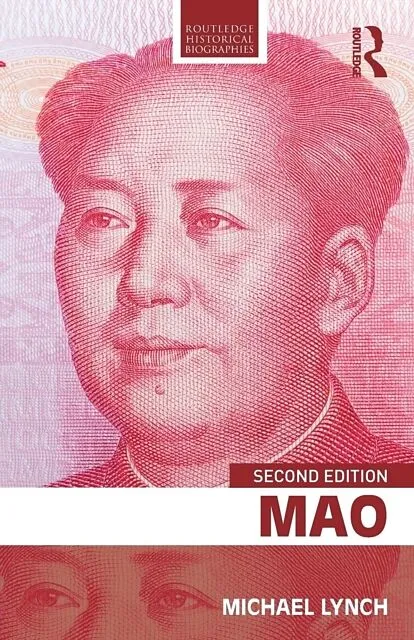
Mao
Beschreibung
Zusatztext 'Perhaps more than any other historical figure! Mao Zedong remains a paradox - was he a revolutionary visionary! a bloodthirsty tyrant! or a combination of the two? In this second edition! Michael Lynch deftly explores the contradictions and conflic...Format auswählen
- Kartonierter EinbandCHF 79.60
Wird oft zusammen gekauft
Andere Kunden kauften auch
Beschreibung
Zusatztext 'Perhaps more than any other historical figure! Mao Zedong remains a paradox - was he a revolutionary visionary! a bloodthirsty tyrant! or a combination of the two? In this second edition! Michael Lynch deftly explores the contradictions and conflicts within Mao's political ideology and personal life by rooting Maoism within its sociopolitical context. Approachable and highly readable! Mao is certain to become a key text for scholars and students alike.'Emily Baum! University of California! Irvine 'In his concise yet penetrating narrative! Lynch steps out of the Western ideological framework to examine Mao Zedong on his own terms. He skilfully places Mao in the broader context of tumultuous twentieth century China! which was forced to grapple with the twin burdens of her proud and glorious historical past and the bleak reality of a world order dominated in almost every way by foreign powers. This nuanced and vividly written biography is a must-read to understand why Mao Zedong continues to be revered in China! both officially and among a wide segment of Chinese society.'Xing Hang! Brandeis University Informationen zum Autor Michael Lynch is an Honorary Fellow of the University of Leicester and specialises in European and Far Eastern history. He has contributed to a number of television documentaries on modern historical themes, and his publications include Hitler (2013), Authoritarian States (2015) and China 19391997 (2016). Klappentext Michael Lynch presents an engaging and thorough account of Mao's life and politics, making use of a wealth of primary and secondary sources. He locates Maoism in the broader context of twentieth century Chinese history, discussing the development of the Chinese Communist Party, the creation of the People's Republic of China and the Cultural Revolution. Details of Mao's controversial private life as well as his political and philosophical thought add to this diverse picture of the influential leader. This second edition provides detailed analysis of the Long March, Sino-Soviet relations and the Great Famine and also includes a new chapter on Mao's legacy. Zusammenfassung Michael Lynch's second edition of Mao examines the life of this controversial figure. Opening with a detailed chronology, it delves into Mao's younger years and tracks his gradual rise to power, with a chapter dedicated to the cult status that surrounded him. Through a wealth of primary and secondary sources and a balanced consideration of the conflicting views that surround Mao's leadership, this book provides a thorough exploration of Mao's political and private life. Key features of the second edition include a detailed analysis of the Long March, an account of Sino-Japanese relations and an assessment of Mao's ongoing legacy. This biography will be essential reading for anyone interested in Mao and the politics of twentieth-century China. Inhaltsverzeichnis List of maps Chronology Introduction 1 Young Mao 2 Mao the Communist and Nationalist: 1921 30 3 From Futian to the Long March: 1930 35 4 The Yanan years: 1935 43 5 Years of triumph: 1943 50 6 Emperor of the Blue Ants: 1950 62 7 The Cult of Mao and the Cultural Revolution: 1962 76 8 Mao Zedong: an assessment Further reading Index ...
'Perhaps more than any other historical figure, Mao Zedong remains a paradox was he a revolutionary visionary, a bloodthirsty tyrant, or a combination of the two? In this second edition, Michael Lynch deftly explores the contradictions and conflicts within Mao's political ideology and personal life by rooting Maoism within its sociopolitical context. Approachable and highly readable, Mao is certain to become a key text for scholars and students alike.' Emily Baum, University of California, Irvine 'In his concise yet penetrating narrative, Lynch steps out of the Western ideological framework to examine Mao Zedong on his own terms. He skilfully places Mao in the broader context of tumultuous twentieth century China, which was forced to grapple with the twin burdens of her proud and glorious historical past and the bleak reality of a world order dominated in almost every way by foreign powers. This nuanced and vividly written biography is a must-read to understand why Mao Zedong continues to be revered in China, both officially and among a wide segment of Chinese society.' Xing Hang, Brandeis University
Autorentext
Michael Lynch is an Honorary Fellow of the University of Leicester and specialises in European and Far Eastern history. He has contributed to a number of television documentaries on modern historical themes, and his publications include Hitler (2013), Authoritarian States (2015) and China 19391997 (2016).
Klappentext
Michael Lynch presents an engaging and thorough account of Mao's life and politics, making use of a wealth of primary and secondary sources. He locates Maoism in the broader context of twentieth century Chinese history, discussing the development of the Chinese Communist Party, the creation of the People's Republic of China and the Cultural Revolution. Details of Mao's controversial private life as well as his political and philosophical thought add to this diverse picture of the influential leader. This second edition provides detailed analysis of the Long March, Sino-Soviet relations and the Great Famine and also includes a new chapter on Mao's legacy.
Zusammenfassung
Michael Lynch's second edition of Mao examines the life of this controversial figure. Opening with a detailed chronology, it delves into Mao's younger years and tracks his gradual rise to power, with a chapter dedicated to the cult status that surrounded him.
Through a wealth of primary and secondary sources and a balanced consideration of the conflicting views that surround Mao's leadership, this book provides a thorough exploration of Mao's political and private life. Key features of the second edition include a detailed analysis of the Long March, an account of Sino-Japanese relations and an assessment of Mao's ongoing legacy.
This biography will be essential reading for anyone interested in Mao and the politics of twentieth-century China.
Inhalt
List of maps
Chronology
Introduction
1 Young Mao
2 Mao the Communist and Nationalist: 1921**30
3 From Futian to the Long March: 1930**35
4 The Yanan years: 1935**43
5 Years of triumph: 1943**50
6 Emperor of the Blue Ants: 1950**62
7 The Cult of Mao and the Cultural Revolution: 1962**76
8 Mao Zedong: an assessment
Further reading
Index