
IHR WARENKORB IST AKTUELL LEER.
Haben Sie noch nichts passendes gefunden? Stöbern Sie durch unser komplettes Sortiment.
Oder melden Sie sich an bzw. registrieren Sie sich.
- Kostenlose Lieferung
- Kauf auf Rechnung
- Ex Libris Tiefpreis
- Filiallieferung und 650+ Abholorte
- Rabatt-Bons als Club-Mitglied
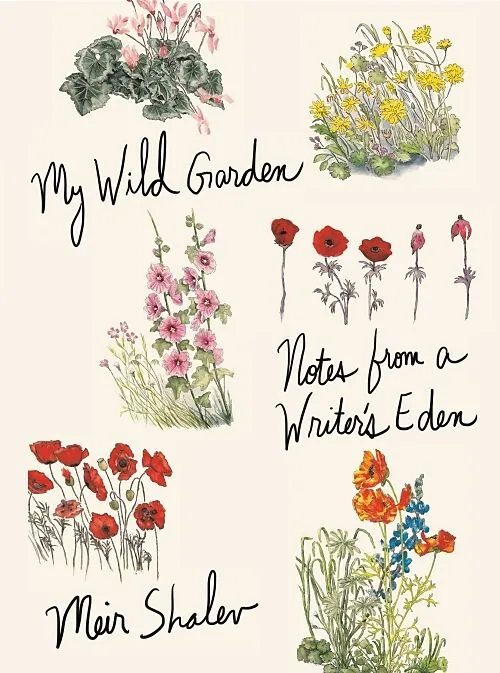
My Wild Garden
Beschreibung
A colorfully illustrated round of the season in the garden of the best-selling novelist, memoirist, and champion putterer with a wheelbarrow On the perimeter of Israel’s Jezreel Valley, with the Carmel mountains rising up in the west, Meir Shalev has a b...Format auswählen
- Fester EinbandCHF 33.20

Wird oft zusammen gekauft
Andere Kunden kauften auch
Beschreibung
A colorfully illustrated round of the season in the garden of the best-selling novelist, memoirist, and champion putterer with a wheelbarrow On the perimeter of Israel’s Jezreel Valley, with the Carmel mountains rising up in the west, Meir Shalev has a beloved garden, “neither neatly organized nor well kept,” as he cheerfully explains. Often covered in mud and scrapes, Shalev cultivates both nomadic plants and “house dwellers,” using his own quirky techniques. He extolls the virtues of the lemon tree, rescues a precious variety of purple snapdragon from the Jerusalem–Tel Aviv highway, and does battle with a saboteur mole rat. He even gives us his superior private recipe for curing olives. Informed by Shalev’s literary sensibility, his sometime riotous humor, and his deep curiosity about the land, My Wild Garden abounds with appreciation for the joy of living, quite literally, on Earth. Our borrowed time on any particular patch of it is enhanced, the author reminds us, by our honest, respectful dealings with all manner of beings who inhabit it with us.
“Insightful, funny . . . Full of wisdom . . . You come away from the garden memoir with a clear sense of the author—his concerns, his surroundings, his loves—and a string of reverberating questions. Why, for example, as Shalev notes, are so few flowers mentioned in the Bible? What does that say about us as a people? And why do the poppies sway—even when the air is still? . . . I went to sleep every night with the smell of fresh figs and lemons and the sound of birdsong in my ears and the image of Shalev’s beloved black cat, Kramer, the hero of many of his Hebrew children’s stories, sleeping the day away beneath the buckthorn tree.” —Mitch Ginsburg, The Times of Israel “A freewheeling horticultural homage . . . Shalev’s own garden serves as a point of departure for literary musings that bloom into a kind of ‘autobiography with flowers.’ . . . Witty prose expertly translated from the Hebrew by Joanna Chen and charmingly illustrated by Refaella Shir.” —Benjamin Balint, Tel Aviv Review of Books
“A nurturer of plants who is careful not to waste even a single seed and mourns the death of a tree, Shalev is a lyrical stylist and philosopher who writes with passion and humor. Drawings by Shir enhance the text.” —Sue O’Brien, Library Journal
“Charming musings on the ‘moments of bliss’ found in the garden . . . in which gardening teaches perspective and the rewards of hard work . . . Rests on solid botanical knowledge but is never heavy-handed.” —***Kirkus Reviews
Autorentext
Meir Shalev
Leseprobe
1: A NEW PLACE
At the heart of my garden stands the house where I live. I remember very well the day I saw it for the first time. Back then, I was looking for a house outside the city. I wandered through villages and hamlets; I poked around, knocked on doors; I questioned corner-store owners and met secretaries of agricultural cooperatives. I chatted with fathers and mothers and shared secrets with sons and daughters. I had already seen quite a few possible dwellings, but this one I loved at first sight: a small meager house, the kind that looks like what were once called Jewish Agency houses. A modest lawn dying at the front, prickles and dry weeds tumbling around it, and a few ornamental bushes and fruit trees, some of which were about to die of thirst.
The house stood on a slope. I went down and walked around it, and here was the surprise: an expansive, deep landscape that stretched out to the farthest western edges. It began with two plots of cultivated land with a few spears of cypresses at their margins, and above them two ranges of forested hills, dotted with dense impressionistic smudges of variegated green: the pale green of the Tabor oak, the dark green of the Palestine oak, here and there the gleaming green of the carob, and the green of the terebinth—that of the slightly faded Land of Israel terebinth and the more vibrant mastic. And above all this, veiled in the summer haziness of the valley, lay a familiar bluish range that extended from one end of the horizon to the other—the Carmel. Which valley? I don’t want to insult anyone, but when I say the valley, I am referring to my very own Jezreel Valley.
I turned around and looked back at the house. Because of the sloping nature of the plot, the rear of the house was supported by thin concrete pillars that created a space between the house and the ground below. Someone, I noticed, had built a small wire coop for chickens. I peeked in and saw four small carcasses bedecked in feathers, and they were all as dry as the tin water trough that stood beside them. When he left, that person had abandoned the chickens in their prison, to die of hunger or thirst. But the house filled me with the happiness of a new love, and even this evildoing did not curtail it.
I examined the plants and trees around it: an old pear tree, a dying lemon tree, a shady pecan tree, two oaks and three terebinths, chinaberry, and jacaranda. A hardy prickly pear also grew there, and a crisp marijuana plant, remarkably green against the brown and yellow background. I wondered who might be coming to water it with such devotion? At the front of the house stood a fig tree, its fruit overripe, but when I drew closer to it I saw tiny mounds of fresh sawdust, heralding disaster, piled up by the trunks. A closer look also revealed tunnel openings dug by the fig-tree borer, a harbinger of death that eats through the flesh of the trunk and eventually topples it.
Everything I saw suggested the garden would need much work and forethought. But although I’ve always loved nature, I had precious little experience in gardening. I was an observer: of my grandfather in Nahalal, and my mother—his daughter—in Jerusalem.
My grandfather was a professional planter who planted a vineyard, a grove, and an orchard on his farm. I loved watching him prune and trellis the grapes in his vineyard. The movements of his hands enchanted me. I was just a child and did not know how to express this in words, but I felt that the movements of a craftsman were the most beautiful movements ever to be embedded within the human body. To this day I enjoy watching carpenters, locksmiths, farriers, stonecutters, bakers—more than watching athletes or ballet dancers.
My grandfather grew up in a Hasidic family in the Ukraine, and when he was old enough to know his own mind, he underwent a religious conversion from the work of God to the work of the land. But my grandfather did not forget his Talmud: the first trees he planted in his yard were olives, pomegranates, and figs, all close to the vineyard. It was no coincidence that these were the fruit trees the Torah included in the seven species that the Land of Israel was blessed with. Alongside the house he planted orange and grapefruit, two more pomegranate trees, and one unbelievable tree that yielded oranges, lemons, tangerines, and other citrus fruits that I do not recall—perhaps grapefruit and, perhaps, according to the storylike nature of my family, avocado or tomato. Either way, that tree aroused awe and excitement within me, and this only increased when I asked my mother how her father had managed to create it. “He’s a magician,” she said. Years later I discovered it was a perfectly ordinary grafting of bitter orange understock, but my mother’s words were already engraved upon me, and the impression has never dissipated.
She herself cultivated a small garden in Jerusalem, where we lived in the Kiryat …