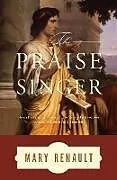
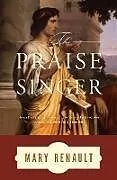
The Praise Singer
Beschreibung
Zusatztext "[Renault's] historical novels . . . are among the finest ever written." The Washington Post Book World A song of praise! a work of love! a serene! deliberate book! full of wisdom! rich in character! incident and description. Wall Street Journal Inf...Format auswählen
- Kartonierter EinbandCHF 19.20

Wird oft zusammen gekauft
Andere Kunden kauften auch
Beschreibung
Zusatztext "[Renault's] historical novels . . . are among the finest ever written." The Washington Post Book World A song of praise! a work of love! a serene! deliberate book! full of wisdom! rich in character! incident and description. Wall Street Journal Informationen zum Autor Mary Renault Klappentext In the story of the great lyric poet Simonides, Mary Renault brings alive a time in Greece when tyrants kept an unsteady rule and poetry, music, and royal patronage combined to produce a flowering of the arts. Born into a stern farming family on the island of Keos, Simonides escapes his harsh childhood through a lucky apprenticeship with a renowned Ionian singer. As they travel through 5th century B.C. Greece, Simonides learns not only how to play the kithara and compose poetry, but also how to navigate the shifting alliances surrounding his rich patrons. He is witness to the Persian invasion of Ionia, to the decadent reign of the Samian pirate king Polykrates, and to the fall of the Pisistratids in the Athenian court. Along the way, he encounters artists, statesmen, athletes, thinkers, and lovers, including the likes of Pythagoras and Aischylos. Using the singer's unique perspective, Renault combines her vibrant imagination and her formidable knowledge of history to establish a sweeping, resilient vision of a golden century.KEOS I Keos is stern. You'd not suppose so from the proverb, that it knows not the horse nor ox, but is rich in the gladdening vine-fruit, and brings forth poets. That last had not been added, when I was born. On the other hand, it is a lie that on Keos a man has to take hemlock when he reaches sixty. That was only in the old siege when the warriors had to be kept alive. Nowadays, it is just considered good manners. Iulis, my native city, is high up the mountain, above Koressia harbor. I used to sit on a rock with my father's sheep around me, looking at the foreign sails and wondering where they came from; they thread the Kyklades from all four corners of the world. I could seldom go down to see. My father was not a man to leave his land to a steward while he sat at ease, nor let his sons go sightseeing. My elder brother, Theasides, got leave from work much oftener than I; not because he was the heir, which would have made it heavier, but because he was good with the disk and javelin and a fine pankratiast, and had to train for the games to do the family credit. He was handsome too. My parents never told me in so many words that they preferred me out of sight, but they had no need. I seemed to have known it from my birth. Keeping out of sight, one is a good deal alone. But if one is short of company, one can always make it. I kept, you might say, the very best company in Keos. If a fine ship with a painted sail passed proudly by the port, keeping its mystery, for me it was the Argo with its talking prow and its crew of heroes, going north to the bewitched Kolchian shore. If a hawk hovered, I saw winged Perseus poised for his flashing swoop; grasping, like the hawk its prey, the Gorgon's deadly head to freeze the dragon. The boulder I sat on had been flung by Herakles, playing ball as a boy. When I drove my flock to pasture, I was with Achilles on some great cattle-raid, bringing the spoils of a plundered city back to camp. As I dreamed I sang, as far back as I can remember. I needed only to be alone, among the creatures of my thought, and the songs would come. Childish, at first; tunes picked up from the work songs of my father's thralls, or the women weaving. They satisfied me, till I was old enough to be taken to the Apollo festival, and heard a rhapsodist chanting his bit of Homer, and some local poet taking his choir through a choral ode. I suppose I was nine or ten. For the first time, I knew that my secret joy was a thing grown men could make a life of, even a living. I ...
"[Renault's] historical novels . . . are among the finest ever written."–The Washington Post Book World
“A song of praise, a work of love, a serene, deliberate book, full of wisdom, rich in character, incident and description.” –*Wall Street Journal
*
Autorentext
Mary Renault was born in London and educated at Oxford. She then trained for three years as a nurse, and wrote her first published novel, Promise of Love. Her next three novels were written while serving in WWII. After the war, she settled in South Africa and traveled considerably in Africa and Greece. It was at this time that she began writing her brilliant historical reconstructions of ancient Greece, including The King Must Die, The Last of the Wine, and The Persian Boy. She died in Cape Town in 1983.
Klappentext
In the story of the great lyric poet Simonides, Mary Renault brings alive a time in Greece when tyrants kept an unsteady rule and poetry, music, and royal patronage combined to produce a flowering of the arts.
Born into a stern farming family on the island of Keos, Simonides escapes his harsh childhood through a lucky apprenticeship with a renowned Ionian singer. As they travel through 5th century B.C. Greece, Simonides learns not only how to play the kithara and compose poetry, but also how to navigate the shifting alliances surrounding his rich patrons. He is witness to the Persian invasion of Ionia, to the decadent reign of the Samian pirate king Polykrates, and to the fall of the Pisistratids in the Athenian court. Along the way, he encounters artists, statesmen, athletes, thinkers, and lovers, including the likes of Pythagoras and Aischylos. Using the singer's unique perspective, Renault combines her vibrant imagination and her formidable knowledge of history to establish a sweeping, resilient vision of a golden century.
Leseprobe
KEOS
I
Keos is stern. You'd not suppose so from the proverb, that it knows not the horse nor ox, but is rich in the gladdening vine-fruit, and brings forth poets. That last had not been added, when I was born. On the other hand, it is a lie that on Keos a man has to take hemlock when he reaches sixty. That was only in the old siege when the warriors had to be kept alive. Nowadays, it is just considered good manners.
Iulis, my native city, is high up the mountain, above Koressia harbor. I used to sit on a rock with my father's sheep around me, looking at the foreign sails and wondering where they came from; they thread the Kyklades from all four corners of the world. I could seldom go down to see. My father was not a man to leave his land to a steward while he sat at ease, nor let his sons go sightseeing. My elder brother, Theasides, got leave from work much oftener than I; not because he was the heir, which would have made it heavier, but because he was good with the disk and javelin and a fine pankratiast, and had to train for the games to do the family credit. He was handsome too. My parents never told me in so many words that they preferred me out of sight, but they had no need. I seemed to have known it from my birth.
Keeping out of sight, one is a good deal alone. But if one is short of company, one can always make it. I kept, you might say, the very best company in Keos.
If a fine ship with a painted sail passed proudly by the port, keeping its mystery, for me it was the Argo with its talking prow and its crew of heroes, going north to the bewitched Kolchian shore. If a hawk hovered, I saw winged Perseus poised for his flashing swoop; grasping, like the hawk its prey, the Gorgon's deadly head to freeze the dragon. The boulder I sat on had been flung by Herakles, playing ball as a boy. When I drove my flock to pasture, I was with Achilles on some great cattle-raid, bringing the spoils of a plundered city back to camp.
As I dreamed I sang, as far back as I can remember. I needed only to be alone, among the creatures of my thought, and the songs would come. Childish, at first; tunes picked up from the work songs of my fat…