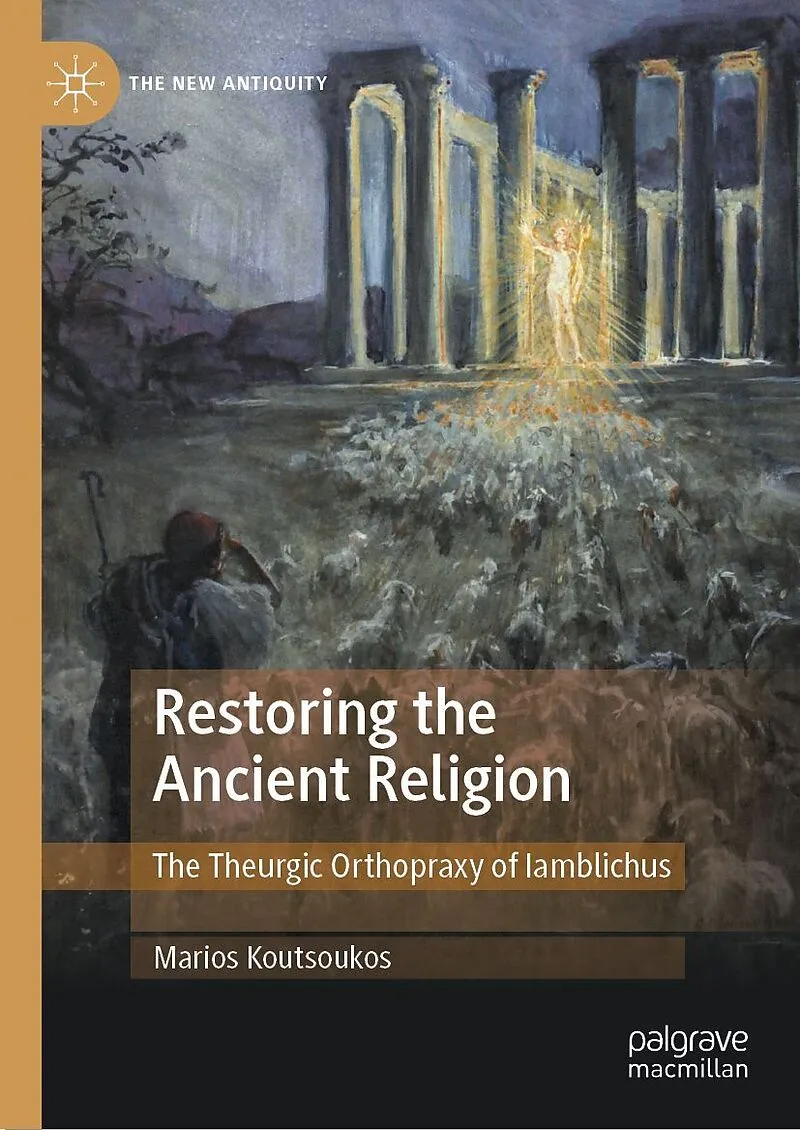
Restoring the Ancient Religion
Beschreibung
This book reconsiders Iamblichus' Response to Porphyry , Late Antiquity's seminal work on theurgy, which is often referred to as De Mysteriis . Was this text intended to be more than just a defence of ritualism or a philosophical crossing of metaphysical wits...Format auswählen
- Fester EinbandCHF 156.40

Wird oft zusammen gekauft
Andere Kunden kauften auch
Beschreibung
This book reconsiders Iamblichus' Response to Porphyry , Late Antiquity's seminal work on theurgy, which is often referred to as De Mysteriis . Was this text intended to be more than just a defence of ritualism or a philosophical crossing of metaphysical wits between Porphyry and Iamblichus? This volume examines whether De Mysteriis constituted a manifesto of restoration, a call to resignify and revive a religion that Iamblichus felt was spiralling into barren traditionalism.
Through a nuanced examination of Iamblichus' theurgy, this book shows the emergence of a sophisticated philosophico-ritualistic system, one designed to reform religious practice through divine epiphanies and direct communication with the gods. Using a thorough textual analysis, this book uncovers crucial distinctions between theurgy and magic and explores the mechanics of divine illumination during theurgic rituals in the context of Iamblichus' intricate hierarchy of spiritual beings. In this system, this book demonstrates, material objects could become vessels of divine power and humans could become interlocutors with the divine itself.
Reframes "De Mysteriis" as a call for resignification focusing on communication with the divine Examines how theurgic rituals were intended to bridge the human and divine realms Explores animating statues as a way to bring divine presences into the world of matter
Autorentext
Marios Koutsoukos received his PhD in Classics from the University of Liverpool, UK. His current research focuses on Late Antique theurgy, hermeticism, Graeco-Egyptian magic, animated statues and the survival of mystery cults beyond the sixth century. He also works as a fiction author, translator and screenwriter.
Klappentext
This is an important, original and timely book, which clearly demonstrates the close relationship and connections between late antique theurgy and traditional Mediterranean religions, as well as offering a re-assessment of the dynamics of theurgic ritual practices, such as those relating to divine epiphany, and of the 'equalising' power of theurgy in relation to the latter's inclusive approach towards female spiritual authority. This powerful work illuminates the impact and legacy of Iamblichus' theurgic project in Late Antiquity through to the early modern period and is essential reading for all who are interested in the religions, philosophy and culture of Late Antiquity.
Crystal Addey, Lecturer in Classics, University College Cork, Ireland, and author of Divination and Theurgy in Neoplatonism: Oracles of the Gods .
Not since Gregory Shaw's Theurgy and the Soul has a full-length study on Iamblichus so considerably expanded our knowledge of late Platonic religiosityFor scholars of Late Antiquity, Neoplatonism, and ancient religion, this work will be essentialdemanding careful study, while also inviting readers into a more intricate and polyphonic world where philosophy and ritual converge and form not only a pathway to the divine but, perhaps more sweetly, to human flourishing and its infinite capacity to imagine ever new and more beautiful ways of life. -Danielle Layne, Professor of Philosophy, Gonzaga University, USA
This book reconsiders Iamblichus' Response to Porphyry, Late Antiquity's seminal work on theurgy, which is often referred to as De Mysteriis. Was this text intended to be more than just a defence of ritualism or a philosophical crossing of metaphysical wits between Porphyry and Iamblichus? This volume examines whether De Mysteriis constituted a manifesto of restoration, a call to resignify and revive a religion that Iamblichus felt was spiralling into barren traditionalism.
Through a nuanced examination of Iamblichus' theurgy, this book shows the emergence of a sophisticated philosophico-ritualistic system, one designed to reform religious practice through divine epiphanies and direct communication with the gods. Using a thorough textual analysis, this book uncovers crucial distinctions between theurgy and magic and explores the mechanics of divine illumination during theurgic rituals in the context of Iamblichus' intricate hierarchy of spiritual beings. In this system, this book demonstrates, material objects could become vessels of divine power and humans could become interlocutors with the divine itself.
Marios Koutsoukos received his PhD in Classics from the University of Liverpool, UK. His current research focuses on Late Antique theurgy, hermeticism, Graeco-Egyptian magic, animated statues and the survival of mystery cults beyond the sixth century. He also works as a fiction author, translator and screenwriter.
Inhalt
- The Orthopraxy of Iamblichus.- 2. Spiritual Authority in Late Antiquity: Magic, Theurgy and Miracles.- 3. Theurgic Dynamics.- 4. The Epiphanic Dimension of Theurgy.- 5. Jesus, the Theurgist.- 6. Theurgy Without Borders: Iamblichus as the Mystagogue of the Ecumene.- 7. Theurgic Ripples in the Empire - The Legacy of Iamblichus.


