Beschreibung
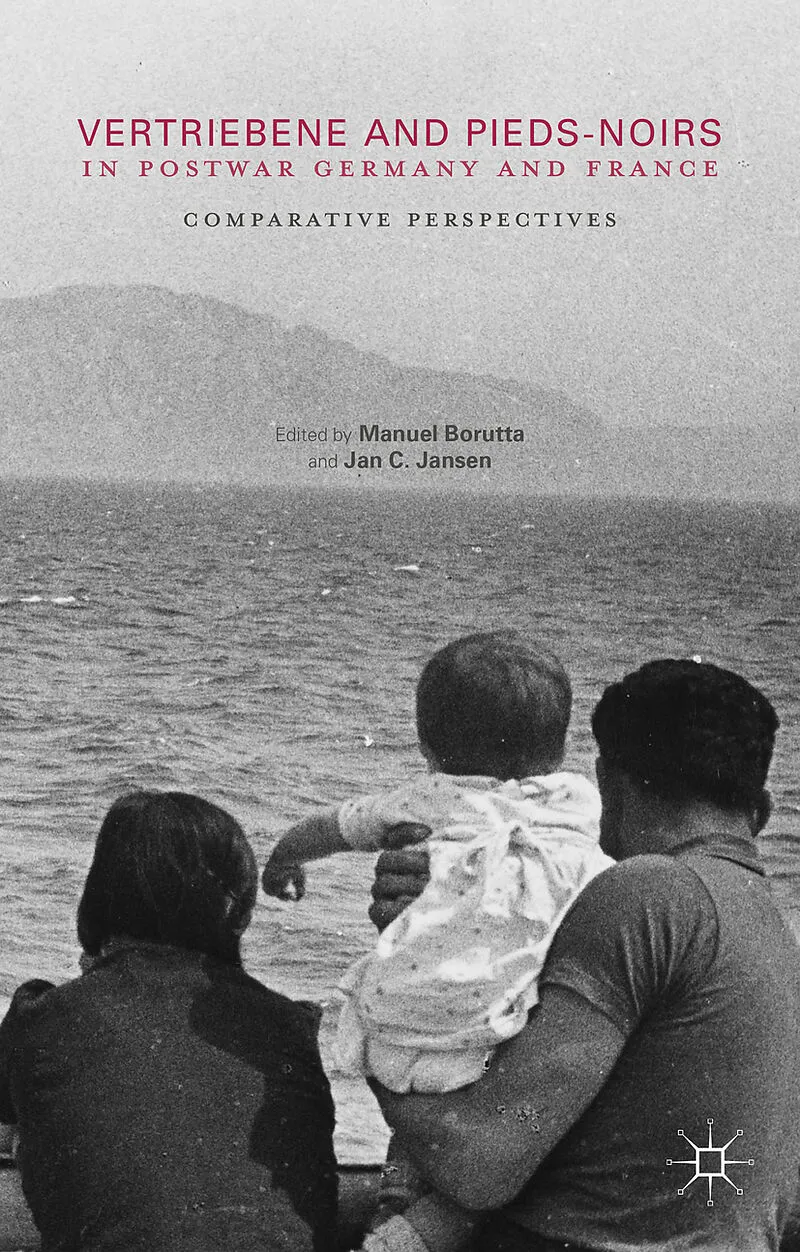
This volume compares one of the largest instances of 'ethnic cleansing' the German expellees from the East (Vertriebene) with the most important case of decolonization migration the French repatriates of Algeria (pieds-noirs). This volume nonetheless constitu...This volume compares one of the largest instances of 'ethnic cleansing' the German expellees from the East (Vertriebene) with the most important case of decolonization migration the French repatriates of Algeria (pieds-noirs).
This volume nonetheless constitutes a highly valuable collection of essays. It brings together many of the best-known experts on either subject and showcases the increasingly sophisticated, critical, and professional character of research in these fields in recent years. (Gaëlle Fisher, H-Nationalism, H-Net Reviews, February2018)
Articles are supremely researched, compelling, and enjoyable to read. This book provides a rich comparative study, the first of its kind, and certainly the first in English to address two lesser known populations of migrants who had and continue to have an important role in the national identities of France and Germany. Specialists in migration studies, diaspora and memory studies, as well as the unversed in the history of the Pieds-Noirs and Vertriebene, will find this book useful. (Amy L. Hubbell, EuropeNow Journal, europenowjournal.org, April, 2017)
Autorentext
Manuel Borutta is Assistant Professor for Mediterranean history at the Ruhr-University Bochum in Germany. Among his recent publications are A Colonial Sea: The Mediterranean, 1798-1956 (2012, co-editor with Sakis Gekas), and Antikatholizismus: Deutschland und Italien im Zeitalter der europäischen Kulturkämpfe (2011).
Jan C. Jansen is Research Fellow at the German Historical Institute in Washington, DC, USA. He is the author of Erobern und Erinnern: Symbolpolitik, öffentlicher Raum und französischer Kolonialismus in Algerien 1830-1950 (2013) and co-author, with Jürgen Osterhammel, of Kolonialismus: Geschichte, Formen, Folgen (2012) and Dekolonisation: Das Ende der Imperien (2013).
Klappentext
After 1945 and 1962, Germany and France received millions of refugees and expellees from Middle and Eastern Europe and from North Africa. Bringing together leading international scholars from both fields, this volume compares one of the largest instances of 'ethnic cleansing' the Germans from the East (Vertriebene) with the most important case of decolonization migration the French repatriates of Algeria (pieds-noirs). By shifting the focus away from the origins and forms to the aftermath of these two examples of mass migration, the book explores to which extent postwar Europe was shaped by the integration of migrants. How did this process impact on the definition of citizenship and the construction of the welfare state in postwar Germany and France? How did it alter the associational and political landscape of both countries? Which marks did it leave on the public memory of crucial chapters in their national histories?
Inhalt
Introduction: Comparing Vertriebene and Pieds-Noirs; Manuel Borutta and Jan C. Jansen
PART I: FROM EMPIRE TO NATION-STATE: 1945 AND 1962
The Birth of the Hexagon: 1962 and the Erasure of France's Supranational History; Todd Shepard
PART II: REPATRIATION AND INTEGRATION
The Postcolonial Repatriations of the French of Algeria: An Emblematic Case of a Public Integration Policy; Yann Scioldo-Zürcher
PART III: SELF-ORGANIZATION AND REPRESENTATION
Unity above all? Relationships and Rivalries within the Pied-Noir Community; Claire Eldridge
PART IV: POLITICAL IMPACT AND PARTICIPATION
The Pieds-Noirs and French Political Life, 1962-2015; Eric Savarese
PART V: COMMEMORATIVE PRACTICES AND EMOTIONS
Pied-Noir Pilgrimages, Commemorative Spaces, and Counter-Memory; Michèle Baussant
PART VI: POLITICS OF REMEMBRANCE
Memory Lobbying and the Shaping of 'Colonial Memories' in France since 1990: the Local, the National, and the International; Jan C. Jansen
Conclusions: Comparison the Way to Understanding; Etienne François