Beschreibung
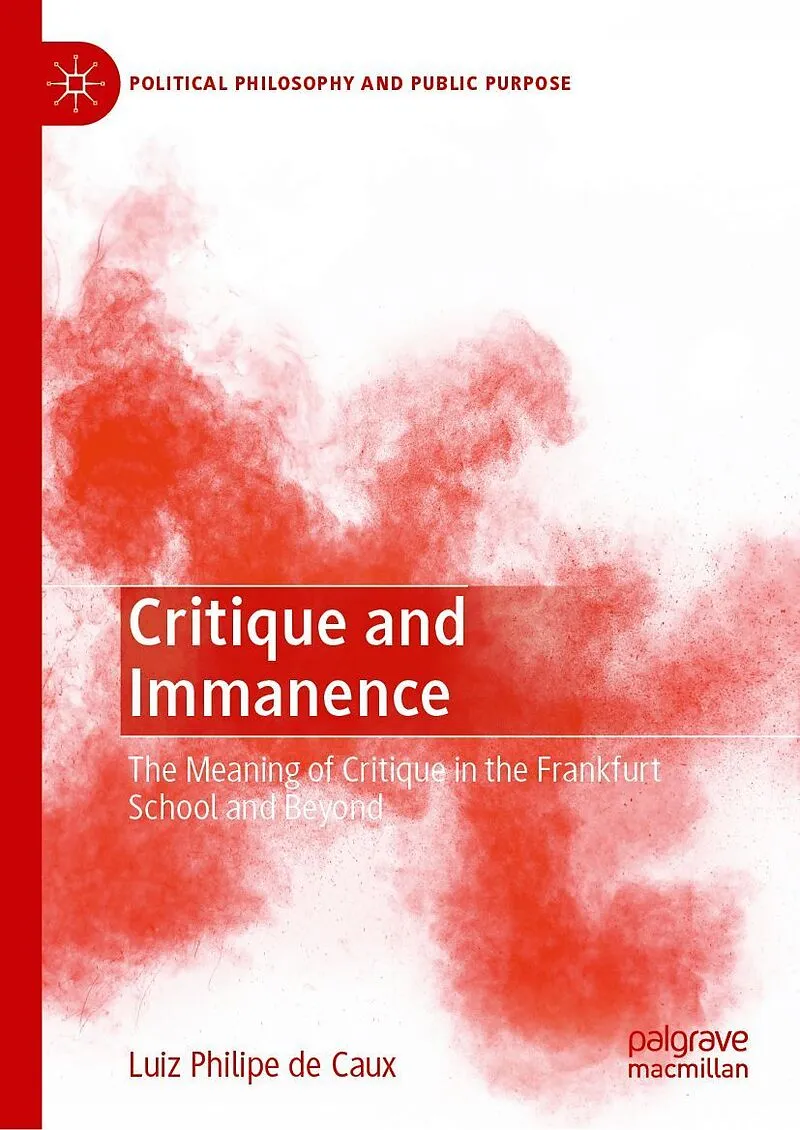
Critique and Immanence tells a critical and philosophical history of the succession of generations of Frankfurtian Critical Theory and presents a systematic Adorno-inspired argument concerning the concept of immanent critique. Rather than asking what it means...Critique and Immanence tells a critical and philosophical history of the succession of generations of Frankfurtian Critical Theory and presents a systematic Adorno-inspired argument concerning the concept of immanent critique. Rather than asking what it means for critique to be immanent, the book inverts the question; starting with more recent protagonists of this tradition, such as Rahel Jaeggi, and going all the way back to Adorno, it is guided by the question of what the scope of immanence is when critical theorists designate their own critique as immanent. To what precisely is critique immanent? To the extent that the boundaries delineating the space of immanence are redrawn by successive generations, it becomes possible to continue coherently advocating an immanent form of critique, yet one that becomes increasingly less critical. This book rereads the Frankfurt School's family novel against the grain: beginning from its end, the book diagnoses a state of exhaustion in the tradition, whose defining symptom is its very self-thematization. As the book delves into this history in reverse, two distinct concepts of immanence are uncovered, along with two corresponding concepts of immanent critique. While Axel Honneth's positive "immanent critique" defines the space of the social as coextensive with normativity, thereby restricting the scope of critique, Adorno develops a dialectical and negative concept of immanence that contains transcendence within itself.
Explores how immanent critique shifts from Adorno's critical negativity to Honneth's normative reconstruction Reveals a normative reductionism in contemporary Critical Theory hindering an adequate formulation of immanent critique Exposes the structure of Adornian negative dialectics in contrast to Hegelian dialectics
Autorentext
Luiz Philipe de Caux is Professor in the Department of Philosophy at the Universidade Federal Rural do Rio de Janeiro (UFRRJ), Brazil, and a Research Fellow of the Fundação Carlos Chagas Filho de Amparo à Pesquisa do Estado do Rio de Janeiro (FAPERJ).
Klappentext
Critique and Immanence tells a critical and philosophical history of the succession of generations of Frankfurtian Critical Theory and presents a systematic Adorno-inspired argument concerning the concept of immanent critique. Rather than asking what it means for critique to be immanent, the book inverts the question; starting with more recent protagonists of this tradition, such as Rahel Jaeggi, and going all the way back to Adorno, it is guided by the question of what the scope of immanence is when critical theorists designate their own critique as immanent. To what precisely is critique immanent? To the extent that the boundaries delineating the space of immanence are redrawn by successive "generations," it becomes possible to continue coherently advocating an immanent form of critique, yet one that becomes increasingly less critical. This book rereads the Frankfurt School’s family novel against the grain: beginning from its end, the book diagnoses a state of exhaustion in the tradition, whose defining symptom is its very self-thematization. As the book delves into this history in reverse, two distinct concepts of immanence are uncovered, along with two corresponding concepts of immanent critique. While Axel Honneth’s positive "immanent critique" defines the space of the "social" as coextensive with normativity, thereby restricting the scope of critique, Adorno develops a dialectical and negative concept of immanence that contains transcendence within itself.
Inhalt
Chapter 1: Introduction.- Chapter 2: The transformation of the critical theory of society into a traditional theory of critique.- Chapter 3: Honneth and positive "immanent" critique.- Chapter 4: Adorno and negative immanent critique.- Chapter 5: Conclusion.