Beschreibung
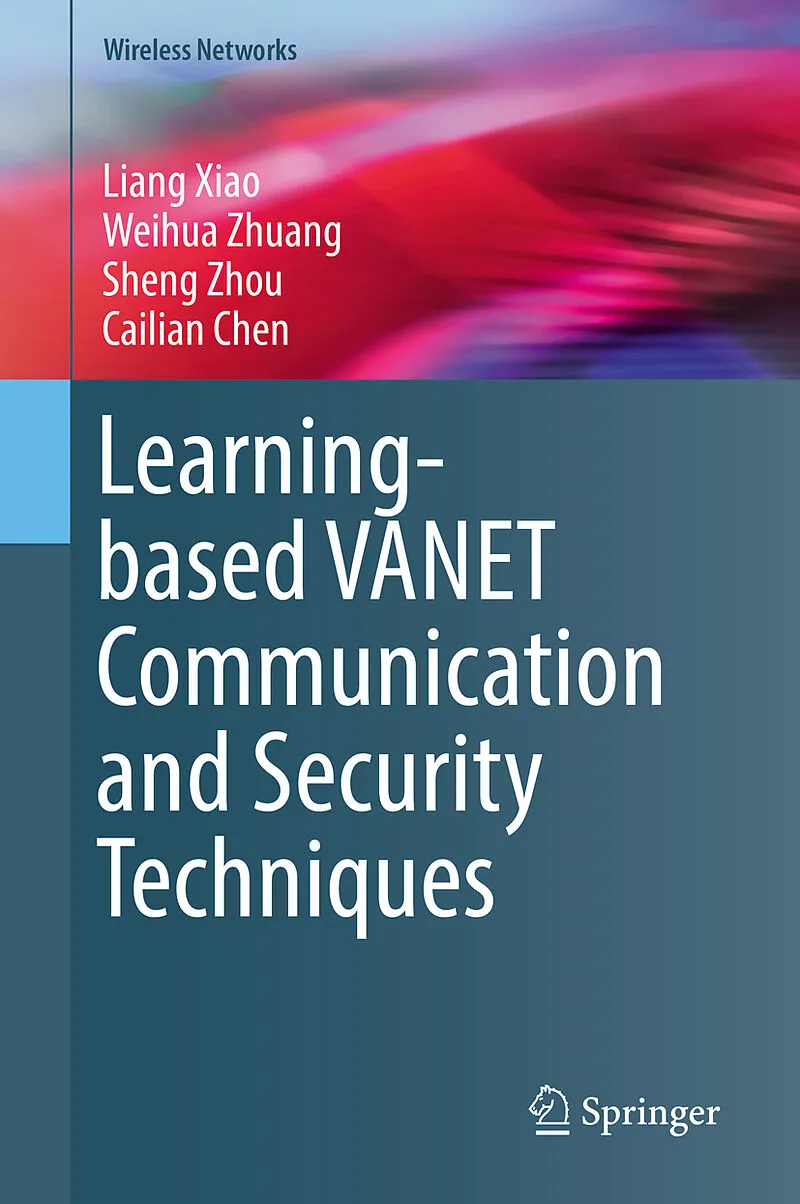
This timely book provides broad coverage of vehicular ad-hoc network (VANET) issues, such as security, and network selection. Machine learning based methods are applied to solve these issues. This book also includes four rigorously refereed chapters from prom...This timely book provides broad coverage of vehicular ad-hoc network (VANET) issues, such as security, and network selection. Machine learning based methods are applied to solve these issues. This book also includes four rigorously refereed chapters from prominent international researchers working in this subject area. The material serves as a useful reference for researchers, graduate students, and practitioners seeking solutions to VANET communication and security related issues. This book will also help readers understand how to use machine learning to address the security and communication challenges in VANETs. Vehicular ad-hoc networks (VANETs) support vehicle-to-vehicle communications and vehicle-to-infrastructure communications to improve the transmission security, help build unmanned-driving, and support booming applications of onboard units (OBUs). The high mobility of OBUs and the large-scale dynamic network with fixed roadside units (RSUs) make the VANET vulnerable to jamming. The anti-jamming communication of VANETs can be significantly improved by using unmanned aerial vehicles (UAVs) to relay the OBU message. UAVs help relay the OBU message to improve the signal-to-interference-plus-noise-ratio of the OBU signals, and thus reduce the bit-error-rate of the OBU message, especially if the serving RSUs are blocked by jammers and/or interference, which is also demonstrated in this book.
This book serves as a useful reference for researchers, graduate students, and practitioners seeking solutions to VANET communication and security related issues.
Investigates the fundamental principles for communication and security issues in VANETs, including the system fundamentals and algorithm fundamentals. These fundamental principles help to fully and deeply understand the communication and security issues for vehicular ad-hoc networks Shows how machine learning techniques can solve problems in vehicular ad-hoc networks Investigates in various aspects, including authentication in VANETs, VANET communication against smart jamming, task offloading in vehicular edge computing networks, and network selection on heterogeneous vehicle network.
Autorentext
Liang Xiao (Senior Member, IEEE) received the B.S. degree in communication engineering from the Nanjing University of Posts and Telecommunications, China, in 2000, the M.S. degree in electrical engineering from Tsinghua University, China, in 2003, and the Ph.D. degree in electrical engineering from Rutgers University, NJ, USA, in 2009. She was a Visiting Professor with Princeton University, Virginia Tech, and the University of Maryland, College Park. She is currently a Professor with the Department of Information and Communication Engineering, Xiamen University, Xiamen, China. She was a recipient of the Best Paper Award for 2016 INFOCOM Big Security WS and 2017 ICC. She has served as an Associate Editor for IEEE Transactions on Information Forensics and Security and a Guest Editor for IEEE Journal of Selected Topics in Signal Processing. Helin Yang (Member, IEEE) received the B.S. and M.S. degrees from the School of Telecommunications Information Engineering, Chongqing University of Posts and Telecommunications, in 2013 and 2016, respectively, and the Ph.D. degree from the School of Electrical and Electronic Engineering, Nanyang Technological University, Singapore, in 2020. He is currently an Associate Professor with the Department of Information and Communication Engineering, Xiamen University, Xiamen, China. His current research interests include wireless communication, the Internet of Things, and resource management. Weihua Zhuang (Fellow, IEEE) received the B.Sc. and M.Sc. degrees from Dalian Marine University, China, and the Ph.D. degree from the University of New Brunswick, Canada, all in electrical engineering. She is a University Professor and a Tier I Canada Research Chair in wireless communication networks at the University of Waterloo, Canada. Her research focuses on network architecture, algorithms and protocols, and service provisioning in future communication systems. She is an Elected Member of the Board of Governors and the Executive Vice President of the IEEE Vehicular Technology Society. She is a fellow of the Royal Society of Canada, the Canadian Academy of Engineering, and the Engineering Institute of Canada. She was a recipient of 2021 Women's Distinguished Career Award from the IEEE Vehicular Technology Society, the 2021 Technical Contribution Award in Cognitive Networks from IEEE Communications Society, the 2021 R. A. Fessenden Award from IEEE Canada, and the 2021 Award of Merit from the Federation of Chinese Canadian Professionals in Ontario. She was the General Co-Chair of 2021 IEEE/CIC International Conference on Communications in China (ICCC), the Technical Program Chair/Co-Chair of 2017/2016 IEEE VTC Fall, the Technical Program Symposia Chair of 2011 IEEE GLOBECOM, an IEEE Communications Society Distinguished Lecturer from 2008 to 2011, and the Editor-in-Chief of the IEEE Transactions on Vehicular Technology from 2007 to 2013. Minghui Min (Member, IEEE) receivedthe B.S. degree in automation from QuFu Normal University, Rizhao, China, in 2013, the M.S. degree in control theory and control engineering from Shenyang Ligong University, joint training with, Shenyang Institute of Automation, Chinese Academy of Sciences, Shenyang, China, in 2016, and the Ph.D. degree with the Department of Information and Communication Engineering, Xiamen University, Xiamen, China, in 2020. She was a Visiting Scholar with the Department of Computer Science and Engineering, University of Houston, Houston, TX, USA. She is currently a Lecturer with the School of Information and Control Engineering, China University of Mining and Technology, Xuzhou, China. Her research interests include privacy, network security, and wireless communications.
Inhalt
1 Introduction.- 2 Learning-based Rogue Edge Detection in VANETs with Ambient Radio Signals.- 3 Learning While Offloading: Multi-armed Bandit Based Task Offloading in Vehicular Edge Computing Networks.- 4 Intelligent Network Access System for Vehicular Real-time Service Provisioning.- 5 UAV Relay in VANETs Against Smart Jamming with Reinforcement Learning.- 6 Conclusion and Future Work.