
IHR WARENKORB IST AKTUELL LEER.
Haben Sie noch nichts passendes gefunden? Stöbern Sie durch unser komplettes Sortiment.
Oder melden Sie sich an bzw. registrieren Sie sich.
- Kostenlose Lieferung
- Kauf auf Rechnung
- Ex Libris Tiefpreis
- Filiallieferung und 650+ Abholorte
- Rabatt-Bons als Club-Mitglied
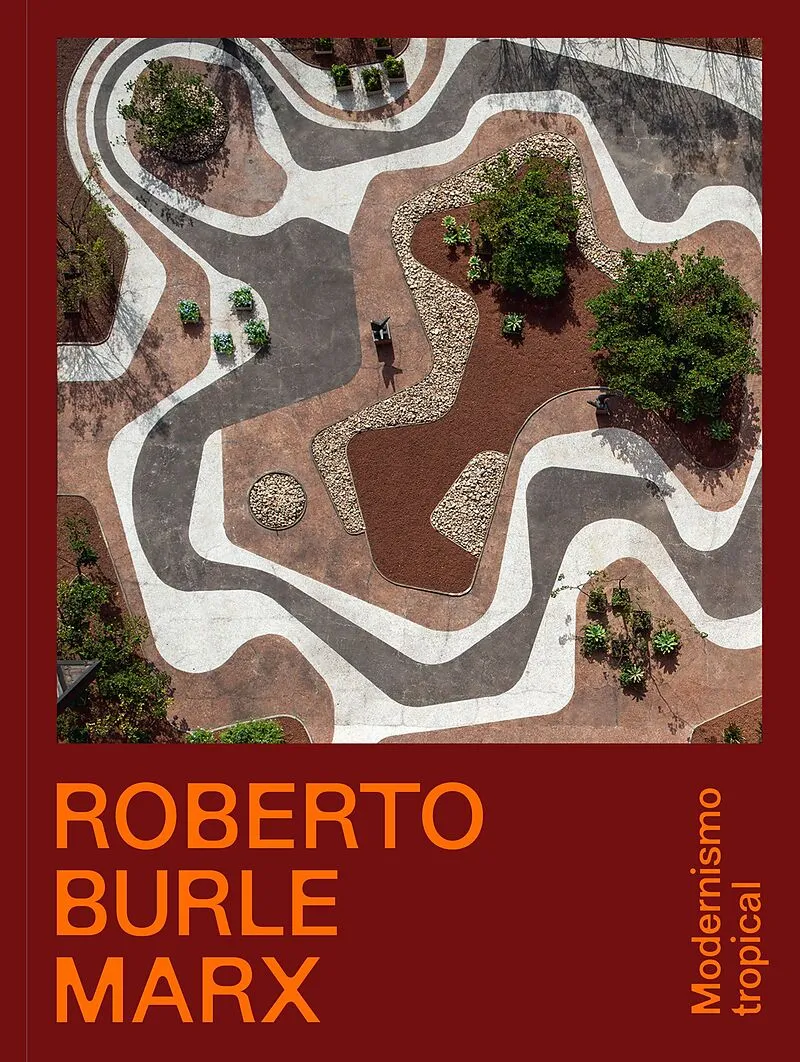
Roberto Burle Marx
Beschreibung
The Brazilian artist Roberto Burle Marx (19091994) revolutionized landscape architecture in the first half of the twentieth century by applying design principles from painting and music to nature. He also brought social and ecological questions to the forefron...Format auswählen
- Kartonierter EinbandCHF 56.00

Wird oft zusammen gekauft
Andere Kunden kauften auch
Beschreibung
The Brazilian artist Roberto Burle Marx (19091994) revolutionized landscape architecture in the first half of the twentieth century by applying design principles from painting and music to nature. He also brought social and ecological questions to the forefront. The exhibition and book will give a broad audience insight into the interdisciplinary artistic cosmos of Roberto Burle Marx. His artistic stance, which runs like a common thread through his entire life's work, serves as a unifying element, bringing viewers and readers closer to his multifaceted oeuvre and, of course, to the dazzling personality of Roberto Burle Marx. Fifteen case studies of landscape and garden projects introduce his innovative work. They demonstrate the significance of Brazil's diverse native flora for the design of landscape gardens, and how this natural beauty is reflected while modernist ideas are taken up at the same time. With his projects and his work, Roberto Burle Marx strove to lastingly improve people's lives in public space, and he actively promoted social and ecological engagement. The exhibition and book also present his paintings, works on paper, sculptures, and design objects; one chapter is devoted to his private collection of folkloric and religious objects.
Autorentext
Gareth Doherty is trained as a landscape architect and urban planner, from 2026 Associate Professor of Landscape Architecture, National University of Singapore, previously at Harvard University, research activities in Brazil, editor of the English lecture manuscripts of Robert Burle Marx. Fabienne Eggelhoefer has been appointed chief curator and head of collection, exhibitions and research at the Zentrum Paul Klee, Bern, in 2017. From 2005 to 2017 she was curator for modern and contemporary art at the Zentrum Paul Klee where she realized numerous temporary exhibitions and collection displays. In 2012 she completed a research project on Paul Klee's teaching at the Bauhaus that culminated in an online database of Klee's teaching notes. In addition, she also analyzed the meaning of nature in Klee's teaching in a dissertation leading to a PhD degree. Guilherme Mazza Dourado is trained as an architect and urban planner, researches, publishes and curates in the fields of fine art, landscape architecture and architecture in Brazil, author of publications on Roberto Burle Marx as a landscape architect, tapestry designer, editor of the correspondence of Burle Marx and contributor to the Catalogue Raisonné . Nina Zimmer (*1973) is director of Kunstmuseum Bern and ZPK Zentrum Paul Klee since 2016, she studied art history, Romance studies and media studies in Bordeaux, Gö ttingen, Mü nster and Hamburg. In 2001, she completed her doctorate at the University of Gö ttingen with a thesis on artists' collectives around 1960. From April 2001 to August 2002, she was a scholarship holder of the state of Lower Saxony at the Central Institute for Art History (ZI) in Munich. She then completed a traineeship at the Kunsthalle Hamburg. Catherine Seavitt Nordensen is trained as an architect and landscape architect, Professor of Urbanism at the Stuart Weitzman School of Design, Co-Director of the Ian L. McHarg Center for Urbanism and Ecology at the University of Pennsylvania and Creative Director of LA+, research in Brazil and author of a publication on Burle Marx's political activism during the military dictatorship. Isabela Ono is trained as a landscape architect, joined the landscape architecture firm Burle Marx in 2004. Following the death of Roberto Burle Marx, the firm was continued by his partner, Haruyoshi Ono. From 2017, she served as the firm's executive director, and from 2019, as executive director of the newly founded Instituto Burle Marx, she was responsible for managing and disseminating the firm's archives. Guilherme Wisnik (*1960) is architect, architectural critic, writer, and professor. He is author of numerous books and articles on architecture and urbanism in Brazil and has curated exhitions and collaborated with artists and musician on interdisciplinary projects. Claudia Maria Pinhero Storino is trained as an architect, designer, and social historian, specializing in the preservation and restoration of historical sites. Director of the UNESCO World Heritage Site Sí tio Roberto Burle Marx since 2012. Roberto Burle Marx (1909 Sã o Paulo - 1994 Rio de Janeiro) was the son of Wilhelm Marx (b. in Trier/Germany, 1869- 1952), his mother was the singer and piano player Cecilia Burle (1876- 1946). He studied art at the Academia de Belas Artes do Rio de Janeiro, continued his studies 1928/1929 in Berlin and was strongly influenced by Cubism. Back in Brasil he started as a self-taught landscape architect in creating roof gardens and parks; he collaborated with Lucio Costa, a childhood friend, and Le Corbusier, as well as Oscar Niemeyer.
Klappentext
Der brasilianische Künstler Roberto Burle Marx (1909-1994) revolutionierte in der ersten Hälfte des 20. Jahrhunderts die Landschaftsarchitektur, indem er Gestaltungsprinzipien aus Malerei und Musik auf die Natur übertrug. Zudem rückte er gesellschaftliche und ökologische Fragen in den Vordergrund. Ausstellung und Buch werden einem breiten Publikum Einblick in den interdisziplinären künstlerischen Kosmos von Roberto Burle Marx geben. Seine künstlerische Haltung, die sich wie ein roter Faden durch sein gesamtes Lebens-Werk zieht, dient als verbindendes Element und bringt den Betrachter- und Leser*-innen das vielseitige Werk und natürlich die schillernde Persönlichkeit von Roberto Burle Marx näher. Dabei führen 15 Fallstudien von Landschafts- und Gartenprojekten in sein innovatives Werk ein. Sie zeigen auf, welche Bedeutung die vielfältige einheimische Flora Brasiliens für die Gestaltung von Landschaftsgärten hat, und wie diese natürliche Schönheit reflektiert wird und zugleich modernistische Ideen aufgegriffen werden. Roberto Burle Marx strebte danach mit seinen Projekten, seiner Arbeit, das Leben der Menschen im öffentlichen Raum nachhaltig zu verbessern und förderte gezielt soziales und ökologisches Engagement. Ausstellung und Buch stellen darüber hinaus seine Gemälde, Arbeiten auf Papier, Skulpturen und Designobjekte vor, ein Kapitel widmet sich seiner privaten Sammlung folkloristischer und religiöser Objekte.