
IHR WARENKORB IST AKTUELL LEER.
Haben Sie noch nichts passendes gefunden? Stöbern Sie durch unser komplettes Sortiment.
Oder melden Sie sich an bzw. registrieren Sie sich.
- Kostenlose Lieferung
- Kauf auf Rechnung
- Ex Libris Tiefpreis
- Filiallieferung und 650+ Abholorte
- Rabatt-Bons als Club-Mitglied
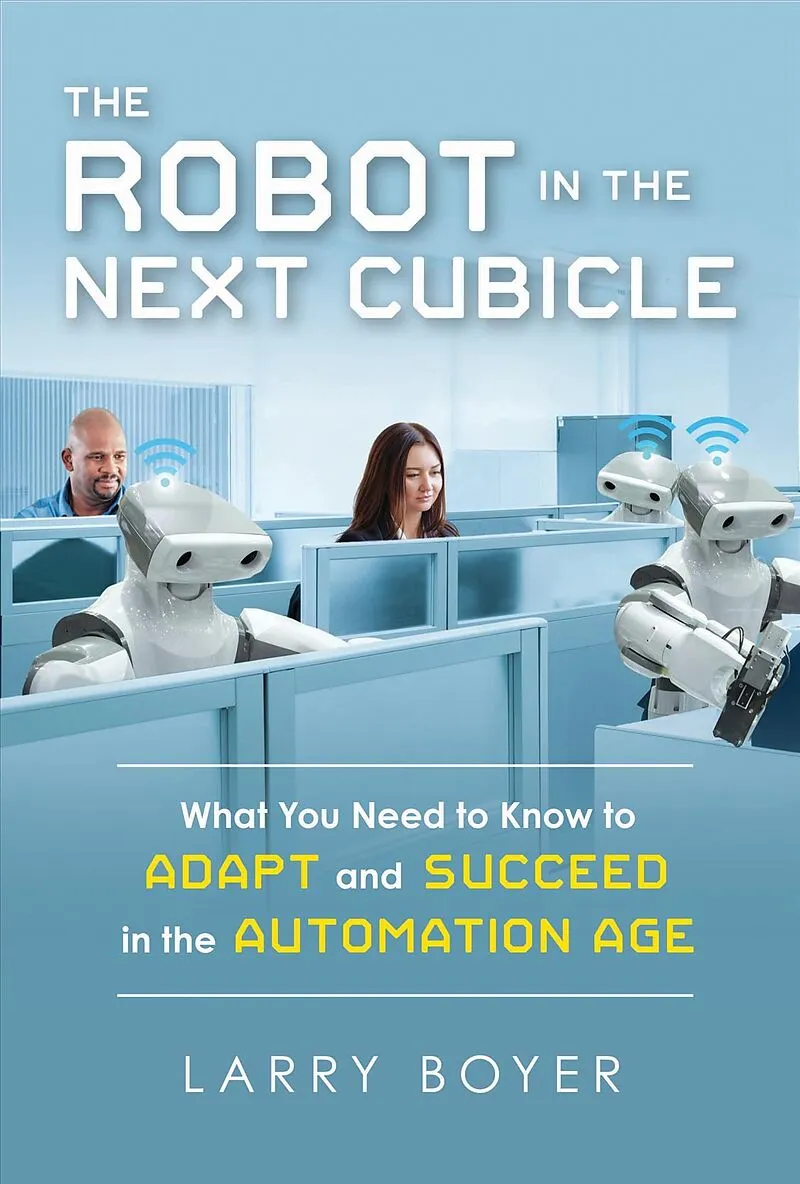
The Robot in the Next Cubicle
Beschreibung
Zusatztext 67815010 Informationen zum Autor By Larry Boyer Klappentext This optimistic and useful look at the coming convergence of automation, robotics, and artificial intelligence, shows how we can take advantage of this revolution in the workplace, crafting...Format auswählen
- Poche format BCHF 25.10
Wird oft zusammen gekauft
Andere Kunden kauften auch
Beschreibung
Zusatztext 67815010 Informationen zum Autor By Larry Boyer Klappentext This optimistic and useful look at the coming convergence of automation, robotics, and artificial intelligence, shows how we can take advantage of this revolution in the workplace, crafting "robot-proof jobs" and not fearing "the robocalypse." It's called the Fourth Industrial Revolution--a revolution fueled by analytics and technology--that consists of data-driven smart products, services, entertainment, and new jobs. Economist and data scientist Larry Boyer lays out the wealth of exciting possibilities this revolution brings as well as the serious concerns about its disruptive impact on the lives of average Americans. Most important, he shows readers how to navigate this sea of change, pointing to strategies that will give businesses and individuals the best chance to succeed and providing a roadmap to thriving in this new economy. Boyer describes how future workers may have to think of themselves as entrepreneurs, marketing their special talents as valuable skills that machines cannot do. This will be especially important in the coming employment climate, when full-time jobs are likely to decrease and industries move toward contract-based employment. He provides guidelines for identifying your individual talents and pursuing the training that will make you stand out. He also shows you how to promote your personal brand to give more exposure to your unique skills. Whether we like it or not, automation will soon transform the work place and employment prospects. This book will show you how to look for and take advantage of the opportunities that this revolution presents.Introduction My father graduated from high school, joined the US Army, learned a trade, and saw the world. When he left the army, he was hired by AT&T®, where he worked until he retired thirty-five or so years later. While we commonly understand that career model no longer works today, what I find helpful now is how my father managed to survive the waves of disruption during what we now know as the third industrial revolution, which consisted of the wave of transformations that led to computerization, electronics, and tele-communications technology. I didn't see it growing up, and unless you've given thought to it, you may not have noticed it either if you were raised between the 1960s and 1990s. My father was a lineman, laying and repairing the copper wires that connected homes and businesses so we could talk on the phone. Back then, it was simply the phone, no need to call it a landline, and AT&T was the phone company. For much of the 1960s and 1970s, it hovered around number ten on Fortune's list of largest American companies. There is no doubt that AT&T was a huge driver of the third industrial revolution, with its vaunted Bell Labs® driving disruptive innovations in everything from microwave communications to video calling. In that respect, it was great to be part of such a company creating the future. However, it wasn't all rainbows and unicorns. The new technologies being developed changed the nature of the work during that time, resulting in thousands of employees losing their jobs to the tech. It wasn't all about technological change either. Employees lost their jobs and faced pressures for other reasons tooeconomic cycles, competitive pressures, and the eventual regulatory breakup of AT&T. The economy, political and social disruption, and life events continued as well. This was the time of economically impossible stagflationsimultaneous high unemployment and high inflation. The oil embargos. Cold War and détente. Iran hostage crisis. Savings and loan collapse. Relatives getting sick and passing away. It's a stark reminder that while technology marches forward, creating new jobs and destroying old ones, at the same time jobs are also created and destroyed by economics, politic...
ldquo;There’s lots of talk about the coming technological singularity and how machines are set to take over many jobs. But how is it going to impact you personally? In The Robot in the Next Cubicle, Larry Boyer says what you need to do to stay ahead in the race against the machines.”
—Toby Walsh, professor of artificial intelligence and author of Machines That Think: The Future of Artificial Intelligence
“The most common question I get these days is, ‘What will happen to my job as technology keeps getting more powerful?’ Larry Boyer does a great job answering this question, with lively examples from Amazon to Pizza Hut and with clear, practical advice.”
—Erik Brynjolfsson, professor at MIT and coauthor of The Second Machine Age and Machine, Platform, Crowd: Harnessing Our Digital Future
“An invaluable handbook to the rapidly changing technological world of the early twenty-first century. If you want to understand where we’re headed, the potential impact on our companies, economies, and society, and how you can adapt to succeed amid this change, you must read this book.”
—Lance Uggla, chairman and CEO, IHS Markit
“As technology reshapes and takes a bigger role in the workplace, the question ‘what makes you stand out?’ becomes more important than ever. The Robot in the Next Cubicle helps us understand the evolving workplace so that we can clearly define our place in it, remaining not only relevant but valued and recognized.”
—William Arruda, personal-branding pioneer and cofounder of CareerBlast.TV
“A call to action to prepare ourselves for the accelerating technological innovation that is changing business and personal lives alike. We need to prepare our skills, digital mind-set, and social capital so that we can take advantage of the great opportunities that lie ahead.”
—Penny Power, OBE, serial entrepreneur and author of Digital Business Britain Manifesto and Know Me, Like Me, Follow Me
“The new technologies driving the Fourth Industrial Revolution require us to understand our places in a new world of machines that challenges us to be better humans. The Robot in the Next Cubicle puts this new paradigm into perspective. We no longer have the luxury of having separate professional and personal selves. We need to present and use all our gifts to succeed.”
—Javier Cámara Rica, founder and CEO at beBee
“Building a brand, whether for yourself or a business, takes time. The Robot in the Next Cubicle is a call to action to start building your brand so you can succeed rather than be disrupted in the coming technological revolution.”
—Brian Smith, UGG founder, and author of The Birth of a Brand: Launching Your Entrepreneurial Passion and Soul
“Some of the greatest opportunities for success came during times of economic disruption. The Robot in the Next Cubicle sheds light on emerging technologies and shows us how people navigated past economic upheavals to achieve their success. No one said it would be easy, but knowing what’s coming, what to look for, and what you can do will make a big difference.”
—Dr. Greg S. Reid, author of the Think and Grow Rich series
"An examination of the rise of artificial intelligence and the role of humans in the future workplace. While Boyer clearly depicts the rise of automation, he also gives readers a refreshing guide on how to leverage their social skills to maintain relevancy and sanity.”
—Dan Schawbel, author of Back to Human, Promote Yourself, and Me 2.0
Autorentext
By Larry Boyer
Klappentext
**This optim…