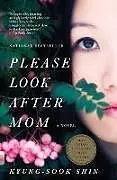
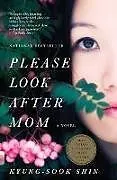
Please Look After Mom
Beschreibung
Zusatztext 46740613 Informationen zum Autor KYUNG-SOOK SHIN is the author of numerous works of fiction and is one of South Korea's most widely read and acclaimed novelists. She was the first woman to be awarded the Man Asian Literary Prize (for Please Look Aft...Format auswählen
- Kartonierter EinbandCHF 21.50

Wird oft zusammen gekauft
Andere Kunden kauften auch
Beschreibung
Zusatztext 46740613 Informationen zum Autor KYUNG-SOOK SHIN is the author of numerous works of fiction and is one of South Korea's most widely read and acclaimed novelists. She was the first woman to be awarded the Man Asian Literary Prize (for Please Look After Mom ), and she has also been honored with the Manhae Literature Prize, the Dong-in Literature Prize, and the Yi Sang Literary Prize, as well as France's Prix de l'Inaperçu. Please Look After Mom is her first book to appear in English. It will be published in twenty-nine countries and has sold over 2 million copies in South Korea alone. Klappentext WINNER OF THE MAN ASIAN LITERARY PRIZE When sixty-nine-year-old So-nyo is separated from her husband among the crowds of the Seoul subway station, her family begins a desperate search to find her. Yet as long-held secrets and private sorrows begin to reveal themselves, they are forced to wonder: how well did they actually know the woman they called Mom? Told through the piercing voices and urgent perspectives of a daughter, son, husband, and mother, Please Look After Mom is at once an authentic picture of contemporary life in Korea and a universal story of family love. 1 Nobody Knows It's been one week since Mom went missing. The family is gathered at your eldest brother Hyong-chol's house, bouncing ideas off each other. You decide to make flyers and hand them out where Mom was last seen. The first thing to do, everyone agrees, is to draft a flyer. Of course, a flyer is an old-fashioned response to a crisis like this. But there are few things a missing person's family can do, and the missing person is none other than your mom. All you can do is file a missing-person report, search the area, ask passersby if they have seen anyone who looks like her. Your younger brother, who owns an online clothing store, says he posted something about your mother's disappearance, describing where she went missing; he uploaded her picture and asked people to contact the family if they'd seen her. You want to go look for her in places where you think she might be, but you know how she is: she can't go anywhere by herself in this city. Hyong-chol designates you to write up the flyer, since you write for a living. You blush, as if you were caught doing something you shouldn't. You aren't sure how helpful your words will be in finding Mom. When you write July 24, 1938, as Mom's birth date, your father corrects you, saying that she was born in 1936. Official records show that she was born in 1938, but apparently she was born in 1936. This is the first time you've heard this. Your father says everyone did that, back in the day. Because many children didn't survive their first three months, people raised them for a few years before making it official. When you're about to rewrite 38 as 36, Hyong-chol says you have to write 1938, because that's the official date. You don't think you need to be so precise when you're only making homemade flyers and it isn't like you're at a government office. But you obediently cross out 36 and write 38, wondering if July 24 is even Mom's real birthday. A few years ago, your mom said, We don't have to celebrate my birthday separately. Father's birthday is one month before Mom's. You and your siblings always went to your parents' house in Chongup for birthdays and other celebrations. All together, there were twenty-two people in the immediate family. Mom liked it when all of her children and grandchildren gathered and bustled about the house. A few days before everyone came down, she would make fresh kimchi, go to the market to buy beef, and stock up on extra toothpaste and toothbrushes. She pressed sesame oil and roasted and ground sesame and perilla seeds, so she could present her children with a jar of each as they left. As she waited for the family to arrive, your mom wo...
“A suspenseful, haunting, achingly lovely novel about the hidden lives, wishes, struggles and dreams of those we think we know best.” —Seattle Times
“A moving portrayal of the surprising nature, sudden sacrifices, and secret reveries of motherhood.” —Elle
“Intimate and hauntingly spare. . . . A raw tribute to the mysteries of motherhood.” —The New York Times Book Review
“Lovely. . . . Please Look After Mom, especially its magical, transcendent ending, lifts the spirit as only the best writing can do.” —Minneapolis Star-Tribune
“Shin renders a tender and beautiful portrait of South Korea, but the novel recognizes a familial dilemma experienced throughout the world.” –Ms. Magazine blog
“The most moving and accomplished, and often startling, novel in translation I’ve read in many seasons. . . . Every sentence is saturated in detail. . . . It tells an almost unbearably affecting story of remorse and belated wisdom that reminds us how globalism—at the human level—can tear souls apart and leave them uncertain of where to turn.” —Pico Iyer, Wall Street Journal
“The novel perfectly combines universal themes of love and loss, family dynamics, gender equality, tradition, and charity with the rich Korean culture and values which make Please Look After Mom a great literary masterpiece.” —Seattle Post-Intelligencer
“An authentic, moving story that brings to vivid life the deep family connections that lie at the core of Korean culture. But it also speaks beautifully to an urgent issue of our time: migration, and how the movement of people from small towns and villages to big cities can cause heartbreak and even tragedy. This is a tapestry of family life that will be read all over the world. I loved this book.” —Gary Shteyngart, author of Super Sad True Love Story
“Haunting. . . . The novel’s language—so formal in its simplicity—bestows a grace and solemnity on childhood scenes that might otherwise be overwrought. . . . Throughout the novel, the rhythms of agrarian life and labor that Shin deftly conveys have a subtle, cumulative power.” —Boston Sunday Globe
“An affecting account of a slow-burn family break-up. . . . Well-controlled and emotionally taut. . . . What distinguishes this novel is the way it questions whether our pasts, either public or private, are really available for us to recollect and treasure anyway.” —*The Financial Times
*
“A captivating story, written with an understanding of the shortcomings of traditional ways of modern life. It is nostalgic but unsentimental, brutally well observed and, in this flawlessly smooth translation by Chi-Young Kim, it offers a sobering account of a vanished past. . . . We must hope there will be more translations to follow.” —Times Literary Supplement (London)
“A poignant story of a family told in four voices. . . . Shin’s storytelling and her gift for detail make Please Look After Mom a book worth reading.” —Post and Courier
“Shin perceptively explores the greatest mystery—not Mom’s disappearance, but who Mom really was. Every mom, that is.” –*Richmond Times-Dispatch
*
“Here is a wonderful, original new voice, by turns plangent and piquant. Please Look After Mom takes us on a dual journey, to the unfamiliar corners of a foreign culture and into the shadowy recesses of the heart. In spare, exquisite prose, Kyung-sook Shin penetrates the very essence of what it means to be a family, and a human being.” —Geraldine Brooks, Pulitzer Prize–winning author of *March
*
“Shin is a scribe with a slow and steady pulse; this is writing that allows you to meander with your own thoughts (and reflect on your own mother, perhaps), while still following the physical and mental travels of h…