
IHR WARENKORB IST AKTUELL LEER.
Haben Sie noch nichts passendes gefunden? Stöbern Sie durch unser komplettes Sortiment.
Oder melden Sie sich an bzw. registrieren Sie sich.
- Kostenlose Lieferung
- Kauf auf Rechnung
- Ex Libris Tiefpreis
- Filiallieferung und 650+ Abholorte
- Rabatt-Bons als Club-Mitglied
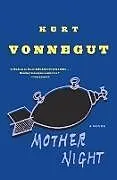
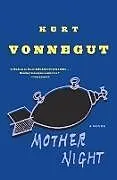
Mother Night
Beschreibung
Zusatztext A great artist. Cincinnati Enquirer A shaking up in the kaleidoscope of laughter . . . Reading Vonnegut is addictive! Commonweal Informationen zum Autor Kurt Vonnegut 's humor, satiric voice, and incomparable imagination first captured America's att...Format auswählen
- Poche format BCHF 21.10

Wird oft zusammen gekauft
Andere Kunden kauften auch
Beschreibung
Zusatztext A great artist. Cincinnati Enquirer A shaking up in the kaleidoscope of laughter . . . Reading Vonnegut is addictive! Commonweal Informationen zum Autor Kurt Vonnegut 's humor, satiric voice, and incomparable imagination first captured America's attention in The Sirens of Titan in 1959 and established him as a true artist ( The New York Times ) with Cat's Cradle in 1963. He was, as Graham Greene declared, one of the best living American writers. Mr. Vonnegut passed away in April 2007. Klappentext "Vonnegut is George Orwell, Dr. Caligari and Flash Gordon compounded into one writer . . . a zany but moral mad scientist."-Time Mother Night is a daring challenge to our moral sense. American Howard W. Campbell, Jr., a spy during World War II, is now on trial in Israel as a Nazi war criminal. But is he really guilty? In this brilliant book rife with true gallows humor, Vonnegut turns black and white into a chilling shade of gray with a verdict that will haunt us all. "A great artist."-Cincinnati Enquirer "A shaking up in the kaleidoscope of laughter . . . Reading Vonnegut is addictive!"-Commonweal Chapter One Tiglath-Pileser The Third . . . My name is Howard W. Campbell, Jr. I am an American by birth, a Nazi by reputation, and a nationless person by inclination. The year in which I write this book is 1961. I address this book of mine to Mr. Tuvia Friedmann, Director of the Haifa Institute for the Documentation of War Criminals, and to whomever else this may concern. Why should this book interest Mr. Friedmann? Because it is written by a man suspected of being a war criminal. Mr. Friedmann is a specialist in such persons. He had expressed an eagerness to have any writings I might care to add to his archives of Nazi villainy. He is so eager as to give me a typewriter, free stenographic service, and the use of research assistants, who will run down any facts I may need in order to make my account complete and accurate. I am behind bars. I am behind bars in a nice new jail in old Jerusalem. I am awaiting a fair trail for my war crimes by the Republic of Israel. It is a curious typewriter Mr. Friedmann has given to me--and an appropriate typewriter, too. It is a typewriter, too. It is a typewriter that was obviously made in Germany during the Second World War. How can I tell? Quite simply, for it puts at finger tips a symbol that was never used on a typewriter before the Third German Reich, a symbol that will never be used on a typewriter again. The symbol is the twin lightning strokes used for the dreaded S.S., the Schutzstaffel, the most fanatical wing of Nazism. I used such a typewriter in Germany all through the war. Whenever I had occasion to write of the Schutzstaffel, which I did often and with enthusiasm, I never abbreviated it as "S.S.," but always struck the typewriter key for the far more frightening and magical twin lightning strokes. Ancient history. I am surrounded by ancient history. Though the jail in which I rot is new, some of the stones in it, I´m told, were cut in the time of King Solomon. And sometimes, when I look out through my cell window at the gay and brassy youth of the infant Republic of Israel, I feel that I and my war crimes are as ancient as Solomon´s old gray stones. How long ago that war, that Second World War, was! How long ago the crimes in it! How nearly forgotten it is, even by the Jews--the young Jews, that is. One of the Jews who guards me here knows nothing about that war. He is not interested. His name is Arnold Marx. He has very red hair. He is only eighteen, which means Arnold was three when Hitler died, and nonexistent when my career as a war criminal began. He guards me fro...
ldquo;A great artist.”**—***Cincinnati Enquirer
- “A shaking up in the kaleidoscope of laughter . . . Reading Vonnegut is addictive!”—Commonweal*
Autorentext
Kurt Vonnegut’s humor, satiric voice, and incomparable imagination first captured America’s attention in The Sirens of Titan in 1959 and established him as “a true artist” (The New York Times) with Cat’s Cradle in 1963. He was, as Graham Greene declared, “one of the best living American writers.” Mr. Vonnegut passed away in April 2007.
Klappentext
"Vonnegut is George Orwell, Dr. Caligari and Flash Gordon compounded into one writer . . . a zany but moral mad scientist."-Time
Mother Night is a daring challenge to our moral sense. American Howard W. Campbell, Jr., a spy during World War II, is now on trial in Israel as a Nazi war criminal. But is he really guilty? In this brilliant book rife with true gallows humor, Vonnegut turns black and white into a chilling shade of gray with a verdict that will haunt us all.
"A great artist."-Cincinnati Enquirer
"A shaking up in the kaleidoscope of laughter . . . Reading Vonnegut is addictive!"-Commonweal
Leseprobe
*Chapter One
Tiglath-Pileser
The Third . . .
My name is Howard W. Campbell, Jr.
I am an American by birth, a Nazi by reputation, and a nationless person by inclination.
The year in which I write this book is 1961.
I address this book of mine to Mr. Tuvia Friedmann, Director of the Haifa Institute for the Documentation of War Criminals, and to whomever else this may concern.
Why should this book interest Mr. Friedmann?
Because it is written by a man suspected of being a war criminal. Mr. Friedmann is a specialist in such persons. He had expressed an eagerness to have any writings I might care to add to his archives of Nazi villainy. He is so eager as to give me a typewriter, free stenographic service, and the use of research assistants, who will run down any facts I may need in order to make my account complete and accurate.
I am behind bars.
I am behind bars in a nice new jail in old Jerusalem.
I am awaiting a fair trail for my war crimes by the Republic of Israel.
It is a curious typewriter Mr. Friedmann has given to me--and an appropriate typewriter, too. It is a typewriter, too. It is a typewriter that was obviously made in Germany during the Second World War. How can I tell? Quite simply, for it puts at finger tips a symbol that was never used on a typewriter before the Third German Reich, a symbol that will never be used on a typewriter again.
The symbol is the twin lightning strokes used for the dreaded S.S., the Schutzstaffel, the most fanatical wing of Nazism.
I used such a typewriter in Germany all through the war. Whenever I had occasion to write of the Schutzstaffel, which I did often and with enthusiasm, I never abbreviated it as "S.S.," but always struck the typewriter key for the far more frightening and magical twin lightning strokes.
Ancient history.
I am surrounded by ancient history. Though the jail in which I rot is new, some of the stones in it, I'm told, were cut in the time of King Solomon.
And sometimes, when I look out through my cell window at the gay and brassy youth of the infant Republic of Israel, I feel that I and my war crimes are as ancient as Solomon's old gray stones.
How long ago that war, that Second World War, was! How long ago the crimes in it!
How nearly forgotten it is, even by the Jews--the young Jews, that is.
One of the Jews who guards me here knows nothing about that war. He is not interested. His name is Arnold Marx. He has very red hair. He is only eighteen, which means Arnold was three when Hitler died, and nonexistent when my career as a war criminal began.
He guards me from six in the morning until noon.
Arnold was born in Israel. He has never been outside of Israel.
His mother and father left Germany in the early thirties. His grandfather, he told me, won an Iron Cross in the First World War.
Arnold is studying to be a lawyer. The avocation of Arnold and of his father, a gunsmith, is archaeology. Father …