
IHR WARENKORB IST AKTUELL LEER.
Haben Sie noch nichts passendes gefunden? Stöbern Sie durch unser komplettes Sortiment.
Oder melden Sie sich an bzw. registrieren Sie sich.
- Kostenlose Lieferung
- Kauf auf Rechnung
- Ex Libris Tiefpreis
- Filiallieferung und 650+ Abholorte
- Rabatt-Bons als Club-Mitglied
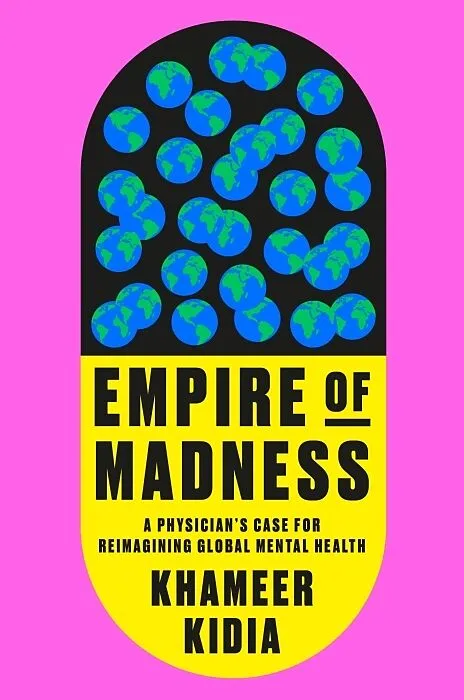
Empire of Madness
Beschreibung
An urgent rethinking of the Western approach to mental health, which treats the symptoms rather than the exploitative systems causing our distress--by a Rhodes Scholar and Harvard Medical School physician-anthropologist--offering lessons from the rest of the w...Format auswählen
- Fester EinbandCHF 29.50
Wird oft zusammen gekauft
Andere Kunden kauften auch
Beschreibung
An urgent rethinking of the Western approach to mental health, which treats the symptoms rather than the exploitative systems causing our distress--by a Rhodes Scholar and Harvard Medical School physician-anthropologist--offering lessons from the rest of the world. In Western psychiatry, which emerged during nineteenth-century colonialism and expanded under neoliberalism, mollifies the effects--depression, anxiety, hunger, poverty--of oppressive structures rather than fixes them. "Burnout" is just one example of mental distress caused by economic and social conditions but disguised as a medical problem. Clear-eyed and open-hearted, Kidia asks the necessary questions that our current mental health system, pharmaceutically-driven and focused on one-size-fits-all solutions, doesn''t address.; How do history, culture, and politics shape mental distress? Is hoarding a medical problem? Why are the outcomes of schizophrenia sometimes better in places without antipsychotics? Can a Zimbabwean grandmother sitting on a wooden "friendship bench" talk through someone''s problems better than a Western-trained therapist? For those living in poverty, can cash replace pills?; <Empire of Madness <sharply intertwines discussions of the colonial origins of psychiatry, the long-lasting and psychological effects of oppression, and the overburdened health professionals striving to heal their patients in rigid, archaic systems to reimagine global mental health as a capacious, inclusive field where our wellbeing is mutual and everyone''s voice--patients, caregivers, and health workers alike--matters....
Autorentext
Khameer Kidia
Leseprobe
Chapter 1
Nervous Breakdowns
Harare, Zimbabwe, 2020
Chief Complaint: “I’m having a nervous breakdown.”
History of Present Illness: Sixty-eight-year-old Zimbabwean-Indian female with a history of depression and anxiety presents with suicidal ideation and a “nervous breakdown.”
The patient is a pleasant lady accompanied by her son, a physician. She says that about three months ago her small business became insolvent because of the pandemic's impact on the Zimbabwean economy. “It all came as a shock,” she explained. “Our sales figures were terrible. We were in the red for months.”
Since the onset of the stressor, the patient’s mental health has gradually deteriorated. At first, she was stressed and fearful. She was worried about what was going to happen to the business; she had recurring thoughts that she might lose everything. “I was so scared,” she says. She believes she is having a “nervous breakdown,” which she describes as prolonged periods (weeks to months) of paralytic mental distress during which she is unable to fully function. She mostly stays in bed, except for running a few errands each day. She has had several such nervous breakdowns over the course of her life, beginning as a teenager.
She is currently experiencing passive suicidality: wishing she wasn’t around any longer but with no active plan to take her life. She has limited access to guns or other lethal means. Recently, she had a biopsy for uterine cancer and, while awaiting the results, told her son that she would decline chemotherapy should the biopsy turn out to be malignant. Fortunately, the tumor was benign.
Sometimes, about once or twice a year, the patient has periods of very high energy when she regains her desire to live and experiences elated mood. Her son explains that during these periods she is more likely to start fights, sever important social ties with friends or family members, and make rash financial decisions.
Financial worries, in general, seem to affect the patient’s mood dramatically. When she is in debt or her bank balance is low, she develops severe, often crippling anxiety. Most of the time, the patient has some kind of financial concern on her mind, often related to wealth inheritance. She explains that her biggest stressor right now is deciding how to write up her will and how she will continue to afford to pay the house expenses and grocery bills now that her small business had to close.
Her primary social support comes from her children. She subscribes to the Indian customs of multigenerational family living and care. She also has a high care burden and suffers from caregiver fatigue. She has a history of childhood trauma and has had one prior mental health hospitalization. Her medication trials include sulpiride, fluoxetine, sertraline, mirtazapine, quetiapine, lamotrigine, bromazepam, and lorazepam. She is currently stable on sulpiride and lamotrigine.
I have been shaped by my mother’s experience with mental distress. When I was growing up, no one really understood what was going on with her. We could tell she was suffering, and we knew she was getting antidepressants from our GP, but we didn’t know where her nervous breakdowns came from or what to do about them. Most of the time, we did nothing, and eventually—sometimes after months—she would spontaneously improve.
My mother’s aura dictated my childhood. When she was on edge, disappointed, grieving, irate, annoyed, calm, or elated, her mood would diffuse throughout our home and press up against me until I either let it in and shared it or fought against it, stirring up conflict. This experience with intersubjectivity taught me, at an early age, that our emotional lives don’t exist in a vacuum. It was perhaps the most important lesson I would learn about mental well-being, but it is one that I have forgotten and had to relearn many times in my efforts to understand where mental distress comes from and what to do about it.
Over the last decade, in both Zimbabwe and the United States, caring for and studying patients with mental distress like my mother’s, I’ve been taken by surprise again and again. I was surprised, for instance, to learn in medical school that there is no official diagnosis of “nervous breakdown,” which I had grown up believing was the most severe form of mental collapse that could befall a person. Instead, nervous breakdowns, for which there are web pages from the Mayo Clinic, Cleveland Clinic, and WebMD, exist in Western culture as a social diagnosis. Nervous breakdowns occur when the demands of society are just too much for the sufferer, who must temporarily hit the pause button and recover from the stress of it all. Perhaps the closest term in psychiatry would be “acute stress disorder.” But acute stress disorder occurs in response to a traumatic exposure, and it can last only one month; any longer and it becomes known as PTSD. Sometimes my mother’s nervous breakdowns persisted for months on end.
How we decide in medicine what is or is not a real psychiatric diagnosis is dependent largely on the Diagnostic and Statistical Manual of Mental Disorders (DSM). Since its inception in 1952, the DSM has been updated multiple times, the number of mental diagnoses growing dramatically each time. But these updates are less rooted in science and more determined by political pressure of pharmaceutical and insurance companies and contemporary opinions of what constitutes “disorder” among the individuals on the DSM committee, who have been mostly white, male, American psychiatrists. For example, in 2013, hoarding, which was listed as a symptom of obsessive-compulsive personality disorder in DSM-IV, became a separate diagnosis of “hoarding disorder” in DSM-5, treatable with selective serotonin reuptake inhibitors (SSRIs). Even when research is used to justify a category, as we are now doing for “burnout,” which by some estimates affects up to 55 percent of Americans, the decision about what types of data…