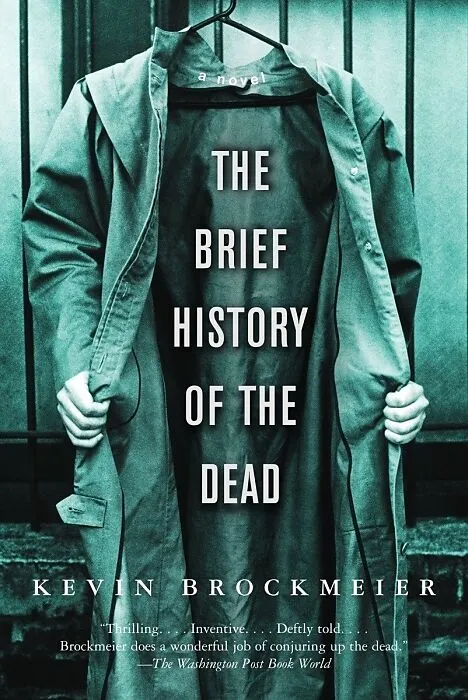
The Brief History of the Dead
Beschreibung
Zusatztext Thrilling. . . . Inventive. . . . Deftly told. . . . Brockmeier does a wonderful job of conjuring up the dead. The Washington Post Book World Brilliant. . . . Brockmeier's characters are wonderful! and his images are dazzling. Detroit Free Press Ext...Format auswählen
- Kartonierter EinbandCHF 20.00
Wird oft zusammen gekauft
Andere Kunden kauften auch
Beschreibung
Zusatztext Thrilling. . . . Inventive. . . . Deftly told. . . . Brockmeier does a wonderful job of conjuring up the dead. The Washington Post Book World Brilliant. . . . Brockmeier's characters are wonderful! and his images are dazzling. Detroit Free Press Extraordinary. . . . Breathtaking. . . . A gracefully written story that blends fantasy! philosophical speculation! adventure and crystalline moments of compassion. Milwaukee Journal Sentinel Striking. . . . Brave. . . . Deliciously disquieting. . . . The Brief History of the Dead will stay alive in the memories of readers for years to come. The Atlanta Journal-Constitution Informationen zum Autor In addition to his most recent work, A Few Seconds of Radiant Filmstrip, KEVIN BROCKMEIER is the author of the novels The Illumination, The Brief History of the Dead, and The Truth About Celia; the story collections Things That Fall from the Sky and The View from the Seventh Layer; and the children's novels City of Names and Grooves: A Kind of Mystery. His work has been translated into seventeen languages. He has published his stories in such venues as The New Yorker, The Georgia Review, McSweeney's, Zoetrope, Tin House, The Oxford American, The Best American Short Stories, The Year's Best Fantasy and Horror, and New Stories from the South. He has recieved the Borders Original Voices Award, three O. Henry Awards (one, a first prize), the PEN USA Award, a Guggenheim Fellowship, and an NEA Grant. In 2007, he was named one of Granta magazine's Best Young American Novelists He teaches frequently at the Iowa Writers' Workshop, and he lives in Little Rock, Arkansas, where he was raised. Klappentext From Kevin Brockmeier, one of this generation's most inventive young writers, comes a striking new novel about death, life, and the mysterious place in between. The City is inhabited by those who have departed Earth but are still remembered by the living. They will reside in this afterlife until they are completely forgotten. But the City is shrinking, and the residents clearing out. Some of the holdouts, like Luka Sims, who produces the City's only newspaper, are wondering what exactly is going on. Others, like Coleman Kinzler, believe it is the beginning of the end. Meanwhile, Laura Byrd is trapped in an Antarctic research station, her supplies are running low, her radio finds only static, and the power is failing. With little choice, Laura sets out across the ice to look for help, but time is running out. Kevin Brockmeier alternates these two storylines to create a lyrical and haunting story about love, loss and the power of memory. Leseprobe CHAPTER ONE THE CITY When the blind man arrived in the city, he claimed that he had traveled across a desert of living sand. First he had died, he said, and thensnap!the desert. He told the story to everyone who would listen, bobbing his head to follow the sound of their footsteps. Showers of red grit fell from his beard. He said that the desert was bare and lonesome and that it had hissed at him like a snake. He had walked for days and days, until the dunes broke apart beneath his feet, surging up around him to lash at his face. Then everything went still and began to beat like a heart. The sound was as clear as any he had ever heard. It was only at that moment, he said, with a million arrow points of sand striking his skin, that he truly realized he was dead. Jim Singer, who managed the sandwich shop in the monument district, said that he had felt a prickling sensation in his fingers and then stopped breathing. "It was my heart," he insisted, thumping firmly on his chest. "Took me in my own bed." He had closed his eyes, and when he opened them again, he was on a train, the kind that trolleys small children around in circles at amusement park...
Autorentext
In addition to his most recent work, A Few Seconds of Radiant Filmstrip, KEVIN BROCKMEIER is the author of the novels The Illumination, The Brief History of the Dead, and The Truth About Celia; the story collections Things That Fall from the Sky and The View from the Seventh Layer; and the children’s novels City of Names and Grooves: A Kind of Mystery. His work has been translated into seventeen languages. He has published his stories in such venues as* The New Yorker, The Georgia Review, McSweeney’s, Zoetrope, Tin House, The Oxford American, The Best American Short Stories, The Year’s Best Fantasy and Horror, *and New Stories from the South. He has recieved the Borders Original Voices Award, three O. Henry Awards (one, a first prize), the PEN USA Award, a Guggenheim Fellowship, and an NEA Grant. In 2007, he was named one of Granta magazine’s Best Young American Novelists He teaches frequently at the Iowa Writers’ Workshop, and he lives in Little Rock, Arkansas, where he was raised.
Klappentext
From Kevin Brockmeier, one of this generation's most inventive young writers, comes a striking new novel about death, life, and the mysterious place in between.
The City is inhabited by those who have departed Earth but are still remembered by the living. They will reside in this afterlife until they are completely forgotten. But the City is shrinking, and the residents clearing out. Some of the holdouts, like Luka Sims, who produces the City's only newspaper, are wondering what exactly is going on. Others, like Coleman Kinzler, believe it is the beginning of the end. Meanwhile, Laura Byrd is trapped in an Antarctic research station, her supplies are running low, her radio finds only static, and the power is failing. With little choice, Laura sets out across the ice to look for help, but time is running out. Kevin Brockmeier alternates these two storylines to create a lyrical and haunting story about love, loss and the power of memory.
Leseprobe
CHAPTER ONE
THE CITY
When the blind man arrived in the city, he claimed that he had traveled across a desert of living sand. First he had died, he said, and then–snap!–the desert. He told the story to everyone who would listen, bobbing his head to follow the sound of their footsteps. Showers of red grit fell from his beard. He said that the desert was bare and lonesome and that it had hissed at him like a snake. He had walked for days and days, until the dunes broke apart beneath his feet, surging up around him to lash at his face. Then everything went still and began to beat like a heart. The sound was as clear as any he had ever heard. It was only at that moment, he said, with a million arrow points of sand striking his skin, that he truly realized he was dead.
Jim Singer, who managed the sandwich shop in the monument district, said that he had felt a prickling sensation in his fingers and then stopped breathing. "It was my heart," he insisted, thumping firmly on his chest. "Took me in my own bed." He had closed his eyes, and when he opened them again, he was on a train, the kind that trolleys small children around in circles at amusement parks. The rails were leading him through a thick forest of gold-brown trees, but the trees were actually giraffes, and their long necks were reaching like branches into the sky. A wind rose up and peeled the spots from their backs. The spots floated down around him, swirling and dipping in the wake of the train. It took him a long time to understand that the throbbing noise he heard was not the rattling of the wheels along the tracks.
The girl who liked to stand beneath the poplar tree in the park said that she had died into an ocean the color of dried cherries. For a while the water had carried her weight, she said, and she had lain on her back turning in meaningless circles, singing the choruses of the pop songs she remembered. But then there was a drum of thunder, and the clouds split open, and the ball bearings began to pelt down …