Beschreibung
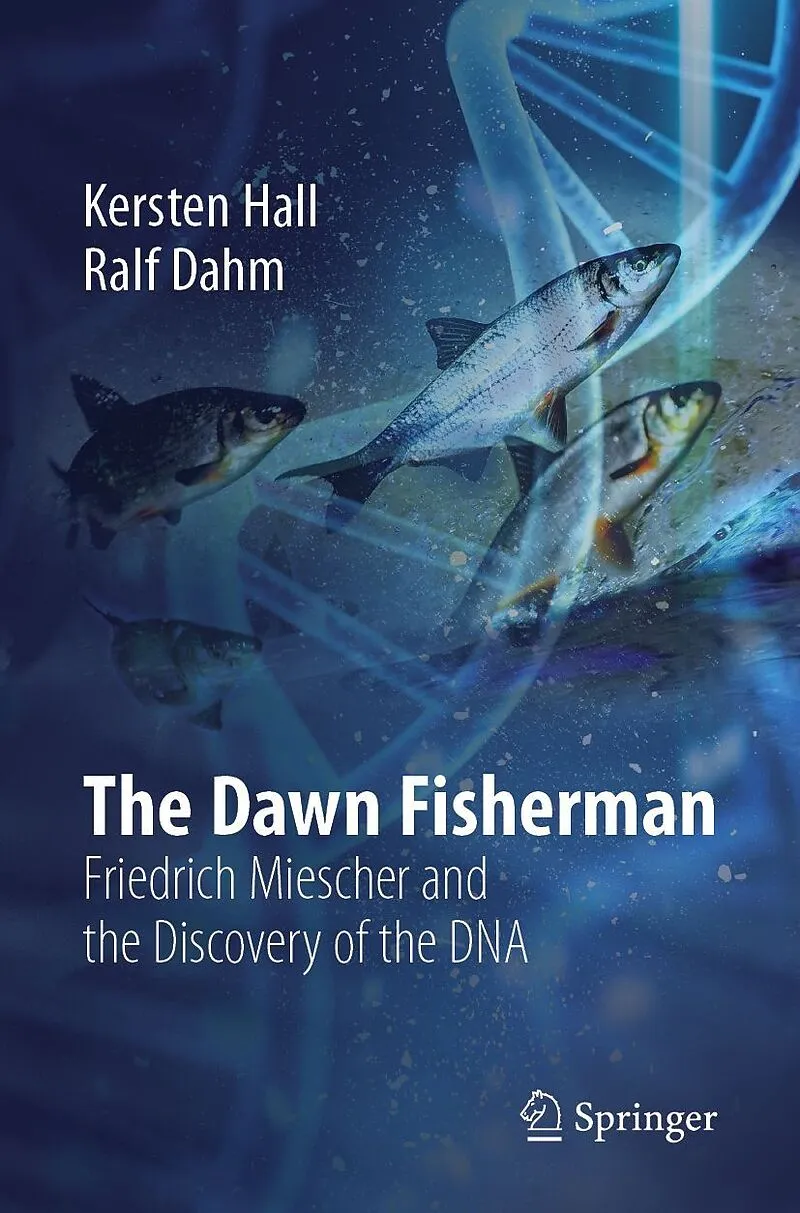
Thanks to blockbuster movies about superheroes and cloned dinosaurs, DNA now is an icon in popular culture. Yet if asked who discovered DNA, most people including most scientists would probably think of Watson and Crick, unaware that it all began almost a cen...
Thanks to blockbuster movies about superheroes and cloned dinosaurs, DNA now is an icon in popular culture. Yet if asked who discovered DNA, most people including most scientists would probably think of Watson and Crick, unaware that it all began almost a century earlier.
This book tells the story of Swiss scientist Friedrich Miescher, whose pioneering work led to the discovery of DNA. Drawing on Miescher's publications and letters, the authors trace his breakthrough from washing pus off discarded bandages in Tübingen's medieval castle to fishing salmon in the Rhine at dawn to study their sperm and follow how his insights were received against a backdrop of intellectual rivalries, clashing egos, and fierce feuds that raged between disciplines.
The book then explores what became of Miescher's discovery after his death, showing how a molecule long dismissed as biologically insignificant became central to powerful technologies that now shape our future. Finally, the authors examine the ethical, social, and political questions raised by such developments and why Miescher's story may matter today more than ever.
Written in an engaging and accessible style, this account of Miescher's groundbreaking work will captivate anyone interested in the discovery of one of biology's most important and enigmatic molecules.
First book to focus on the story of the scientist who discovered DNA at all, as opposed to the molecule's structure Places Miescher in the context of his own time, not merely as a stepping stone to the present day Reveals that Miescher's achievement was not only practical, but conceptual in identifying the key traits of the genetic molecule
Autorentext
Kersten Hall is a visiting fellow in the Centre for History and Philosophy of Science at the University of Leeds, UK. After graduating in biochemistry from St. Anne’s College, Oxford, he embarked on PhD research into gene regulation in viruses, and then worked as a molecular biologist at the University of Leeds before turning to writing about the history of science. His 2014 book ‘The Man in the Monkeynut Coat’ told the little known story of how research into wool fibres for the textile industries of Northern England played a crucial part in the discovery of the structure of DNA, and ‘Insulin – the Crooked Timber’ (2022) explored the controversies around the discovery of insulin and how it became a multi-million dollar pharmaceutical thanks to genetic engineering.
Ralf Dahm is Director of Scientific Management at the Institute of Molecular Biology (IMB) in Mainz, Germany, and a Visiting Professor at the University of Padua, Italy. He obtained his MSc and PhD in Biochemistry from the University of Dundee, Scotland, before working as a postdoctoral researcher with Christiane Nüsslein-Volhard at the Max Planck Institute for Developmental Biology in Tübingen, Germany. He subsequently was a group leader at the Medical University of Vienna, Austria, where he also obtained his habilitation in neuroscience, and Director of Scientific Management at the Spanish National Cancer Research Center (CNIO) in Madrid, Spain.
Inhalt
Introduction.- 1. 'The Quiet in the Land'.- 2. Lifting the Veil.- 3. Blood Feud.- 4. The Sperm Campaign.- 5. The Great Unwashed.- 6. Hacking the Heads off the Hydra.- 7. 'The Wooden Stretcher Behind the Rembrandt'?.- 8. 'The Grammar of Biology'.- 9. 'What is Life?'.- 10. Opening the Book of Life.- 11. Breaking the Glass.- 12. The Struggle of Sisyphus.- Epilogue.- List of Figures.- Further Reading.- Bibliography.
Tief- preis