Beschreibung
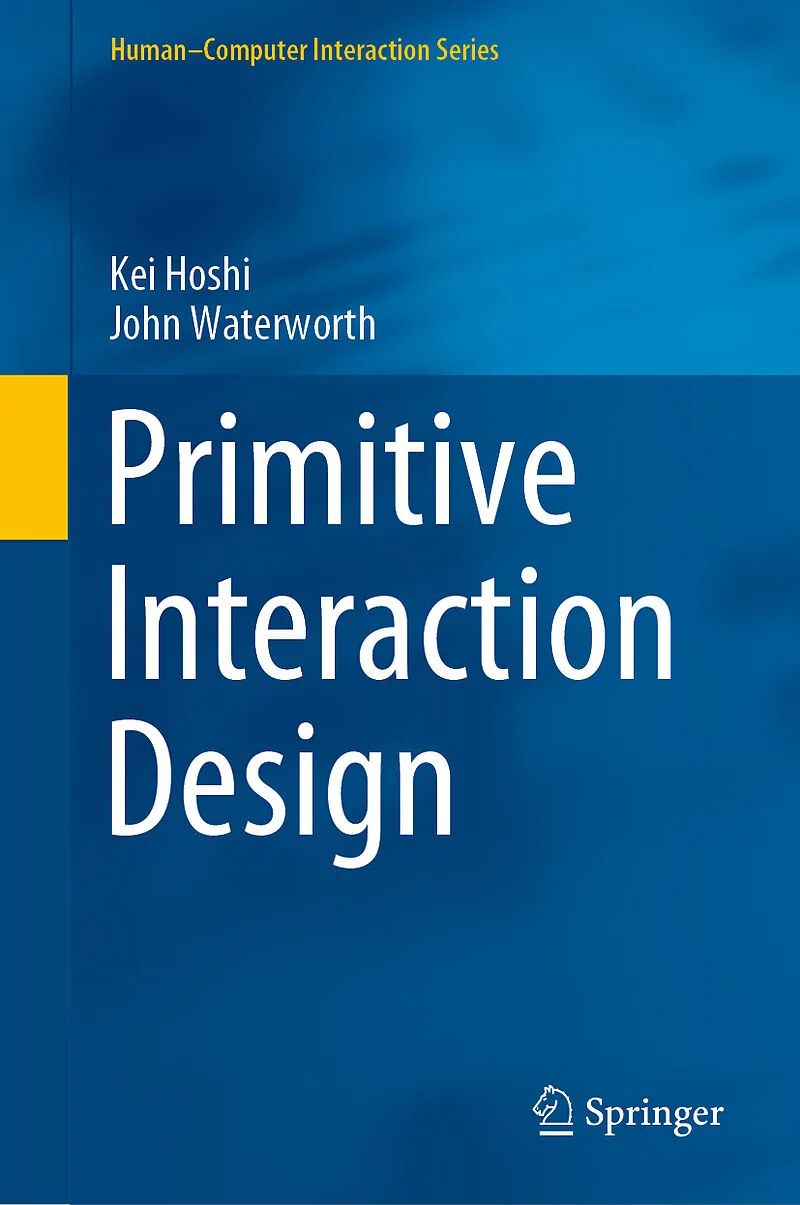
Interaction design is acknowledged as an important area of study, and more especially of design practice. Hugely popular and profitable consumer devices, such as mobile phones and tablets, are seen as owing much of their success to the way they have been desi...Interaction design is acknowledged as an important area of study, and more especially of design practice. Hugely popular and profitable consumer devices, such as mobile phones and tablets, are seen as owing much of their success to the way they have been designed, not least their interface characteristics and the styles of interaction that they support. Interaction design studies point to the importance of a user-centred approach, whereby products are in principle designed around their future users' needs and capacities. However, it is the market, and marketing, that determine which products are available for people to interact with and to a great extent what their designed characteristics are.
Primitive Interaction Design is based on the realisation that designers need to be freed from the marketplace and industry pressure, and that the usual user-centred arguments are not enough to make a practical difference. Interaction designers are invited to cast themselves as savages, as if wielding primitive tools in concrete physical environments. A theoretical perspective is presented that opens up new possibilities for designers to explore fresh ideas and practices, including the importance of conscious and unconscious being, emptiness and trickery. Building on this, a set of design tools for primitive design work is presented and illustrated with practical examples.
This book will be of particular interest to undergraduate and graduate students and researchers in interaction design and HCI, as well as practicing interaction designers and computer professions. It will also appeal to those with an interest in psychology, anthropology, cultural studies, design and the future of technology in society.
Discusses the issues in conventional, market-driven, interaction design practices Proposes an extended vision of human-experiential design, emphasizing the importance of unconscious being, myth and emptiness Presents tools and examples of primitive interaction design in practice
Autorentext
John Waterworth is a full Professor of Informatics and member of the Q-life research group at Umeå University in Sweden. He has a PhD in Experimental Psychology and has carried out research on human-computer interaction over a long period - in the UK (British Telecom Research Labs), Singapore (Institute of Systems Science) and Sweden (Umeå University and the Interactive Institute). Recent research has focused on the subjective experience and psychological impact of using new information and communication technology on quality of life and health. With over 200 publications to his name, he is best known for his work on topics such as information exploration, interaction design, and the experience of presence and creativity in mediated environments. Kei Hoshi is a senior lecturer in product innovation design at the University of South Australia, with over 20 year's professional and academic experience in design. Prior to joining UniSA, he worked as a post-doctoral researcher at the University of Zurich, as part of the Neurology and Rehabilitation group, exploring new therapy and assessment solutions based on wearable technologies. He has a Ph.D. in Informatics Umeå University, Sweden and a Master of Design from the Institute of Design, Illinois Institute of Technology. As a professional designer, he has worked on A/V & telecommunication systems for a major Japanese manufacturing company, and worked with Isao Hosoe, a Milan-based designer in Italy. His research interests include methods and theory in human-computer interaction, and their application to designing interactive systems.
Inhalt
Preface.- Part 1:Motivations and Inspirations.- Why Primitive Interaction Design.- Being Through Interaction.- Part 2: Theories and Foundations.- Savage and Trickster.- Emptiness, Nothingness and the Interval in Between- Unconscious Interaction and Design.- Part 3: Design Untamed.- The Designer as Savage.- Primitive Interaction Design: Methods.- Primitive Interaction Design: Examples.- Towards a New Culture of Interaction Design