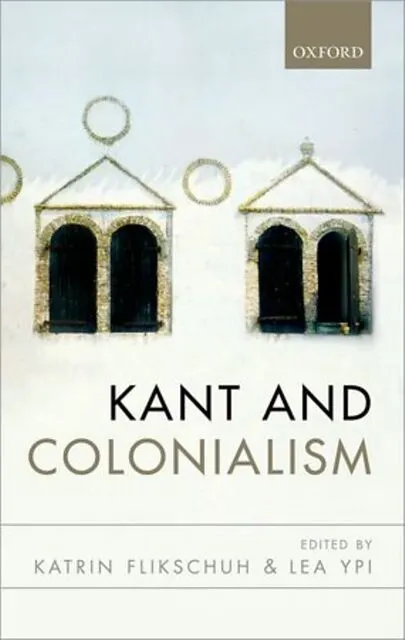
Kant and Colonialism
Beschreibung
Zusatztext a highly valuable book for many readers... Informationen zum Autor Katrin Flikschuh is Professor of Political Theory at the London School of Economics. She works on Kant's political philosophy and its relation to contemporary liberal thinking! and h...Format auswählen
- Fester EinbandCHF 138.00

Wird oft zusammen gekauft
Andere Kunden kauften auch
Beschreibung
Zusatztext a highly valuable book for many readers... Informationen zum Autor Katrin Flikschuh is Professor of Political Theory at the London School of Economics. She works on Kant's political philosophy and its relation to contemporary liberal thinking! and has growing interests in modern African political philosophy. She is principal investigator of a three year International Networks Project awarded by the Leverhulme Trust that endeavours to bring African and Western political thinking into productive contact with each other (2014-2017).She is author of Kant and Modern Political Philosophy (CUP! 2000); Freedom: Contemporary Liberal Perspectives (Polity Press! 2007)! and Kant contra Cosmopolitanism: Assessing the Global Justice Debate (CUP! forthcoming).Lea Ypi is Associate Professor in Political Theory at the London School of Economics and Political Science. She is interested in theories of justice! representation in democratic theory and Enlightenment political thought. She is the author ofGlobal Justice and Avant-Garde Political Agency (OUP! 2012) and co-editor (with Sarah Fine) of Migration in Political Theory: The Ethics of Movement and Membership (OUP! forthcoming). Klappentext This book presents the first full exploration of Kant's position on colonialism. Leading experts in both political thought and normative theory place Kant's thoughts on the subject in historical context! examine the tensions that colonialism produces in his work! and evaluate the relevance of these reflections for current debates on global justice. Zusammenfassung This is the first book dedicated to a systematic exploration of Kant's position on colonialism. Bringing together a team of leading scholars in both the history of political thought and normative theory, the chapters in the volume seek to place Kant's thoughts on colonialism in historical context, examine the tensions that the assessment of colonialism produces in Kant's work, and evaluate the relevance of these reflections for current debates on global justice andthe relation of Western political thinking to other parts of the world. Inhaltsverzeichnis Katrin Flikschuh and Lea Ypi: Introduction: Kant on colonialism: apologist or critic?; 1 Anthony Pagden: The Law of continuity: colonies! provinces and the justice of war within the limits of Kant's International Right; 2 Pauline Kleingeld: Kant's second thoughts on colonialism; 3 Sankar Muthu: Productive resistance in Kant's political thought: domination! counter-domination! and global unsocial sociability; 4 Lea Ypi: Commerce and colonialism in Kant's philosophy of history; 5 Liesbet Vanhaute: Colonists! traders or settlers? Kant on fair international trade and legitimate settlement; 6 Arthur Ripstein: Kant's juridical theory of colonialism; 7 Peter Niesen: Restorative justice in international and cosmopolitan law; 8 Anna Stilz: Provisional right and non-state peoples; 9 Martin Ajei and Katrin Flikschuh: Colonial mentality: Kant's hospitality right then and now; Index ...
a highly valuable book for many readers...
Autorentext
Katrin Flikschuh is Professor of Political Theory at the London School of Economics. She works on Kant's political philosophy and its relation to contemporary liberal thinking, and has growing interests in modern African political philosophy. She is principal investigator of a three year International Networks Project awarded by the Leverhulme Trust that endeavours to bring African and Western political thinking into productive contact with each other (2014-2017). She is author of Kant and Modern Political Philosophy (CUP, 2000); Freedom: Contemporary Liberal Perspectives (Polity Press, 2007), and Kant contra Cosmopolitanism: Assessing the Global Justice Debate (CUP, forthcoming).
Lea Ypi is Associate Professor in Political Theory at the London School of Economics and Political Science. She is interested in theories of justice, representation in democratic theory and Enlightenment political thought. She is the author ofGlobal Justice and Avant-Garde Political Agency (OUP, 2012) and co-editor (with Sarah Fine) of Migration in Political Theory: The Ethics of Movement and Membership (OUP, forthcoming).
Klappentext
This book presents the first full exploration of Kant's position on colonialism. Leading experts in both political thought and normative theory place Kant's thoughts on the subject in historical context, examine the tensions that colonialism produces in his work, and evaluate the relevance of these reflections for current debates on global justice.
Inhalt
Introduction: Kant on colonialism: apologist or critic?
1: Anthony Pagden: The Law of continuity: colonies, provinces and the justice of war within the limits of Kant's International Right
2: Pauline Kleingeld: Kant's second thoughts on colonialism
3: Sankar Muthu: Productive resistance in Kant's political thought: domination, counter-domination, and global unsocial sociability
4: Lea Ypi: Commerce and colonialism in Kant's philosophy of history
5: Liesbet Vanhaute: Colonists, traders or settlers? Kant on fair international trade and legitimate settlement
6: Arthur Ripstein: Kant's juridical theory of colonialism
7: Peter Niesen: Restorative justice in international and cosmopolitan law
8: Anna Stilz: Provisional right and non-state peoples
9: Martin Ajei and Katrin Flikschuh: Colonial mentality: Kant's hospitality right then and now
Index