
IHR WARENKORB IST AKTUELL LEER.
Haben Sie noch nichts passendes gefunden? Stöbern Sie durch unser komplettes Sortiment.
Oder melden Sie sich an bzw. registrieren Sie sich.
- Kostenlose Lieferung
- Kauf auf Rechnung
- Ex Libris Tiefpreis
- Filiallieferung und 650+ Abholorte
- Rabatt-Bons als Club-Mitglied
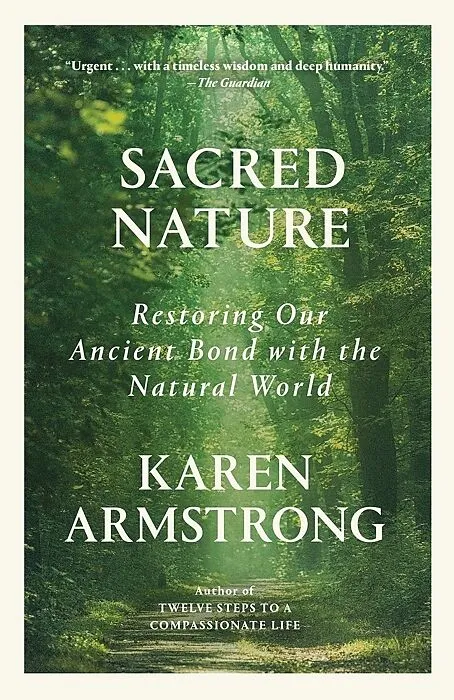
Sacred Nature
Beschreibung
Informationen zum Autor Karen Armstrong Klappentext ONE OF THE NEW YORKER 'S BEST BOOKS OF 2022 From one of the most original thinkers on the role of religion in the modern world, a profound exploration of the spiritual power of natureand an urgent call to rec...Format auswählen
- Kartonierter EinbandCHF 17.00

Wird oft zusammen gekauft
Andere Kunden kauften auch
Beschreibung
Informationen zum Autor Karen Armstrong Klappentext ONE OF THE NEW YORKER 'S BEST BOOKS OF 2022 From one of the most original thinkers on the role of religion in the modern world, a profound exploration of the spiritual power of natureand an urgent call to reclaim that power in everyday life. "Much has been written on the scientific and technological aspects of climate change. . . . But Armstrong's book is both more personal and more profound. Its urgent message is that hearts and minds need to change if we are to once more learn to revere our beautiful and fragile planet." The Guardian Since the beginning of time, humankind has looked upon nature and seen the divine. In the writings of the great thinkers across religions, the natural world inspires everything from fear, to awe, to tranquil contemplation; God, or however one defined the sublime, was present in everything. Yet today, even as we admire a tree or take in a striking landscape, we rarely see nature as sacred. In this short but deeply powerful book, the bestselling historian of religion Karen Armstrong re-sacralizes nature for modern times. Drawing on her vast knowledge of the world's religious traditions, she vividly describes nature's central place in spirituality across the centuries. In bringing this age-old wisdom to life, Armstrong shows modern readers how to rediscover nature's potency and form a connection to something greater than ourselves. Leseprobe 1 Mythos and Logos A great deal of environmental discussion is scientific: we constantly hear about emissions, particles, pollution levels and the ozone layer. This provides us with essential information and we have become familiar with the terminology. But it does not move us emotionally. Today we tend to use the term myth rather vaguely to mean something that is not true. When we hear of gods walking on the earth, a dead man striding out of his tomb or a sea parting to release an enslaved people, we dismiss these tales as only myths. But in the past, myth meant something entirely different. For most of human history, there were two ways of thinking, speaking and acquiring knowledge about the world: mythos and logos. Both were essential to comprehending reality: they were not in opposition to one another but complementary modes of arriving at truth, and each had its special area of competence. Mythos was concerned with what was considered timeless. It looked both back to the origins of life and culture and inward to the deepest levels of human experience. It was concerned with meaning not practical affairs. Humans are ?meaning ?seeking creatures. If our lives lack significance, we fall very easily into despair, and it was mythos that introduced people to deeper truths, making sense of their moribund and precarious lives by directing their attention to the eternal and universal. As far as we know, cats do not agonise about the feline condition, worry about the plight of cats in other parts of the world, or try to see life from a different perspective. But from a very early period humans felt compelled to devise stories that enabled them to place their lives in a different setting and give them a conviction ?that?against all the depressing evidence to the ?contrary?life had some meaning and value. A myth is an event which, in some sense, happened once, but which also happens all the time. Mythology points beyond the chaotic flux of historical events to what is timeless in human life, helping us to glimpse the stable core of reality. It is also rooted in what we call the unconscious mind. Myths are an ancient form of psychology. When people told tales of heroes descending into the underworld, struggling through labyrinths or fighting with monsters, they were bringing to light fears and desires from the obscure regions of the subconscious mind, which is not accessible by purely logic...
Autorentext
Karen Armstrong
Zusammenfassung
**ONE OF THE NEW YORKER'S BEST BOOKS OF 2022
From one of the most original thinkers on the role of religion in the modern world, a profound exploration of the spiritual power of nature—and an urgent call to reclaim that power in everyday life.
"Much has been written on the scientific and technological aspects of climate change. . . . But Armstrong’s book is both more personal and more profound. Its urgent message is that hearts and minds need to change if we are to once more learn to revere our beautiful and fragile planet." —The Guardian**
Since the beginning of time, humankind has looked upon nature and seen the divine. In the writings of the great thinkers across religions, the natural world inspires everything from fear, to awe, to tranquil contemplation; God, or however one defined the sublime, was present in everything. Yet today, even as we admire a tree or take in a striking landscape, we rarely see nature as sacred.
In this short but deeply powerful book, the bestselling historian of religion Karen Armstrong re-sacralizes nature for modern times. Drawing on her vast knowledge of the world’s religious traditions, she vividly describes nature’s central place in spirituality across the centuries. In bringing this age-old wisdom to life, Armstrong shows modern readers how to rediscover nature’s potency and form a connection to something greater than ourselves.
Leseprobe
1
Mythos and Logos
A great deal of environmental discussion is scientific: we constantly hear about emissions, particles, pollution levels and the ozone layer. This provides us with essential information and we have become familiar with the terminology. But it does not move us emotionally. Today we tend to use the term “myth” rather vaguely to mean something that is not true. When we hear of gods walking on the earth, a dead man striding out of his tomb or a sea parting to release an enslaved people, we dismiss these tales as “only myths.” But in the past, “myth” meant something entirely different.
For most of human history, there were two ways of thinking, speaking and acquiring knowledge about the world: mythos and logos. Both were essential to comprehending reality: they were not in opposition to one another but complementary modes of arriving at truth, and each had its special area of competence. Mythos was concerned with what was considered timeless. It looked both back to the origins of life and culture and inward to the deepest levels of human experience. It was concerned with meaning not practical affairs. Humans are meaning seeking creatures. If our lives lack significance, we fall very easily into despair, and it was mythos that introduced people to deeper truths, making sense of their moribund and precarious lives by directing their attention to the eternal and universal. As far as we know, cats do not agonise about the feline condition, worry about the plight of cats in other parts of the world, or try to see life from a different perspective. But from a very early period humans felt compelled to devise stories that enabled them to place their lives in a different setting and give them a conviction that—against all the depressing evidence to the contrary—life had some meaning and value.
A myth is an event which, in some sense, happened once, but which also happens all the time. Mythology points beyond the chaotic flux of historical events to what is timeless in human life, helping us to glimpse the stable core of reality. It is also rooted in what we call the unconscious mind. Myths are an ancient form of psychology. When people told tales of heroes descending into the underworld, struggling through labyrinths or fighting with monsters, they were bringing to light fears and desires from the obscure regions of the subconscious mind, which is not accessible by purely logical investigation but has…