
IHR WARENKORB IST AKTUELL LEER.
Haben Sie noch nichts passendes gefunden? Stöbern Sie durch unser komplettes Sortiment.
Oder melden Sie sich an bzw. registrieren Sie sich.
- Kostenlose Lieferung
- Kauf auf Rechnung
- Ex Libris Tiefpreis
- Filiallieferung und 650+ Abholorte
- Rabatt-Bons als Club-Mitglied
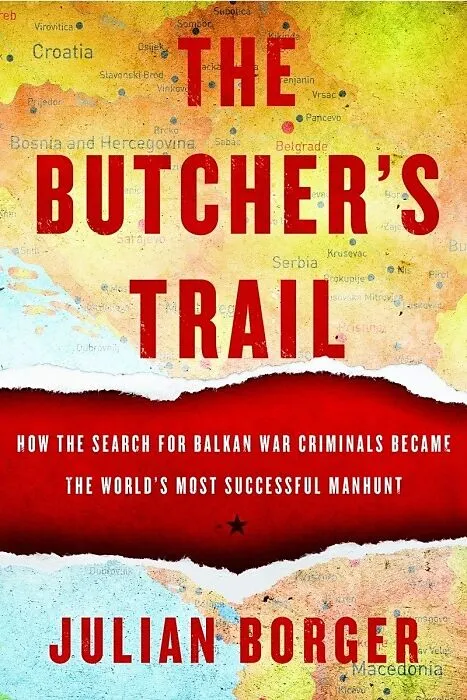
The Butcher's Trail
Beschreibung
Zusatztext 77574917 Informationen zum Autor Julian Borger is the diplomatic editor for The Guardian . He covered the Bosnian War for the BBC and The Guardian , and returned to the Balkans to report on the Kosovo conflict in 1999. He has also served as The Guar...Format auswählen
- Fester EinbandCHF 29.50

Wird oft zusammen gekauft
Andere Kunden kauften auch
Beschreibung
Zusatztext 77574917 Informationen zum Autor Julian Borger is the diplomatic editor for The Guardian . He covered the Bosnian War for the BBC and The Guardian , and returned to the Balkans to report on the Kosovo conflict in 1999. He has also served as The Guardian 's Middle East correspondent and its Washington bureau chief. Borger was part of the Guardian team that won the 2014 Pulitzer Prize for public service journalism for its coverage of the Snowden files on mass surveillance. He was also on the team awarded the 2013 Investigative Reporters and Editors (IRE) medal and the Paul Foot Special Investigation Award in the UK. Klappentext The gripping, untold story of The International Criminal Tribunal for the former Yugoslavia and how the perpetrators of Balkan war crimes were captured by the most successful manhunt in history Written with a thrilling narrative pull, The Butcher's Trail chronicles the pursuit and capture of the Balkan war criminals indicted by the International Criminal Tribunal in The Hague. Borger recounts how Radovan Karadzic and Ratko Mladic-both now on trial in The Hague-were finally tracked down, and describes the intrigue behind the arrest of Slobodan Milosevic, the Yugoslav president who became the first head of state to stand before an international tribunal for crimes perpetrated in a time of war. Based on interviews with former special forces soldiers, intelligence officials, and investigators from a dozen countries-most speaking about their involvement for the first time-this book reconstructs a fourteen-year manhunt carried out almost entirely in secret. Indicting the worst war criminals that Europe had known since the Nazi era, the ICTY ultimately accounted for all 161 suspects on its wanted list, a feat never before achieved in political and military history. Genocide challenges our idea of what it is to be human. The acts perpetrated against innocent victims are so grotesque and disturbing we recoil from their contemplation. We prefer them to be either far away or long ago. What happened in the countries of the former Yugoslavia between 1991 and 1999 ripped all that insulation away. The mass murders took place in supposedly modern Europe, a continent that flattered itself in thinking it had evolved beyond such savagery. For millions of Europeans, it was a holiday spot, dotted with resorts along azure seas, yet suddenly it was a war zone on the evening news. Almost immediately, the rest of Europe began to distance itself, like neighbors of a dying household. Shutting their doors and windows, they convinced themselves that if they looked the other way, they would never catch the disease. Western politicians diagnosed ancient ethnic hatreds let loose by the fall of communism as the cause of the bloodshed. It was one of a litany of excuses for not getting involved, and it explained nothing. The history of the ethnic communities that made up Yugoslavia had indeed been marked by sporadic bouts of violence, but those eruptions had been interspersed by long periods of peaceful coexistence. Exactly the same could be said of most regions of Europe's richly diverse and turbulent continent. Yet if the English herded the Scottish into concentration camps, or if the Spanish committed mass murder against the Catalans or Basques in the late twentieth century, a history of ancient ethnic hatreds would seem a grossly inadequate explanation. As it is for the Balkans. Zusammenfassung The gripping! untold story of The International Criminal Tribunal for the former Yugoslavia and how the perpetrators of Balkan war crimes were captured by the most successful manhunt in history Written with a thrilling narrative pull! The Butcher's Trail chronicles the pursuit and capture of the Balkan war criminals indicted by the International Criminal Tribunal in The Hague. Borger recounts ho...
"[A] vivid, page-turning account...A well-organized, deeply researched work that ably digests the Balkan war, the criminals, the criminal court, and its legacy." —Kirkus Reviews (starred review)
“In* The Butcher’s Trail*, the riveting and important history of the international manhunt for 161 Balkan war criminals… Julian Borger describes the moment investigators tracked down Radovan Karadzic, the leader of the early 1990s genocide against Bosnia’s Muslims…With atrocities committed daily in Syria and elsewhere around the world, and the U.S. and its allies grappling with which of their core values to adhere to against the asymmetric threat of transnational terrorism, the hope of future international justice for war crimes may seem distant. But it is not impossible that major powers may find international judicial tribunals are more an ally than an enemy in the fight against the threats that have developed in the post-Cold War period. If they do, Borger makes clear The Hague tribunal’s efforts to bring Karadzic and other war criminals to justice will have set the high water mark against which future efforts at justice will be measured.” *—TIME
*“The genocidal crimes of the 1990s Balkan wars stunned the world, mass killings, concentration camps, systematic rape. Many, but by no means all of the perpetrators were the majority Serbs, starting with Serbian President Slobodan Milosevic. The U.N. set up an international tribunal to investigate and indict some 161 people it found most responsible. The challenge was to actually apprehend them. How they did so is captured in a gripping new book by Julian Borger, longtime correspondent and editor at The Guardian newspaper, titled The Butcher’s Trail: How the Search for Balkan War Criminals Became the World’s Most Successful Manhunt… What’s really, truly groundbreaking about this book is what it took to apprehend them.” *—PBS NewsHour
*
"Gripping." —The Independent
"Well researched...timely." *—The Wall Street Journal
“What Julian Borger has achieved in this superb account of the tribunal’s manhunt is much more than a litany of these crimes. It is an elegantly written, powerfully convincing reckoning of how the world stumblingly faced up to a reality that should not have been: war crimes in modern Europe. He focuses on the manhunt as a single thread in the complex Balkan story, partly as a way to reveal how that region influences our wider world today, through rendition, jihad – and the delicate flower of international law…Borger is honest about the muddles and misunderstandings. He recounts America’s early muscle-bound efforts to go after targets…The early snatch operations – target cars being rammed from behind and pushed into pre-arranged ambush positions – provide great military theatre, but Borger shows how the greatest scalps for the tribunal were won through diplomatic finesse: the moderate leaders of Bosnia, Croatia and Serbia were told that a pre-condition of those tiny new nations being welcomed as equals by the international community was the surrender of war crimes suspects.” —The Guardian (US)
“Borger… handles [this] complicated story with flair and confidence. Vividly written, packed with lively character sketches of spymasters, lawyers and diplomats, The Butcher’s Trail is a deeply researched account of the hunt for some of the worst war criminals of the late 20th century…[and] an important work that adds greatly to our understanding of how international criminal justice has evolved and offers lessons for future war crimes investigations.”—Newsweek*
"The Butcher’s Trail create[s] what may ultimately become one of the defining accounts of this episode of Balkan history." —The National
"Borger’s compelling, readable prose with these stories of assault on impunity offer a rare opportunity to…