
IHR WARENKORB IST AKTUELL LEER.
Haben Sie noch nichts passendes gefunden? Stöbern Sie durch unser komplettes Sortiment.
Oder melden Sie sich an bzw. registrieren Sie sich.
- Kostenlose Lieferung
- Kauf auf Rechnung
- Ex Libris Tiefpreis
- Filiallieferung und 650+ Abholorte
- Rabatt-Bons als Club-Mitglied
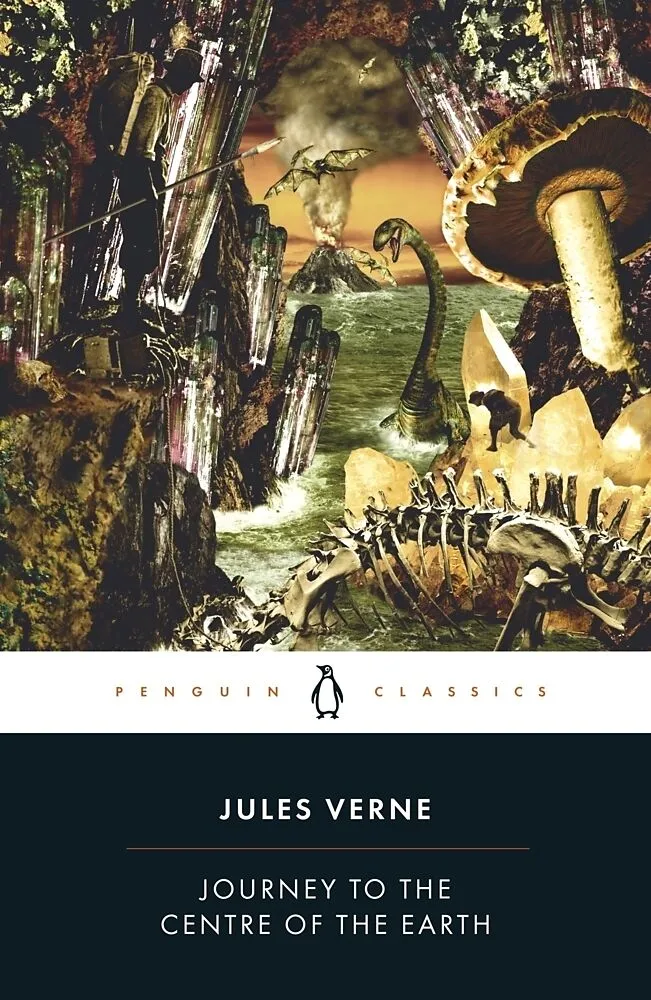
Journey to the Centre of the Earth
Beschreibung
Zusatztext The reason Verne is still read by millions today is simply that he was one of the best storytellers who ever lived.Arthur C. Clarke Informationen zum Autor Jules Verne Klappentext A new translation of one of the world's greatest adventure Stories Or...Format auswählen
- Poche format BCHF 18.40
Wird oft zusammen gekauft
Andere Kunden kauften auch
Beschreibung
Zusatztext The reason Verne is still read by millions today is simply that he was one of the best storytellers who ever lived.Arthur C. Clarke Informationen zum Autor Jules Verne Klappentext A new translation of one of the world's greatest adventure Stories Originally published in 1864, this Jules Verne classic has wowed generations of readers with its portrayal of an imaginary odyssey into a subterranean wonderland. When Axel deciphers an old parchment describing a secret passage through a volcano to the center of the earth, nothing will stop his eccentric Uncle Lidenbrock from setting out at once. With silent Hans as guide, the two men encounter natural hazards, prehistoric beasts, and other curiosities on their perilous, astonishing, terrifying trek through the underworld. For more than seventy years, Penguin has been the leading publisher of classic literature in the English-speaking world. With more than 1,700 titles, Penguin Classics represents a global bookshelf of the best works throughout history and across genres and disciplines. Readers trust the series to provide authoritative texts enhanced by introductions and notes by distinguished scholars and contemporary authors, as well as up-to-date translations by award-winning translators. I It was on Sunday, the 24th of May, 1863, that my uncle, Professor Lidenbrock, came rushing suddenly back to his little house in the old part of Hamburg, No. 19, Königstrasse. Our good Martha could not but think she was very much behindhand with the dinner, for the pot was scarcely beginning to simmer, and I said to myself: Now, then, we'll have a fine outcry if my uncle is hungry, for he is the most impatient of mortals. Mr. Lidenbrock, already! cried the poor woman, in dismay, half opening the dining-room door. Yes, Martha; but of course dinner can't be ready yet, for it is not two o'clock. It has only just struck the half-hour by St. Michael's. What brings Mr. Lidenbrock home, then? He'll probably tell us that himself. Here he comes. I'll be off, Mr. Axel; you must make him listen to reason. And forthwith she effected a safe retreat to her culinary laboratory. I was left alone, but not feeling equal to the task of making the most irascible of professors listen to reason, was about to escape to my own little room upstairs, when the street-door creaked on its hinges, and the wooden stairs cracked beneath a hurried tread, and the master of the house came in and bolted across the dining-room, straight into his study. But, rapid as his flight was, he managed to fling his nutcracker-headed stick into a corner, and his wide-brimmed rough hat on the table, and to shout out to his nephew: Axel, follow me. Before I had time to stir he called out again, in the most impatient tone imaginable: What! Not here yet? In an instant I was on my feet and in the study of my dreadful master. Otto Lidenbrock was not a bad man. I grant that, willingly. But, unless he mightily changes, he will live and die a terrible origi- nal. He was professor in the Johannæum, and gave the course of lectures on mineralogy, during which he regularly put himself into a passion once or twice. Not that he troubled himself much about the assiduity of his pupils, or the amount of attention they paid to his lessons, or their corresponding success. These points gave him no concern. He taught subjectively, to use a German philosophical expression, for himself, and not for others. He was a selfish savant a well of science, and nothing could be drawn up from it without the grinding noise of the pulleys: in a word, he was a miser. There are professors of this stamp in Germany. My uncle, unfortunately, did not enjoy great facility of pronunciation, unless he was with intimate friends; at least, not when he s...
#8220;The reason Verne is still read by millions today
is simply that he was one of the best storytellers
who ever lived.”—Arthur C. Clarke
Autorentext
Jules Verne
Klappentext
A new translation of one of the world's greatest adventure Stories
Originally published in 1864, this Jules Verne classic has wowed generations of readers with its portrayal of an imaginary odyssey into a subterranean wonderland. When Axel deciphers an old parchment describing a secret passage through a volcano to the center of the earth, nothing will stop his eccentric Uncle Lidenbrock from setting out at once. With silent Hans as guide, the two men encounter natural hazards, prehistoric beasts, and other curiosities on their perilous, astonishing, terrifying trek through the underworld.
For more than seventy years, Penguin has been the leading publisher of classic literature in the English-speaking world. With more than 1,700 titles, Penguin Classics represents a global bookshelf of the best works throughout history and across genres and disciplines. Readers trust the series to provide authoritative texts enhanced by introductions and notes by distinguished scholars and contemporary authors, as well as up-to-date translations by award-winning translators.
Zusammenfassung
Tells the story of distinguished but eccentric Professor Lidenbrock, who finds a scrap of parchment in an old manuscript. A cipher written in runes, it tells of an entrance to another world - a world hidden beneath our own, illuminated by an electrified gas and populated by strange, prehistoric beings.
Leseprobe
**I
**
It was on Sunday, the 24th of May, 1863, that my uncle, Professor Lidenbrock, came rushing suddenly back to his little house in the old part of Hamburg, No. 19, Königstrasse.
Our good Martha could not but think she was very much behindhand with the dinner, for the pot was scarcely beginning to simmer, and I said to myself:
“Now, then, we’ll have a fine outcry if my uncle is hungry, for he is the most impatient of mortals.”
“Mr. Lidenbrock, already!” cried the poor woman, in dismay, half opening the dining-room door.
“Yes, Martha; but of course dinner can’t be ready yet, for it is not two o’clock. It has only just struck the half-hour by St. Michael’s.”
“What brings Mr. Lidenbrock home, then?”
“He’ll probably tell us that himself.”
“Here he comes. I’ll be off, Mr. Axel; you must make him listen to reason.”
And forthwith she effected a safe retreat to her culinary laboratory.
I was left alone, but not feeling equal to the task of making the most irascible of professors listen to reason, was about to escape to my own little room upstairs, when the street-door creaked on its hinges, and the wooden stairs cracked beneath a hurried tread, and the master of the house came in and bolted across the dining-room, straight into his study. But, rapid as his flight was, he managed to fling his nutcracker-headed stick into a corner, and his wide-brimmed rough hat on the table, and to shout out to his nephew:
“Axel, follow me.”
Before I had time to stir he called out again, in the most impatient tone imaginable:
“What! Not here yet?”
In an instant I was on my feet and in the study of my dreadful master.
Otto Lidenbrock was not a bad man. I grant that, willingly. But, unless he mightily changes, he will live and die a terrible origi- nal.
He was professor in the Johannæum, and gave the course of lectures on mineralogy, during which he regularly put himself into a passion once or twice. Not that he troubled himself much about the assiduity of his pupils, or the amount of attention they paid to his lessons, or their corresponding success. These points gave him no concern. He taught subjectively, to use a German philosophical expression, for himself, and not for others. He was a selfish savant— a well of science, and nothing could be drawn up from it without the grinding noise of the pulleys: in a word,…