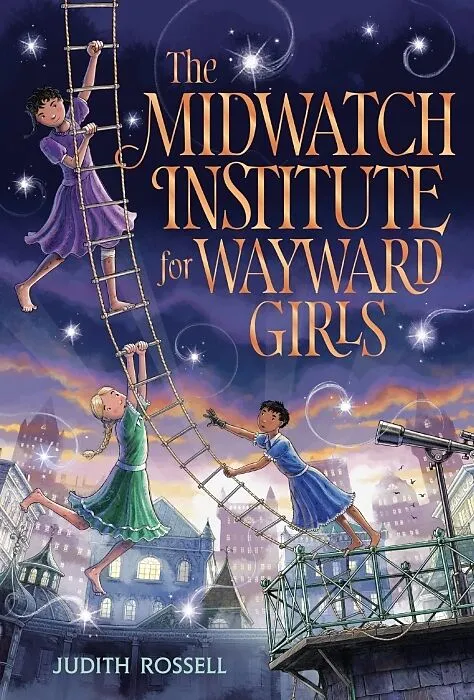
The Midwatch Institute for Wayward Girls
Beschreibung
A whimsical, adventure-filled mystery about a young orphan at the edge of society who finds herself at the center of a city''s secrets. For fans of <The Swifts< and <A Series of Unfortunate Events<. <"<I was hooked from the beginning … Move over Lem...Format auswählen
- Fester EinbandCHF 16.25
- Kartonierter EinbandCHF 9.10

Wird oft zusammen gekauft
Andere Kunden kauften auch
Beschreibung
A whimsical, adventure-filled mystery about a young orphan at the edge of society who finds herself at the center of a city''s secrets. For fans of <The Swifts< and <A Series of Unfortunate Events<.
<"<I was hooked from the beginning … Move over Lemony Snicket!" —Karen Foxlee, award-winning author of <Lenny’s Book of Everything<
Maggie Fishbone is not expecting much when she’s sent to the Midwatch Institute for Orphans, Runaways, and Wayward Girls—the last resort after causing a ruckus at the orphanage where she was living. Except . . . the Institute isn’t some dreadful, dreary place like she thought.
Instead it’s full of curious girls training to solve mysteries, fight bad guys, and keep the city safe. In between fencing lessons and discovering all the shortcuts in the building, Maggie finds herself making friends at the Midwatch and finally feeling like she’s home. And when a woman goes missing, Maggie’s off on her first assignment, with each step leading her deeper into the secrets of the city.
With gorgeous black-and-white illustrations and pages of “Useful Things Every Girl Should Know” (like how send messages in morse code and how to shout extremely loudly), <The Midwatch< is a whimsical, adventure-filled mystery from internationally bestselling author-illustrator Judith Rossell.
Autorentext
Judith Rossell
Leseprobe
Chapter One
It was late afternoon when the little steamer from Mud Harbor reached the city, and the sun was sinking behind low, gray clouds. Maggie Fishbone was dizzy and seasick and so nervous, she felt like she had swallowed an eel. She gripped her suitcase, stumbled off the gangplank, and followed Sister Immaculata through the docks and out into the street.
The noise was deafening. Motorcars and trucks trundled past and trains clanked on iron bridges overhead. Clouds of steam hissed from gratings in the sidewalk. The air smelled of smoke, garbage, and a bunch of other things Maggie did not recognize. And there were people everywhere. A group of young men staggered by; one was playing a bugle and the others were singing in a foreign language. A woman bustled past with a huge purple cabbage in a basket. A man stood beside a baker’s cart, yelling about hot pies and pretzels.
Back in the orphanage in Mud Harbor, Maggie had heard stories about the city. The fish heads for the orphans’ supper came wrapped in newspapers, and the orphans read the newspapers and whispered about them at night in the dormitory. The city was stuffed full of wickedness, everyone knew that. Huge alligators lived in the sewers. Shadowy, hulking monsters lurched through the streets at night. Bakers stole children, chopped them up, and made them into pies.
Maggie didn’t believe the stories. Not really. But all the same, she frowned suspiciously at the pies on the baker’s cart.
Sister Immaculata’s black habit fluttered and her mouth was set in a determined line as she strode through the crowd. She checked the time and asked for directions, then they boarded a streetcar and found a seat. Maggie was uncomfortably squashed between the window and Sister Immaculata (who felt lumpy and bony, as if she were made out of potatoes and cutlery), and had to crane her neck to peer out as they rattled through the streets. They passed statues and steeples and buildings that reached so high into the sky that Maggie felt like they were traveling along the floor of a deep canyon. Advertising signs flashed and sparkled. Far above, she glimpsed an airship—a shadow against the clouds, as big as a whale. She caught her breath as it glided overhead.
Sister Immaculata cleared her throat and said, “Well, Magdalena. You’ve got a devil of a temper, and you acted like a hooligan, time and again. Even as a baby you had a shriek like a banshee . . .”
Maggie scowled out the window and tried not to listen. She had heard the story a hundred times. How she’d been left on the doorstep of the orphanage, wrapped in a scrap of sailcloth and tucked into a mackerel box. How the nuns had chosen the names Magdalena (after the saint, of course; the nuns were very keen on saints) and Fishbone, because her angry screams had sounded exactly like the seagulls in a gutter nearby, fighting over a herring bone.
She sighed crossly.
Sister Immaculata was still talking. “… And now look where it’s landed you. You’ve only got yourself to blame. You’ll be tamed now, that’s certain. Tamed good and proper.”
Maggie shrugged, still scowling. There was nothing to say about that. Sister Immaculata had been saying similar, discouraging things all day, and Maggie was feeling sick with dread.
They clambered off the streetcar on a busy street lined with storefronts and apartment buildings. It had started to rain, and people were hurrying along, heads bent.
Sister Immaculata unfolded a letter and studied it in the light of a streetlight. She frowned. “This way,” she said. “Hurry up, or we’ll be late.”
They followed the street for a few blocks, turned a corner, and came to a high, dark building; a looming, spiky shape of gables and chimneys. Set in the wall was an archway, with words carved into the stone.
THE MIDWATCH INSTITUTE
for Orphans, Runaways, and
WAYWARD GIRLS
Maggie felt her heart lurch. She took a breath and gripped her suitcase tightly. This was her last chance to escape. But before she could take a step, Sister Immaculata grabbed her by the wrist and snapped, “Oh no you don’t.” And she dragged Maggie up the stairs to the door and rang the bell.
They waited. Traffic rumbled past. A cat darted across the narrow street and disappeared behind a row of garbage cans. Two women walked by. As they passed, one of them said, “Another poor kid. They go in, but you never see them come out again, do you?”
Maggie swallowed and tried to stop herself from shaking.
At last, the door was opened by an enormous woman wearing an apron. She was around the same size and shape as the door, and she had a forbidding expression.
Maggie took a step backward.
Sister Immaculata’s fingers tightened on her wrist. “I’ve brought a wayward girl,” she said.
The woman frowned, let them in, then closed the door behind them with a heavy thud. Somewhere deeper in the building, an organ was playing a slow, melancholy tune. As the woman led them along a short passage and into a hallway, a line of girls appeared. They were wearing long, gray, hooded cloaks, and they walked silently past with their eyes down. Sister Immaculata watched them until they disappeared around a corner, and she gave a satisfied little nod.
On a bench in the hallway, two dejected-looking girls of about Maggie’s age sat waiting, each with a shabby suitcase.
The large woman pointed to an office window. Above the window Maggie read:
INSTITUTE OFFICE
Miss Fortnightly
Secretary
Admissions on the last day of the month.
By Arrangement.
Strictly 5pm–6pm only.
Sister Immaculata tapped on the window. A thin, gray-haired woman slid it open and peered out, frowning over her spectacles. She said, “Admissions?” and didn’t wait for a reply. “Name?”
“Magdalena Fishbone,” said Sister Immaculata.
“Fishbone?” The secretary ran her finger down a column in a ledger, nodded, and said, “Yes. You brought the letter?”
Sister Immaculata passed it over. The secretary read it carefully, then pointed at the ledger. “Sign here.”
As Sister Immaculata signed her name, the line of silent girls filed back in the other direction. Maggie shivered. They definitely looked tamed. Tamed and miserab…