
IHR WARENKORB IST AKTUELL LEER.
Haben Sie noch nichts passendes gefunden? Stöbern Sie durch unser komplettes Sortiment.
Oder melden Sie sich an bzw. registrieren Sie sich.
- Kostenlose Lieferung
- Kauf auf Rechnung
- Ex Libris Tiefpreis
- Filiallieferung und 650+ Abholorte
- Rabatt-Bons als Club-Mitglied
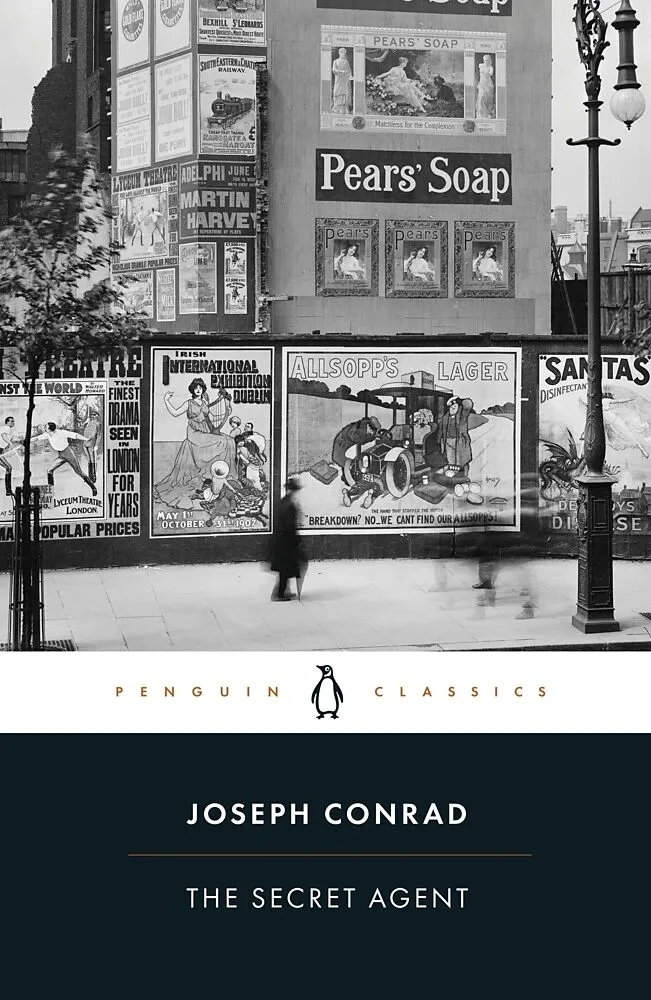
The Secret Agent
Beschreibung
Zusatztext The Secret Agent is an astonishing book. It is one of the bestand certainly the most significantdetective stories ever written. Ford Madox Ford The Secret Agent is an altogether thrilling 'crime story' . . . a political novel of a foreign embassy in...Format auswählen
- Kartonierter EinbandCHF 16.20
Wird oft zusammen gekauft
Andere Kunden kauften auch
Beschreibung
Zusatztext The Secret Agent is an astonishing book. It is one of the bestand certainly the most significantdetective stories ever written. Ford Madox Ford The Secret Agent is an altogether thrilling 'crime story' . . . a political novel of a foreign embassy intrigue and its tragic human outcome. Thomas Mann One of Conrad's supreme masterpieces. F. R. Leavis [ The Secret Agent ] was in effect the world's first political thrillerspies! conspirators! wily policemen! murders! bombings . . . Conrad was also giving artistic expression to his domestic anxietieshis overweight wife and problem child! his lack of money! his inactivity! his discomfort in London! his uneasiness in English society! his sense of exile! of being an alien . . . The novel has the perverse logic and derangement of a dream. from the Introduction to the Everyman's Library edition by Paul Theroux Informationen zum Autor Joseph Conrad Klappentext Joseph Conrad's dark satire on English society In the only novel Conrad set in London, The Secret Agent communicates a profoundly ironic view of human affairs. The story is woven around an attack on the Greenwich Observatory in 1894 masterminded by Verloc, a Russian spy working for the police, and ostensibly a member of an anarchist group in Soho. His masters instruct him to discredit the anarchists in a humiliating fashion, and when his evil plan goes horribly awry, Verloc must deal with the repercussions of his actions. While rooted in the Edwardian period, Conrad's tale remains strikingly contemporary, with its depiction of Londoners gripped by fear of the terrorists living in their midst. This edition of The Secret Agent contains a chronology, further reading, notes and maps of London and Greenwich. In his introduction, Michael Newton discusses London's real-life world of political anarchy, and Conrad's portrayal of the Verlocs' marriage. For more than seventy years, Penguin has been the leading publisher of classic literature in the English-speaking world. With more than 1,700 titles, Penguin Classics represents a global bookshelf of the best works throughout history and across genres and disciplines. Readers trust the series to provide authoritative texts enhanced by introductions and notes by distinguished scholars and contemporary authors, as well as up-to-date translations by award-winning translators. Zusammenfassung An attack on the Greenwich Observatory in 1894 masterminded by Verloc, a Russian spy working for the police, and ostensibly a member of an anarchist group in Soho. His masters instruct him to discredit the anarchists in a humiliating fashion, and when his evil plan goes horribly awry, Verloc must deal with the repercussions of his actions....
ldquo;The Secret Agent is an astonishing book. It is one of the best—and certainly the most significant—detective stories ever written.” —Ford Madox Ford
“The Secret Agent is an altogether thrilling ‘crime story’ . . . a political novel of a foreign embassy intrigue and its tragic human outcome.” —Thomas Mann
“One of Conrad’s supreme masterpieces.” —F. R. Leavis
“[The Secret Agent] was in effect the world’s first political thriller—spies, conspirators, wily policemen, murders, bombings . . . Conrad was also giving artistic expression to his domestic anxieties—his overweight wife and problem child, his lack of money, his inactivity, his discomfort in London, his uneasiness in English society, his sense of exile, of being an alien . . . The novel has the perverse logic and derangement of a dream.”
—from the Introduction to the Everyman's Library edition by Paul Theroux
Autorentext
Joseph Conrad
Klappentext
Joseph Conrad's dark satire on English society
In the only novel Conrad set in London, The Secret Agent communicates a profoundly ironic view of human affairs. The story is woven around an attack on the Greenwich Observatory in 1894 masterminded by Verloc, a Russian spy working for the police, and ostensibly a member of an anarchist group in Soho. His masters instruct him to discredit the anarchists in a humiliating fashion, and when his evil plan goes horribly awry, Verloc must deal with the repercussions of his actions. While rooted in the Edwardian period, Conrad's tale remains strikingly contemporary, with its depiction of Londoners gripped by fear of the terrorists living in their midst.
This edition of The Secret Agent contains a chronology, further reading, notes and maps of London and Greenwich. In his introduction, Michael Newton discusses London's real-life world of political anarchy, and Conrad's portrayal of the Verlocs' marriage.
For more than seventy years, Penguin has been the leading publisher of classic literature in the English-speaking world. With more than 1,700 titles, Penguin Classics represents a global bookshelf of the best works throughout history and across genres and disciplines. Readers trust the series to provide authoritative texts enhanced by introductions and notes by distinguished scholars and contemporary authors, as well as up-to-date translations by award-winning translators.
Zusammenfassung
An attack on the Greenwich Observatory in 1894 masterminded by Verloc, a Russian spy working for the police, and ostensibly a member of an anarchist group in Soho. His masters instruct him to discredit the anarchists in a humiliating fashion, and when his evil plan goes horribly awry, Verloc must deal with the repercussions of his actions.
Leseprobe
I
Mr. Verloc, going out in the morning, left his shop nominally in charge of his brother-in-law. It could be done, because there was very little business at any time, and practically none at all before the evening. Mr. Verloc cared but little about his ostensible business. And, moreover, his wife was in charge of his brother-in-law.
The shop was small, and so was the house. It was one of those grimy brick houses which existed in large quantities before the era of reconstruction dawned upon London.1 The shop was a square box of a place, with the front glazed in small panes. In the daytime the door remained closed; in the evening it stood discreetly but suspiciously ajar.
The window contained photographs of more or less undressed dancing girls; nondescript packages in wrappers like patent medicines; closed yellow paper envelopes, very flimsy, and marked two and six in heavy black figures; a few numbers of ancient French comic publications hung across a string as if to dry; a dingy blue china bowl, a casket of black wood, bottles of marking ink, and rubber stamps; a few books, with titles hinting at impropriety; a few apparently old copies of obscure newspapers, badly printed, with titles like The Torch, The Gong—rousing titles.2 And the two gas jets inside the panes were always turned low, either for economy’s sake or for the sake of the customers.
These customers were either very young men, who hung about the window for a time before slipping in suddenly; or men of a more mature age, but looking generally as if they were not in funds. Some of that last kind had the collars of their overcoats turned right up to their moustaches, and traces of mud on the bottom of their nether garments, which had the appearance of being much worn and not very valuable. And the legs inside them did not, as a general rule, seem of much account either. With their hands plunged deep in the side pockets of their coats, they dodged in sideways, one shoulder first, as if afraid to start the bell going.
The bell, hung on the door by means of a curved ribbon of steel, was difficult to circumvent. It was hopelessly cracked; but of an evening, at the slightest provocation, it clattered behind the customer with impudent virulence.
It clattered; and at that si…