Haben Sie noch nichts passendes gefunden? Stöbern Sie durch unser komplettes Sortiment.
Oder melden Sie sich an bzw. registrieren Sie sich.


Beschreibung
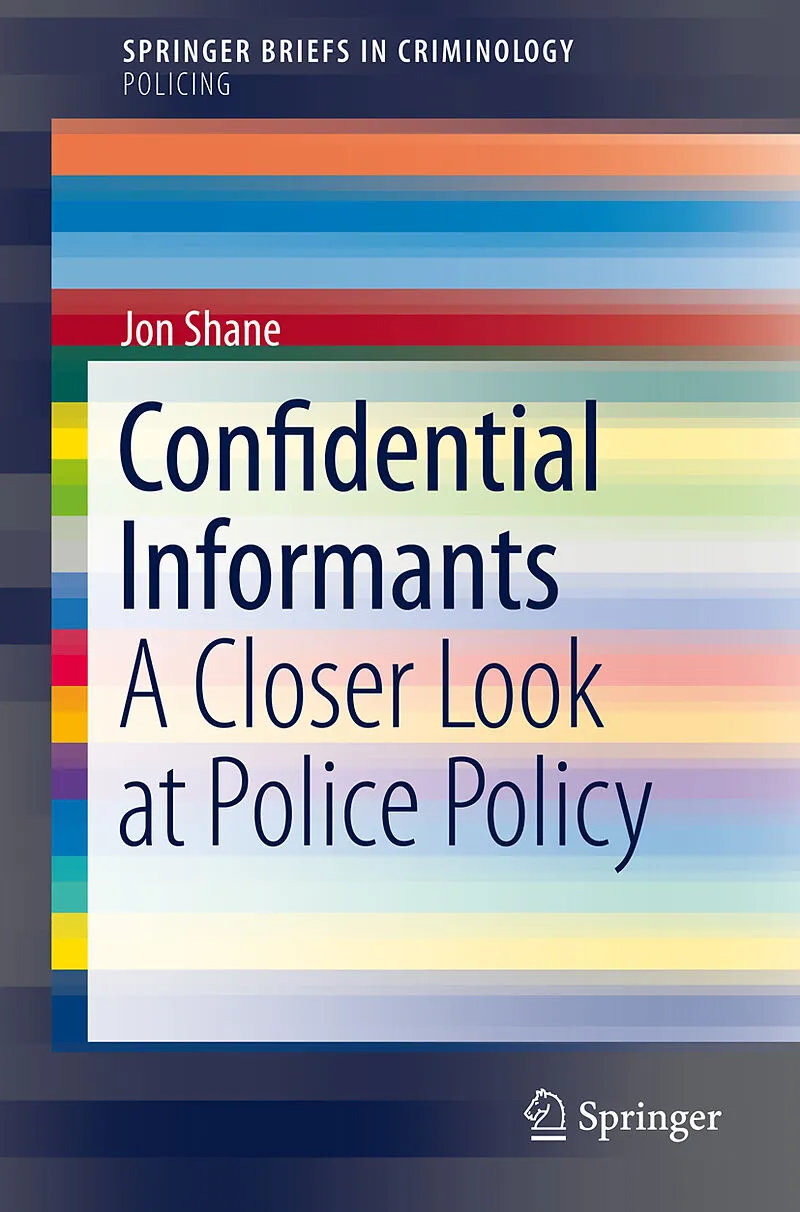
While confidential informants (CI's) can play a crucial role in police investigations, they also have the potential to cause great harm if they are dishonest. The process by which police agencies qualify a CI to work and the strength of agency policy may be t...
While confidential informants (CI's) can play a crucial role in police investigations, they also have the potential to cause great harm if they are dishonest. The process by which police agencies qualify a CI to work and the strength of agency policy may be the source of the problem. This Brief examines the integrity problem involving CIs in police operations within the United States, provides an overview of pitfalls and problems related to veracity and informant integrity including the difficulties in detecting when a CI is lying, and compares the provisions of actual published police policy to the model CI policy published by the International Association of Chiefs of Police (IACP). The analysis shows a wide divergence between actual police policy and the national standard promulgated by the IACP. The Brief provides policy recommendations for improving use of CIs that can potentially reduce or eliminate integrity problems that can lead to organizational accidents such as wrongful arrests and convictions, injuries or deaths. Some Courts have issued measures to ensure that information received from CIs is reliable by examining sworn testimony and documents related to their work. However, as this Brief explores, this judicial effort arises only after a police operation has taken place, and the use of force even deadly forcehas already been employed. The author proposes integrity testing beforehand, which would allow police to have a greater understanding of a CI's motivation, ability and veracity when conducting law enforcement operations. In addition, there are aspects of police policy that can enhance CI management such as training, supervision and entrapment that can further guard against integrity problems. Although integrity testing is not flawless, it does interpose an additional step in the CI management process that can help guard against wrongful conviction and perjury that harms the judicial process.
Provides overview of the role of Confidential Informants in Police Investigations Examines potential problems with integrity and reliability Presents potential solutions for training and preparation of Confidential Informants Includes supplementary material: sn.pub/extras
Autorentext
Jon M. Shane is a Professor in the Department of Law, Police Science, and Criminal Justice Administration at John Jay College of Criminal Justice. He retired from the Newark (NJ) Police Department after 20 years at the rank of captain (2005). Dr. Shane has published extensively in leading criminal justice and policing journals, including Crime Science, Security Journal, Police Quarterly, Behavioral Sciences and the Law, Journal of Criminal Justice, and Justice Quarterly. His work has also appeared in Policing: An International Journal of Strategies and Management, Police Practice and Research, and major publishing houses such as Routledge and Springer. Dr. Shane’s research on organizational stress (Organizational Stressors and Police Performance, 2010) is recognized as being among the top 4% of articles published in 20 criminology and criminal justice journals between 2010 and 2015. His scholarship has contributed to advancing police performance and management analysis. A graduate of the 193rd session of the FBI National Academy (1998) and the 25th session of the Senior Management Institute for Police (SMIP, 2001) at Harvard’s John F. Kennedy School of Government, Dr. Shane holds a certification in non-profit management from Rutgers Graduate School of Public Administration. He currently serves as a core faculty member of the Ohio Certified Law Enforcement Executive (CLEE) program, where he teaches Law Enforcement Staffing Analysis: Creating a Nexus Between Workload and Costs, emphasizing the value of activity-based budgeting. Before joining John Jay College, Dr. Shane lectured at Rutgers University’s Newark campus and Fairleigh Dickinson University’s Teaneck (NJ) campus, instructing courses in policing and criminal justice. He is a senior research associate for the National Policing Institute and a subject matter expert for the Center for Problem-Oriented Policing at Arizona State University. His research interests include police policy, use of force, performance management, and organizational supervision. Dr. Shane is a member of the American Society of Criminology, Academy of Criminal Justice Sciences, Police Executive Research Forum, and the International Association of Chiefs of Police. He can be reached at jshane@jjay.cuny.edu, jmsnpd@gmail.com, and www.jmshane.com
Klappentext
While confidential informants (CI s) can play a crucial role in police investigations, they also have the potential to cause great harm if they are dishonest. The process by which police agencies qualify a CI to work and the strength of agency policy may be the source of the problem. This Brief examines the integrity problem involving CIs in police operations within the United States, provides an overview of pitfalls and problems related to veracity and informant integrity including the difficulties in detecting when a CI is lying, and compares the provisions of actual published police policy to the model CI policy published by the International Association of Chiefs of Police (IACP). The analysis shows a wide divergence between actual police policy and the national standard promulgated by the IACP. The Brief provides policy recommendations for improving use of CIs that can potentially reduce or eliminate integrity problems that can lead to organizational accidents such as wrongful arrests and convictions, injuries or deaths. Some Courts have issued measures to ensure that information received from CIs is reliable by examining sworn testimony and documents related to their work. However, as this Brief explores, this judicial effort arises only after a police operation has taken place, and the use of force even deadly force has already been employed. The author proposes integrity testing beforehand, which would allow police to have a greater understanding of a CI s motivation, ability and veracity when conducting law enforcement operations. In addition, there are aspects of police policy that can enhance CI management such as training, supervision and entrapment that can further guard against integrity problems. Although integrity testing is not flawless, it does interpose an additional step in the CI management process that can help guard against wrongful conviction and perjury that harms the judicial process.
Inhalt
Preface.- Foreword I Mary Nicol Bowman .- Foreword II Jennifer Bonjean .- Foreword III Karen L. Amendola .- Introduction.- Background and the Problems Surrounding Confidential Informants.- Literature Review.- Methodology.- Analysis and Findings.-Discussion.- Policy Implications.- Limitations.- Directions for Future Research.- Afterword James M. Doyle . **
Tief- preis