
IHR WARENKORB IST AKTUELL LEER.
Haben Sie noch nichts passendes gefunden? Stöbern Sie durch unser komplettes Sortiment.
Oder melden Sie sich an bzw. registrieren Sie sich.
- Kostenlose Lieferung
- Kauf auf Rechnung
- Ex Libris Tiefpreis
- Filiallieferung und 650+ Abholorte
- Rabatt-Bons als Club-Mitglied
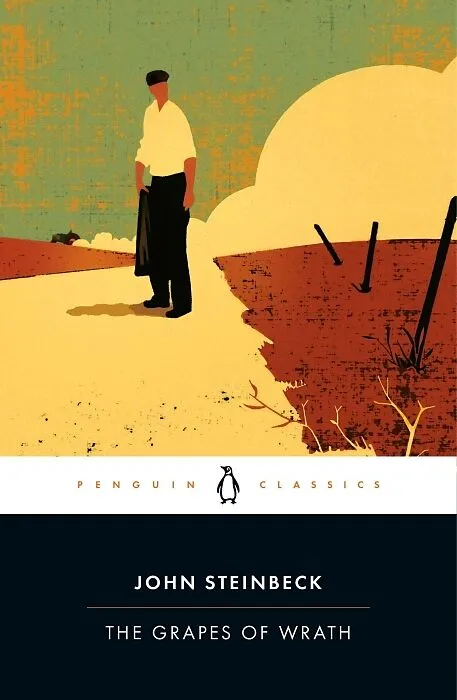
Grapes of Wrath
Beschreibung
Zusatztext Winner of the Pulitzer Prize for Fiction By the Winner of the Nobel Prize in Literature Steinbeck is a poet. . . . Everything is real! everything perfect. Upton Sinclair! Common Sense I think! and with earnest and honest consideration . . . that The...Format auswählen
- Poche format BCHF 19.70

Wird oft zusammen gekauft
Andere Kunden kauften auch
Beschreibung
Zusatztext Winner of the Pulitzer Prize for Fiction By the Winner of the Nobel Prize in Literature Steinbeck is a poet. . . . Everything is real! everything perfect. Upton Sinclair! Common Sense I think! and with earnest and honest consideration . . . that The Grapes of Wrath is the greatest American novel I have ever read." Dorothy Parker It seems to me as great a book as has yet come out of America. Alexander Woollcott I didn't understand at the time no one could have that [ The Grapes of Wrath ] was not just a historical document but also a document about our current world with its depiction of drought and its effects. . . . California! where the Joads went! is no longer the reliably verdant and green paradise they found; it's now coming out of a five-year drought of its own. . . . The other point that Steinbeck makes well! is that when we have huge! natural changes like these! the people who pay the largest price are the people most vulnerable and closest to the bottom. . . . None of them did anything much to cause the problem! and yet they are its early victims. . . . Steinbeck was trying to do something more than just simply tell a story. He's a remarkable writer! and this is his masterpiece. Bill McKibben! environmentalist Informationen zum Autor John Steinbeck; Introduction and Notes by Robert DeMott Klappentext The Pulitzer Prize-winning epic of the Great Depression, a book that galvanized-and sometimes outraged-millions of readers. Nominated as one of America's best-loved novels by PBS's The Great American Read A Penguin Classic First published in 1939, Steinbeck's Pulitzer Prize-winning epic of the Great Depression chronicles the Dust Bowl migration of the 1930s and tells the story of one Oklahoma farm family, the Joads-driven from their homestead and forced to travel west to the promised land of California. Out of their trials and their repeated collisions against the hard realities of an America divided into Haves and Have-Nots evolves a drama that is intensely human yet majestic in its scale and moral vision, elemental yet plainspoken, tragic but ultimately stirring in its human dignity. A portrait of the conflict between the powerful and the powerless, of one man's fierce reaction to injustice, and of one woman's stoical strength, the novel captures the horrors of the Great Depression and probes into the very nature of equality and justice in America. At once a naturalistic epic, captivity narrative, road novel, and transcendental gospel, Steinbeck's powerful landmark novel is perhaps the most American of American Classics. This Penguin Classics edition contains an introduction and notes by Steinbeck scholar Robert Demott. For more than seventy years, Penguin has been the leading publisher of classic literature in the English-speaking world. With more than 1,800 titles, Penguin Classics represents a global bookshelf of the best works throughout history and across genres and disciplines. Readers trust the series to provide authoritative texts enhanced by introductions and notes by distinguished scholars and contemporary authors, as well as up-to-date translations by award-winning translators. INTRODUCTION I The Grapes of Wrath is one of the most famous novels in America perhaps even in the world. When John Steinbeck wrote this book he had no inkling that it would attain such widespread recognition, though he did have high hopes for its effectiveness. On June 18, 1938, a little more than three weeks after starting his unnamed new manuscript, Steinbeck confided in his daily journal (posthumously published in 1989 as Working Days ): If I could do this book properly it would be one of the really fine books and a truly American book. But I am assailed with my own ignoranc...
Winner of the Pulitzer Prize for Fiction
By the Winner of the Nobel Prize in Literature
“Steinbeck is a poet. . . . Everything is real, everything perfect.”
—Upton Sinclair, Common Sense
“I think, and with earnest and honest consideration . . . that The Grapes of Wrath is the greatest American novel I have ever read."
—Dorothy Parker
“It seems to me as great a book as has yet come out of America.”
**—Alexander Woollcott
“I didn’t understand at the time — no one could have — that [The Grapes of Wrath] was not just a historical document but also a document about our current world with its depiction of drought and its effects. . . . California, where the Joads went, is no longer the reliably verdant and green paradise they found; it’s now coming out of a five-year drought of its own. . . . The other point that Steinbeck makes well, is that when we have huge, natural changes like these, the people who pay the largest price are the people most vulnerable and closest to the bottom. . . . None of them did anything much to cause the problem, and yet they are its early victims. . . . Steinbeck was trying to do something more than just simply tell a story. He’s a remarkable writer, and this is his masterpiece.”
— Bill McKibben, environmentalist
**
Autorentext
John Steinbeck; Introduction and Notes by Robert DeMott
Klappentext
The Pulitzer Prize-winning epic of the Great Depression, a book that galvanized-and sometimes outraged-millions of readers. Nominated as one of America's best-loved novels by PBS's The Great American Read
A Penguin Classic
First published in 1939, Steinbeck's Pulitzer Prize-winning epic of the Great Depression chronicles the Dust Bowl migration of the 1930s and tells the story of one Oklahoma farm family, the Joads-driven from their homestead and forced to travel west to the promised land of California. Out of their trials and their repeated collisions against the hard realities of an America divided into Haves and Have-Nots evolves a drama that is intensely human yet majestic in its scale and moral vision, elemental yet plainspoken, tragic but ultimately stirring in its human dignity. A portrait of the conflict between the powerful and the powerless, of one man's fierce reaction to injustice, and of one woman's stoical strength, the novel captures the horrors of the Great Depression and probes into the very nature of equality and justice in America. At once a naturalistic epic, captivity narrative, road novel, and transcendental gospel, Steinbeck's powerful landmark novel is perhaps the most American of American Classics.
This Penguin Classics edition contains an introduction and notes by Steinbeck scholar Robert Demott.
For more than seventy years, Penguin has been the leading publisher of classic literature in the English-speaking world. With more than 1,800 titles, Penguin Classics represents a global bookshelf of the best works throughout history and across genres and disciplines. Readers trust the series to provide authoritative texts enhanced by introductions and notes by distinguished scholars and contemporary authors, as well as up-to-date translations by award-winning translators.
Leseprobe
**INTRODUCTION
I**
The Grapes of Wrath is one of the most famous novels in America— perhaps even in the world. When John Steinbeck wrote this book he had no inkling that it would attain such widespread recognition, though he did have high hopes for its effectiveness. On June 18, 1938, a little more than three weeks after starting his unnamed new manuscript, Steinbeck confided in his daily journal (posthumously published in 1989 as Working Days):
*If I could do this book properly it would be one of the really fine books and a truly American book. But I am assailed with my own ignorance and inability. I’ll just have to work from a background of these. Honesty. If I can keep an honesty it is all I can expect of my poor brain. . . . If I can do that it will be all my lack of genius can produce. For no o…