Beschreibung
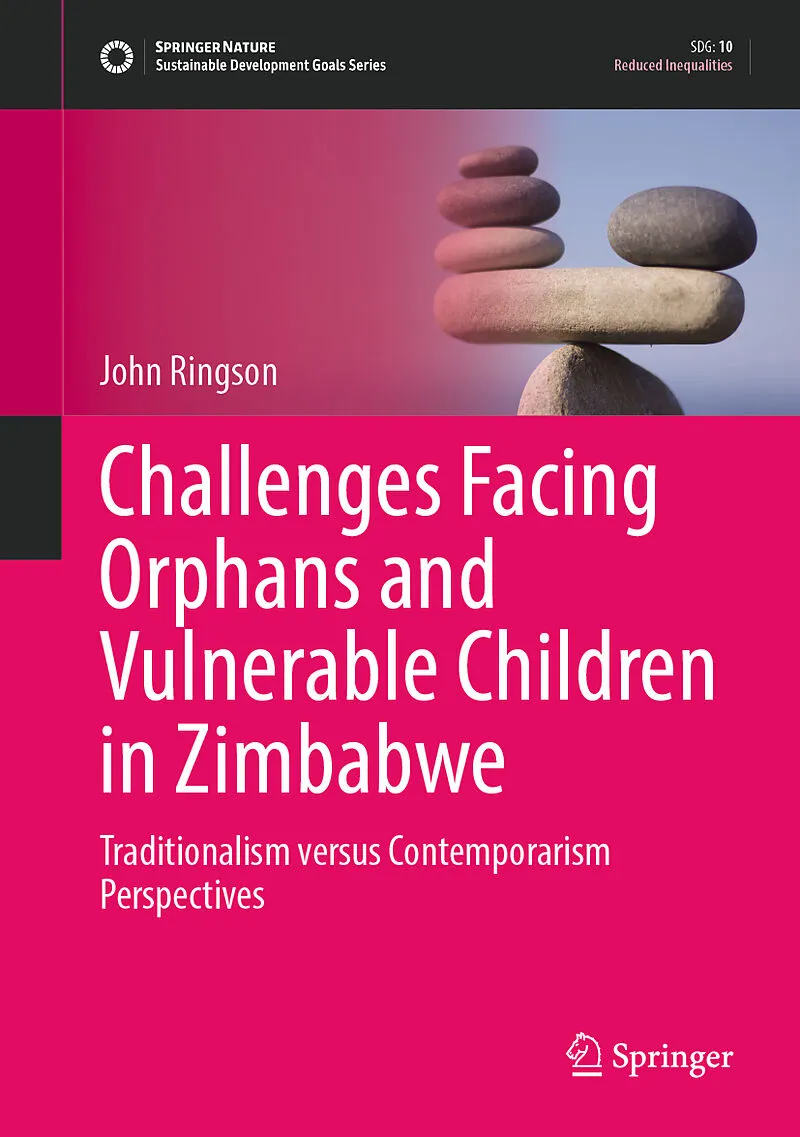
This book is an appraisal of integrating the contemporary and traditional strategies for the sustainable livelihood of orphans and vulnerable children, with a focus on the practicability of hybridising the two approaches, focusing on Zimbabwe within a broader ...This book is an appraisal of integrating the contemporary and traditional strategies for the sustainable livelihood of orphans and vulnerable children, with a focus on the practicability of hybridising the two approaches, focusing on Zimbabwe within a broader Southern African context. The volume draws on cultural hermeneutics and an appreciative inquiry model to diplomatically mediate the rival philosophies, cultures, structures, ideas, and strategies for sustainable development within the context of an open system development paradigm. In doing so, it brings a more collective, qualitative, culturally-sensitive, and transformative approach to the processes of making sense of, and implementing, community-based coping strategies for orphans and vulnerable children. It moves beyond the individual level towards an integrated community-based approach, and considers collective intelligence in the care and support of orphans and vulnerable children in Zimbabwe, and beyond. The book works towards the institutionalisation of traditional approaches alongside contemporary approaches 'on the ground', factoring in the increasing influences of globalisation and modernity, and their respective roles in either widening or narrowing the gap between traditional and contemporary approaches. This book brings with it an original contribution to dialogue and policy on child protection models, and to research on orphans and vulnerable children in Africa, and beyond. It is relevant to policymakers and sociology scholars focused in issues related to development, welfare, poverty, and youth, particualry in Africa and the developing world more widely.
Integrates the rival philosophies of traditionalism and contemporalism in the support of orphans and vulnerable children Makes an original contribution to dialogue and policy on child protection models Integrates multidisciplinary perspectives from within social scientific research on orphans in Africa
Autorentext
Prof John Ringson is a dedicated and accomplished Executive Academic Professional in Public and Development Management, awarded by the South African Association of Public Administration and Management (SAAPAM). He holds a PhD in Public and Development Management from the University of the Witwatersrand, a Master of Science in Peace, Leadership and Governance from Africa University, a Postgraduate Diploma in Development Studies from the National University of Science and Technology, and a Bachelor’s Degree in Social Work and Social Administration from Stanford University. Prof Ringson has a wealth of experience spanning over 10 years, gained from various educational and leadership roles at esteemed institutions, including the University of the Witwatersrand, the University of Johannesburg, the Zimbabwe Open University, Sol Plaatje University, and Regenesys School of Management, among others. He has served in various capacities, including assistant researcher, lecturer, postdoctoral researcher, sessional lecturer, senior lecturer, senior researcher and adjunct research professor at the foregoing institutions of higher education. He taught and supervised undergraduate and postgraduate programs while developing comprehensive curriculum modules. His expertise encompasses educational leadership, teaching, research, and management. His research focuses on Public Sector Reform and Management, Digital Transformation, Public Governance, gender and development, the Sustainable Development Goals, Ethical Leadership, Child Rights Governance, and Service Delivery. This extensive experience underscores his competence and reliability as an academic and a social scientist in public governance, organisational management and development management. Driven by a passion and commitment to making a positive impact in the Public and Private sectors through his expertise and knowledge in Public Governance, Digital Transformation, Public Sector Reform, Development Management, Service Delivery and Child Rights Governance, he is not only ready but eager to continue to contribute to the advancement of knowledge and practice in his fields of expertise.
Inhalt
Challenges Facing Orphans and Vulnerable Children in the Global Southern Africa: An Introduction.- The Zimbabwean Child Care System: Policy and Legislative Frameworks.- The Care Conundrum: Social Reproduction, Capitalism and Experiences of OVC Caregivers in Zimbabwe.- African Traditional Approaches to OVC Care: A Zimbabwean Perspective.- Rethinking OVC Care in Zimbabwe: Contemporary Issues and Trends.- Cultural Dilemmas in Child Upbringing and Rights: Insights from Zimbabwe.- Building Resilience through Integrated Community-Based Approaches for OVC in Zimbabwe.- Challenges of Parenting OVC in the 21st Century in Zimbabwe: An Indigenous Knowledge Perspective.- Custodianship of OVC in Zimbabwe: A Traditional Leadership Perspective.- Commodifying Vulnerability: A Critical Examination of Philanthrocapitalism in Zimbabwe's OVC Care Sector.- The Impact of the COVID-19 Pandemic on the Livelihood of OVC in Zimbabwe.- Zunde Ramambo as a Resilience-Building Mechanism for OVC in Zimbabwe.- Sustainable Development Goals for OVC in Zimbabwe: Prospects and Challenges.- Challenges Facing Orphans and Vulnerable Children in Zimbabwe: Conclusion.